
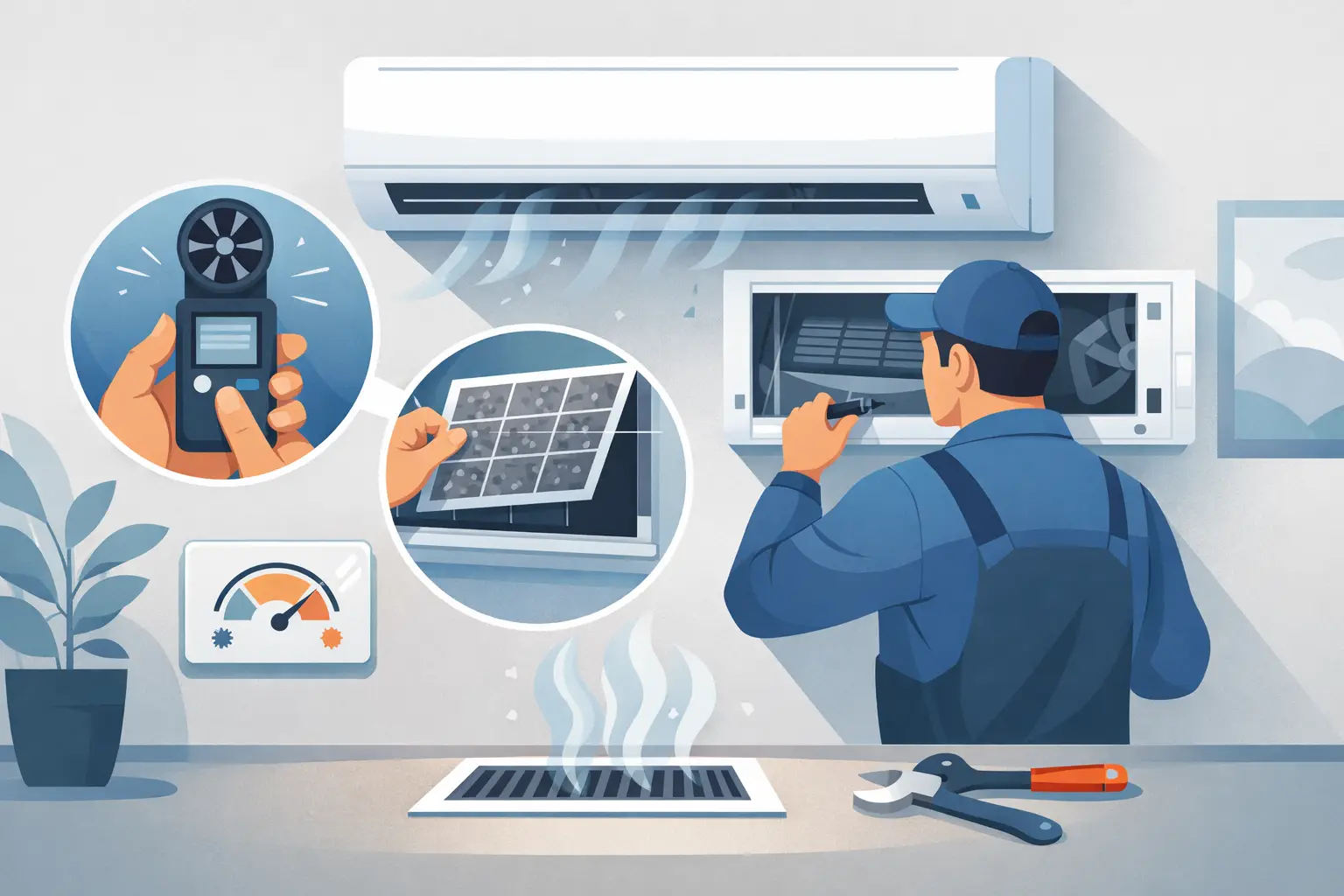
Weak airflow usually shows up before a full breakdown. You notice rooms taking longer to cool, one vent barely pushing air, or a split system running but not moving enough air to make a difference. The good news is that poor airflow does not always mean a major repair. The less good news is that the cause can range from a simple filter issue to a failing blower motor or damaged ductwork.
If you are trying to figure out how to fix weak airflow from air conditioner systems, the fastest approach is to start with the easy checks and work toward the mechanical ones. Some fixes are safe for a homeowner or business operator to handle. Others should be left to a licensed HVAC technician, especially when electrical parts, refrigerant issues, or internal component failure may be involved.
How to fix weak airflow from air conditioner systems
Start by thinking about what type of system you have. A ducted central system, a single-zone split system, and a multi-zone setup can all suffer from weak airflow, but the likely causes are not always the same. Ducted systems often struggle with blocked filters, closed dampers, crushed ducts, or blower issues. Split systems are more likely to have clogged indoor coils, dirty fan wheels, or fan motor problems.
That matters because airflow is not just about comfort. Low airflow can reduce efficiency, increase run times, strain components, and in some cases lead to coil icing. If the system cannot move enough air across the evaporator coil, it may cool poorly while using more energy than it should.
Check the air filter first
This is the simplest place to start because it is also one of the most common causes. A dirty filter restricts air before it even reaches the blower. In a ducted system, that can starve the entire system of airflow. In a return-air setup for a home or small commercial space, one neglected filter can affect every conditioned room.
Remove the filter and inspect it under good light. If it is covered in dust or debris, replace it. If it is a washable type, clean it fully and let it dry before reinstalling. Keep in mind that higher-filtration filters can improve indoor air quality, but some systems are not designed for overly restrictive filter media. If weak airflow started after switching to a very dense filter, that may be part of the problem.
Make sure vents and returns are open and clear
Supply vents should be open and unobstructed. Return grilles also need clear space around them. Furniture, rugs, stock boxes, curtains, and even decorative covers can reduce airflow more than people expect. In offices and retail spaces, it is common to find returns partially blocked by storage or displays.
If only one room has weak airflow, the issue may be as simple as a closed vent or damper. If the whole building feels under-supplied, look at the return side as well. Air conditioning systems need balanced air movement. If air cannot get back to the unit properly, supply airflow suffers too.
Inspect the indoor coil and blower area
If the filter has been dirty for a while, dust may have moved past it and collected on the evaporator coil or blower wheel. That buildup can reduce how much air the fan can move. You may notice airflow dropping gradually over time rather than suddenly.
In some systems, you can see enough of the indoor unit to spot obvious dirt or icing. If the coil is frozen, turn the system off and let it thaw before doing anything else. A frozen coil is a symptom, not the root cause. It can be caused by restricted airflow, a dirty coil, a blower problem, or low refrigerant. Running it while frozen will not fix the issue.
Cleaning coils and blower assemblies is usually best left to a technician. These parts are delicate, and a rushed cleaning can bend fins, damage insulation, or miss the actual fault.
Common reasons airflow gets weak
Once the obvious checks are done, the remaining causes tend to fall into a handful of categories.
Blower motor or fan problems
If the blower motor is failing, airflow may become inconsistent, noisy, or noticeably weaker than normal. In a split system, the indoor fan may be spinning too slowly or not at full capacity. Some motors fail gradually. Others cut in and out, especially when the system has been running for a while.
Capacitor issues can create similar symptoms in systems that use them. A weak capacitor may allow the motor to start poorly or operate below normal performance. This is not a good DIY repair because electrical testing is required, and replacing the wrong part can create bigger problems.
Duct leaks or crushed ductwork
In ducted systems, the air may be produced correctly but lost before it reaches the room. Flexible ducts can sag, disconnect, or become crushed in attic or ceiling spaces. Metal ductwork can also leak at joints. That often leads to uneven cooling, weak airflow at some vents, and higher energy bills.
This is where the answer depends on the pattern. If every room has low airflow, think filter, blower, or return restriction. If only certain areas are affected, duct faults or balancing issues become more likely.
Dirty indoor fan wheel
A blower or fan wheel with heavy dust buildup cannot move air efficiently. This issue is common in systems that have gone too long between maintenance visits. The fan still runs, so the unit sounds normal enough, but actual air volume drops.
The fix is straightforward in principle but not always easy in practice. The assembly often needs to be accessed and cleaned properly, not just sprayed from the outside.
Thermostat or fan setting issues
Sometimes the system is not actually set up to move air the way you expect. Fan speed settings, zoning controls, and thermostat programming can all affect perceived airflow. On variable-speed systems, lower airflow may be normal under certain conditions. That is not a fault if the system is still maintaining temperature correctly and operating efficiently.
If the airflow feels weaker but comfort is otherwise fine, it may be worth checking whether fan settings were changed during a power outage, reset, or recent service visit.
When weak airflow points to a bigger problem
There are a few signs that weak airflow is not just a maintenance issue. If you notice ice on the indoor coil or refrigerant lines, burning smells, rattling from the air handler, water around the unit, or a sharp rise in energy use, it is time to stop troubleshooting and book a professional inspection.
Low refrigerant does not directly cause weak airflow in the same way a dirty filter does, but it can create conditions that lead to coil freezing and poor air movement. Control board faults, motor failures, and zoning system problems can also look like simple airflow issues at first.
For commercial spaces, weak airflow can affect more than comfort. It can impact staff productivity, customer experience, and equipment conditions. If certain rooms overheat while others stay cool, a balancing or duct design issue may be involved rather than a single failed component.
What you can safely do yourself
For most homeowners and small business operators, the safe first steps are checking and replacing the filter, confirming vents and returns are open, clearing obstructions, and inspecting the system for visible ice or dirt. You can also note whether the issue affects one room, one zone, or the whole property. That information helps speed up diagnosis.
If the unit has a washable pre-filter, clean it regularly. If your system uses disposable filters, replace them on schedule rather than waiting for performance to drop. There is no perfect timing for every building because pets, dust load, occupancy, and renovation work all change how quickly filters clog.
When to call an HVAC technician
If weak airflow remains after basic checks, professional service is the practical next step. A technician can test fan performance, static pressure, capacitor health, thermostat control, coil condition, and duct integrity. That matters because replacing parts without proper testing can get expensive fast and still leave the underlying problem unresolved.
A good service visit should not just restore airflow for today. It should identify why the issue happened in the first place. In some cases, the answer is routine cleaning or a small repair. In others, it may be a design issue, aging equipment, or neglected maintenance that keeps causing the same complaint.
At Cool Air Tech, this is usually where a proper diagnostic approach makes the difference. Weak airflow is rarely improved by guesswork, and honest advice matters when the right fix could be as simple as cleaning a coil or as involved as correcting a duct problem.
Preventing the problem from coming back
The best way to avoid weak airflow is consistent maintenance. That means changing filters on time, keeping return grilles clear, having coils and fan components checked, and catching duct issues before they affect comfort across the property.
It also helps to pay attention to small changes. When a system starts taking longer to cool, sounds slightly different, or feels uneven between rooms, that is often the early warning. Acting then is usually cheaper than waiting until airflow drops enough to disrupt the whole house or workplace.
If your air conditioner is running but not delivering the air it should, treat that as a solvable problem, not something to put up with. The sooner you narrow down the cause, the easier it is to protect comfort, efficiency, and the life of the system.