Your air conditioner usually gives you a warning before it fails. Rooms take longer to cool, airflow feels weaker, energy bills creep up, or the system starts cycling more often than usual. If you are wondering how to maintain air conditioner performance without waiting for a breakdown, the good news is that a few consistent habits make a real difference.
Good maintenance is not just about keeping the unit clean. It helps protect efficiency, reduce strain on key components, and catch small issues before they become expensive repairs. Whether you have a split system at home, a ducted setup across a larger property, or a commercial system that needs to run reliably during business hours, the basic principle is the same: clean airflow, stable operation, and regular professional servicing.
Why air conditioner maintenance matters
Air conditioning systems work hard, especially during long cooling seasons. Dust builds up on filters and coils, outdoor units collect leaves and debris, and drain lines can slowly clog. None of that sounds dramatic at first, but even minor buildup can reduce airflow and force the system to run longer to reach the same temperature.
That extra run time affects more than comfort. It can increase power use, add wear to motors and compressors, and shorten the useful life of the system. For homeowners, that often shows up as higher utility bills and uneven temperatures. For business owners, it can also mean complaints from staff or customers, interruptions to operations, and avoidable repair callouts.
The trade-off is straightforward. Basic upkeep is inexpensive and manageable. Ignoring maintenance often costs more later.
How to maintain air conditioner performance at home or work
The most useful maintenance plan combines simple owner checks with scheduled professional service. Some tasks are safe and practical to handle yourself. Others should be left to a qualified HVAC technician, especially anything involving electrical parts, refrigerant, fan motors, or internal diagnostics.
Start with the air filter
If there is one task that has the biggest impact for the least effort, it is checking the filter regularly. A dirty filter restricts airflow, makes the system work harder, and can lead to poor cooling and ice buildup in some cases.
For most residential systems, checking the filter every one to three months is a sensible starting point. Homes with pets, heavy dust, nearby construction, or frequent system use may need more frequent attention. In light-use spaces, the filter may last longer, but it still needs checking on a routine schedule rather than by guesswork.
If the filter is washable, clean it according to the manufacturer instructions and let it dry fully before reinstalling it. If it is disposable, replace it with the correct size and type. Using the wrong filter can affect airflow, so tighter is not always better.
Keep indoor vents and returns clear
Supply vents and return grilles should stay open and unobstructed. Furniture, rugs, shelving, or curtains can block airflow and create hot or cold spots. In commercial spaces, stock, displays, or office fit-outs can cause the same problem.
It is also worth vacuuming dust from vent covers and return grilles occasionally. This will not replace a full service, but it helps support cleaner airflow and gives you a chance to notice anything unusual, such as visible dust buildup, loose covers, or damp marks.
Check the outdoor unit
The outdoor condenser needs room to breathe. Leaves, grass, dirt, and general debris can collect around the unit and reduce heat transfer. That can make the system less efficient and increase operating strain.
Keep the area around the unit clear, and trim plants back to allow open airflow. If the cabinet looks dirty, a gentle rinse with the power off can help remove surface dirt. Avoid using high pressure, which can bend the fins and create more problems than it solves.
If you notice damaged fins, unusual vibration, or loud operation from the outdoor section, that is a good time to book a technician rather than trying to fix it yourself.
Watch the drain line and moisture
Air conditioners remove humidity as they cool, so proper drainage matters. If the condensate drain line becomes blocked, water can back up and lead to leaks, water damage, or musty odors.
Common warning signs include water pooling near the indoor unit, damp drywall, or a stale smell when the system runs. In some systems, a blocked drain may also trigger a safety shutoff. If you see repeated moisture issues, it is best to have the unit inspected. The underlying problem may be a blockage, poor installation, or a larger performance issue causing excess condensation.
Pay attention to early warning signs
Maintenance is also about noticing changes in performance. If the system starts making rattling, buzzing, or grinding noises, that is not normal wear you should ignore. The same goes for weak airflow, inconsistent temperatures, frequent cycling, or a sudden rise in electric bills.
Some issues are simple. Others point to failing capacitors, dirty coils, thermostat faults, low refrigerant, or duct leakage. The earlier those problems are checked, the better your chance of avoiding a major repair.
What professional AC maintenance should include
Knowing how to maintain air conditioner equipment on your own is useful, but it is only part of the picture. A proper service visit goes well beyond cleaning a visible filter.
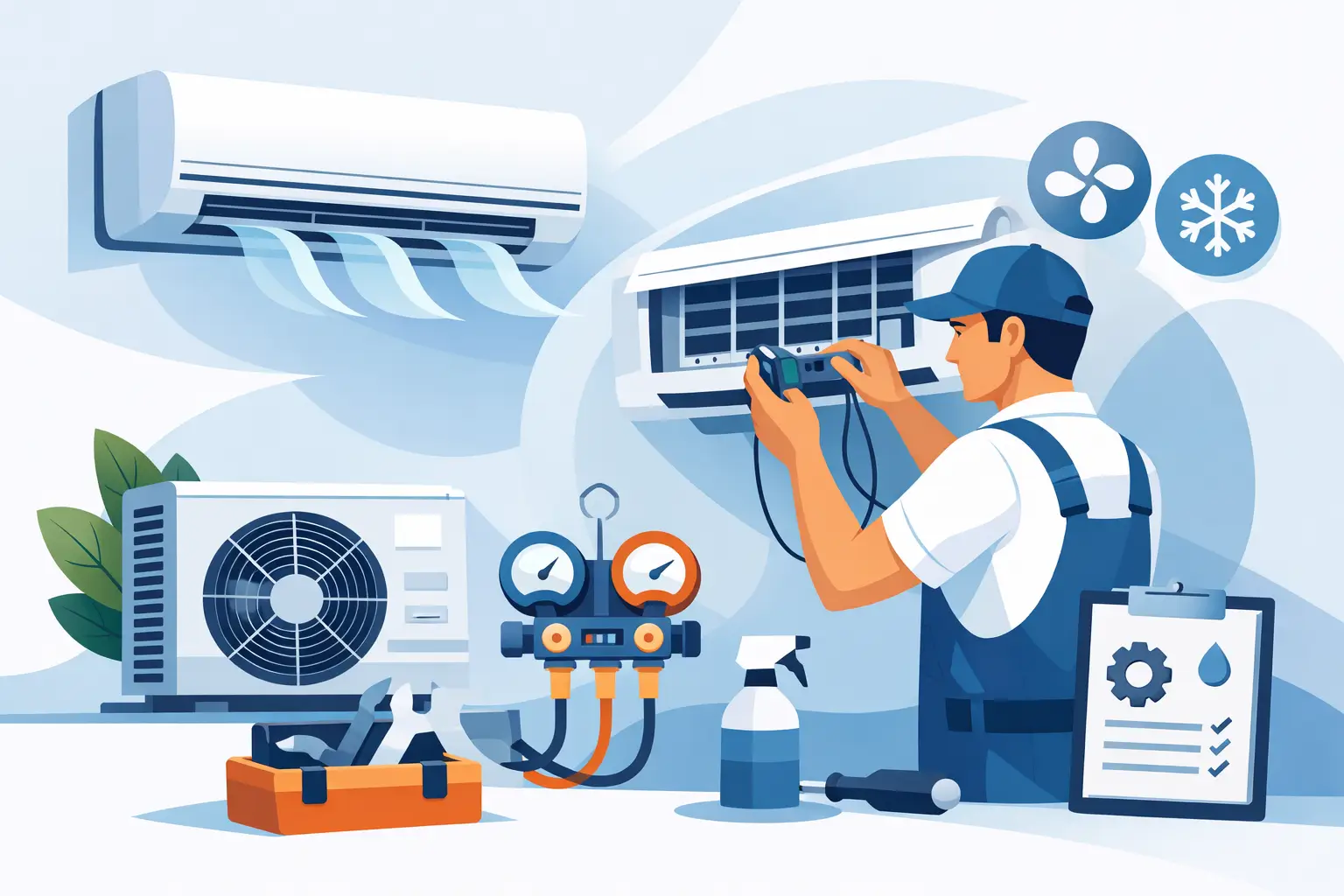
A qualified technician will typically inspect electrical connections, test system performance, clean key components, check refrigerant levels where applicable, inspect fan motors, confirm thermostat operation, assess coil condition, and review drainage. On ducted and commercial systems, they may also check zoning performance, duct condition, and airflow balance.
This matters because many expensive failures start in places you cannot see during day-to-day use. A capacitor may be weakening. A coil may be dirty enough to reduce efficiency. A drain issue may be developing slowly. Professional servicing helps catch those issues before they interrupt cooling when you need it most.
For most homes, annual service is a sensible minimum. Systems with heavy seasonal use, larger homes, pets, or known dust exposure may benefit from more frequent checks. Commercial properties often need a tighter maintenance schedule because downtime carries a higher cost and usage is often more demanding.
Maintenance tips by system type
Not every air conditioner is maintained in exactly the same way. The basics are similar, but the details depend on the setup.
Split systems
Split systems are usually straightforward to maintain from the user side. Filters are easier to access, and performance changes are often noticeable quickly in a single room or zone. The main priorities are regular filter cleaning, keeping the outdoor unit clear, and booking service if cooling drops off or noise increases.
Ducted systems
Ducted systems can hide problems longer because conditioned air is distributed across the whole property. If one room feels off, the issue might be zoning, duct leakage, a blocked return, or a broader airflow problem. Filter access also varies by system design. Regular professional servicing is particularly valuable here because it helps assess the full network, not just the main unit.
Multi-split and VRF or VRV systems
These systems offer flexibility and efficient zone control, but they are more complex. If one indoor unit behaves differently from another, the cause is not always obvious. Maintenance should be methodical and performed by technicians familiar with the system type, especially in commercial settings where control logic and multiple indoor units are involved.
Common mistakes to avoid
One common mistake is running the system with a visibly dirty filter because it still seems to be cooling. It may still cool, but usually at a higher operating cost and with more wear. Another is closing too many vents in an effort to force more air into one room. Depending on the system, that can create pressure issues and reduce overall performance.
People also tend to ignore small noises or mild performance drops until the hottest week of the year, when service demand is highest and breakdowns become more disruptive. Maintenance works best when it is routine rather than reactive.
If you are responsible for a business space, another mistake is treating comfort complaints as isolated occupant preferences. Uneven temperatures often point to airflow, controls, or maintenance issues that need attention.
When to call a professional right away
If your air conditioner is blowing warm air, tripping breakers, leaking water indoors, making sharp electrical or grinding noises, or failing to start properly, do not keep resetting it and hoping it recovers. Shut it down and arrange a professional inspection.
The same applies if you notice ice on the indoor or outdoor unit, burning smells, or sudden performance loss across multiple rooms. These are not routine maintenance items. They are signs that the system needs qualified diagnosis.
A well-maintained air conditioner should cool consistently, run efficiently, and do its job without drawing attention to itself. If your system is overdue for service or showing early warning signs, addressing it now is usually the simplest way to protect comfort, control costs, and avoid unnecessary repairs. If you need experienced local support, Cool Air Tech can help assess what your system needs and keep it running as it should.