
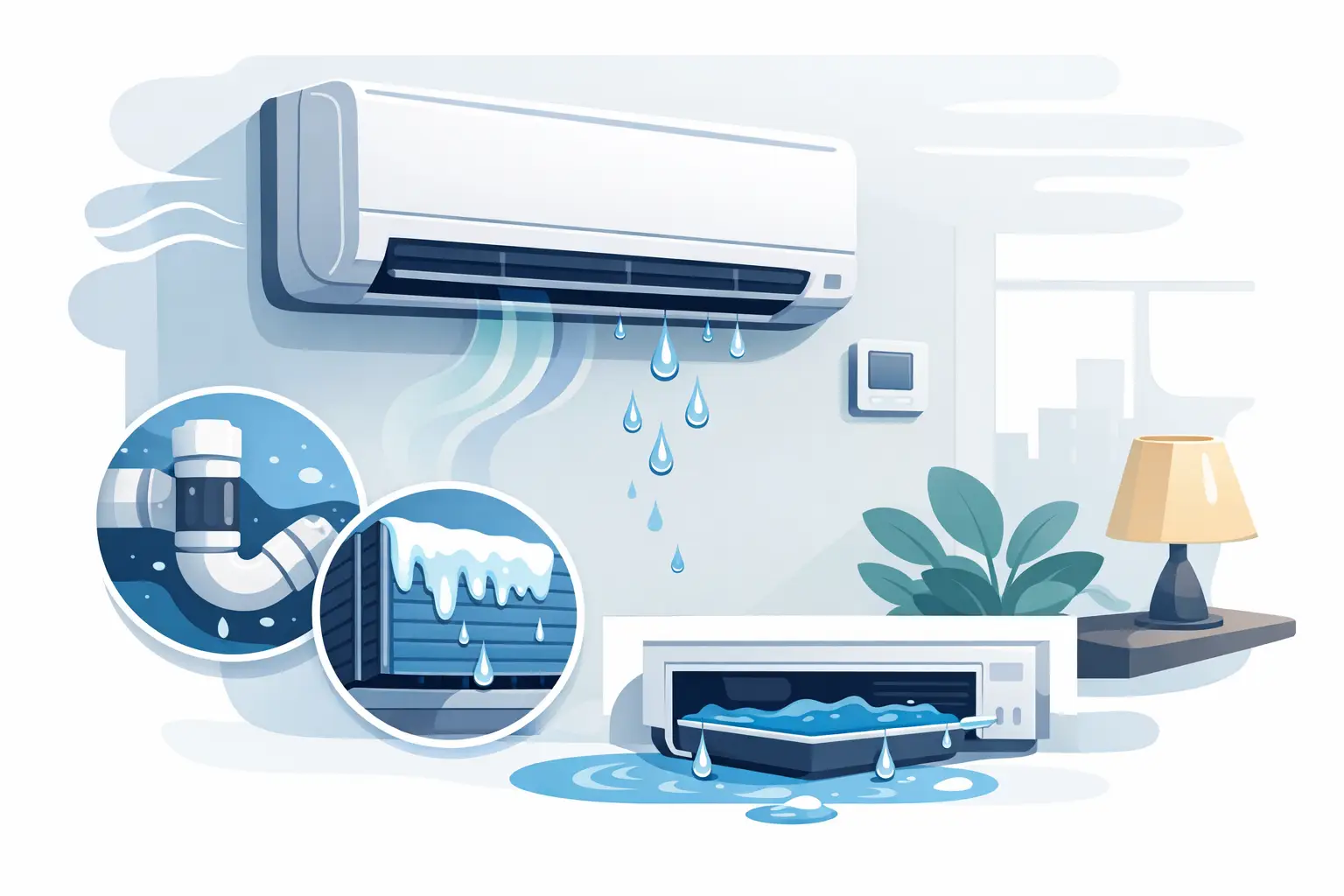
A small puddle near your indoor unit can go from annoying to expensive fast. If you are asking, “why is my AC leaking,” the short answer is that your system is not draining condensation the way it should. Sometimes the fix is simple, like a clogged drain line. In other cases, the leak points to a larger airflow, installation, or refrigerant problem that needs professional repair.
Air conditioners naturally create moisture as they pull humidity from the air. Under normal conditions, that water collects in a drain pan and exits through a condensate line. When any part of that process is blocked, damaged, frozen, or improperly set up, water ends up where it should not be – on your floor, inside a wall cavity, or around the air handler.
Why is my AC leaking inside the house?
If the leak is indoors, the condensate system is the first place to look. Your AC is designed to remove moisture, especially in humid weather, so a steady drip outside is usually normal. Water inside is not.
The most common reason is a clogged condensate drain line. Dust, algae, and debris can build up inside the line over time until water backs up into the drain pan. Once the pan fills, it overflows. This is especially common when the unit has been running hard for long stretches and maintenance has been delayed.
A cracked or rusted drain pan is another frequent cause, especially on older systems. Even if the drain line is clear, a damaged pan will let water escape before it can drain away properly. In newer systems, the pan itself may still be sound, but poor installation or a unit that is not level can cause water to spill over one side.
Frozen evaporator coils can also create a leak. When airflow is restricted or refrigerant levels are low, the coil can ice over. Once the ice melts, the amount of water can exceed what the pan and drain can handle, leading to visible leaking around the indoor unit.
The most common causes of AC leaks
Clogged condensate drain line
This is the issue HVAC technicians see most often. Your system removes humidity from indoor air every time it cools. That moisture has to travel through a narrow drain line. If mold, sludge, or dirt blocks the line, water has nowhere to go.
You may notice standing water near the air handler, a musty smell, or your system shutting off if it has a float switch. A clogged line can look minor at first, but if ignored it can damage flooring, drywall, insulation, and ceilings.
Dirty air filter and poor airflow
A dirty filter does more than reduce efficiency. It can choke airflow across the evaporator coil, making the coil too cold and causing ice to form. When that ice melts, the extra water may overflow the pan.
This is one of the few causes homeowners can often prevent easily. If your filter has not been changed in a while, especially during peak cooling season, it is worth checking before assuming something more serious is wrong.
Low refrigerant
Low refrigerant can also cause the evaporator coil to freeze. Unlike a dirty filter, this is not a maintenance item you can top off yourself. Refrigerant does not get used up like fuel. If the level is low, there is usually a leak somewhere in the system.
Along with water around the unit, you may notice weak cooling, hissing, or longer run times. This is a repair issue, not a wait-and-see issue, because operating the system this way can strain the compressor.
Damaged or rusted drain pan
Drain pans do not last forever. Over time, corrosion or cracks can develop, especially in older units. Once that happens, condensation escapes before it ever reaches the drain line.
In some systems the pan is relatively accessible. In others, proper diagnosis may require opening the unit and checking components around the coil and drain assembly.
Improper installation or poor leveling
Not every leak is caused by wear and tear. If a system was installed without proper pitch, alignment, or drain setup, water may never move through the pan correctly. This can happen in both residential and light commercial settings.
It is one reason an AC leak should not always be treated as a one-off maintenance problem. Sometimes the issue goes back to how the equipment was originally fitted.
What you can check before calling for service
If you notice leaking, turn the system off first if water is actively pooling near electrical components or soaking surrounding materials. Preventing damage comes before troubleshooting.
Next, inspect the air filter. If it is dirty, replace it and let the system thaw completely before restarting. If ice is visible on the indoor coil or refrigerant lines, leave the unit off until a technician can assess it. Running it while frozen often makes the leak worse.
You can also check the area around the indoor unit for obvious signs of a blocked drain, such as standing water in the pan or sludge near the outlet. Some homeowners are comfortable clearing a minor clog with a wet/dry vacuum at the drain termination point, but it depends on the system layout and access. If you are unsure, it is better not to force the issue.
For window AC units, the situation is a little different. A small amount of moisture can be normal, but if water is dripping indoors, the unit may be tilted the wrong way, the filter may be dirty, or the drain path may be blocked.
When an AC leak is more than a minor maintenance issue
A leak becomes more urgent when it keeps returning, appears after filter changes, or comes with reduced cooling performance. That usually means the cause is deeper than a simple blockage.
If the system is freezing up, short cycling, making unusual noises, or struggling to maintain temperature, there may be an airflow restriction, blower issue, refrigerant leak, or control problem involved. In commercial spaces, even a small leak can become a larger operational issue if it affects ceiling tiles, office finishes, stock areas, or tenant comfort.
There is also the question of hidden water damage. The visible puddle is not always the full story. Condensation can track along framing, insulation, or ductwork before it shows up. If a leak has been happening for more than a day or two, it is worth taking seriously.
Why is my AC leaking after I turned it off?
This catches a lot of people off guard. You switch the AC off, and then the water appears. In many cases, the system had already built up ice on the coil while running. Once it shuts down, that ice melts and drains all at once.
Another possibility is that the drain line was partially blocked during operation, allowing water to collect slowly in the pan. When the unit cycles off, the remaining water may finally overflow or shift enough to become noticeable.
So while the timing seems strange, the leak often started before shutdown. Turning the system off just made the symptoms easier to spot.
How professionals diagnose the cause
A proper diagnosis goes beyond mopping up water and clearing a line. An HVAC technician should inspect the filter, coil condition, condensate pan, drain line, float switch, blower performance, refrigerant pressures, and overall installation setup.
That matters because two leaks can look identical from the outside while having very different causes. One may need only a drain cleaning. The other may involve refrigerant repair, coil service, or correcting an installation defect. Honest diagnosis saves money because it avoids replacing parts that are not actually the problem.
At Cool Air Tech, this is the kind of issue we approach practically – fix the immediate leak, identify why it happened, and make sure the system is draining and cooling the way it should.
How to reduce the chance of future leaks
Routine maintenance makes a real difference here. Most AC leaks do not happen without warning. They build from neglected filters, dirty coils, blocked drains, or small performance issues that get missed season after season.
Replacing filters on schedule, keeping service appointments, and addressing weak cooling early can prevent a lot of water-related damage. For business owners, preventive maintenance is especially valuable because a leak can disrupt more than comfort. It can affect operations, presentation, and repair costs beyond the HVAC system itself.
If your AC is leaking once, it may be manageable. If it is leaking twice, it is telling you something. The right next step is not just drying the floor – it is finding out why the water is there in the first place.