
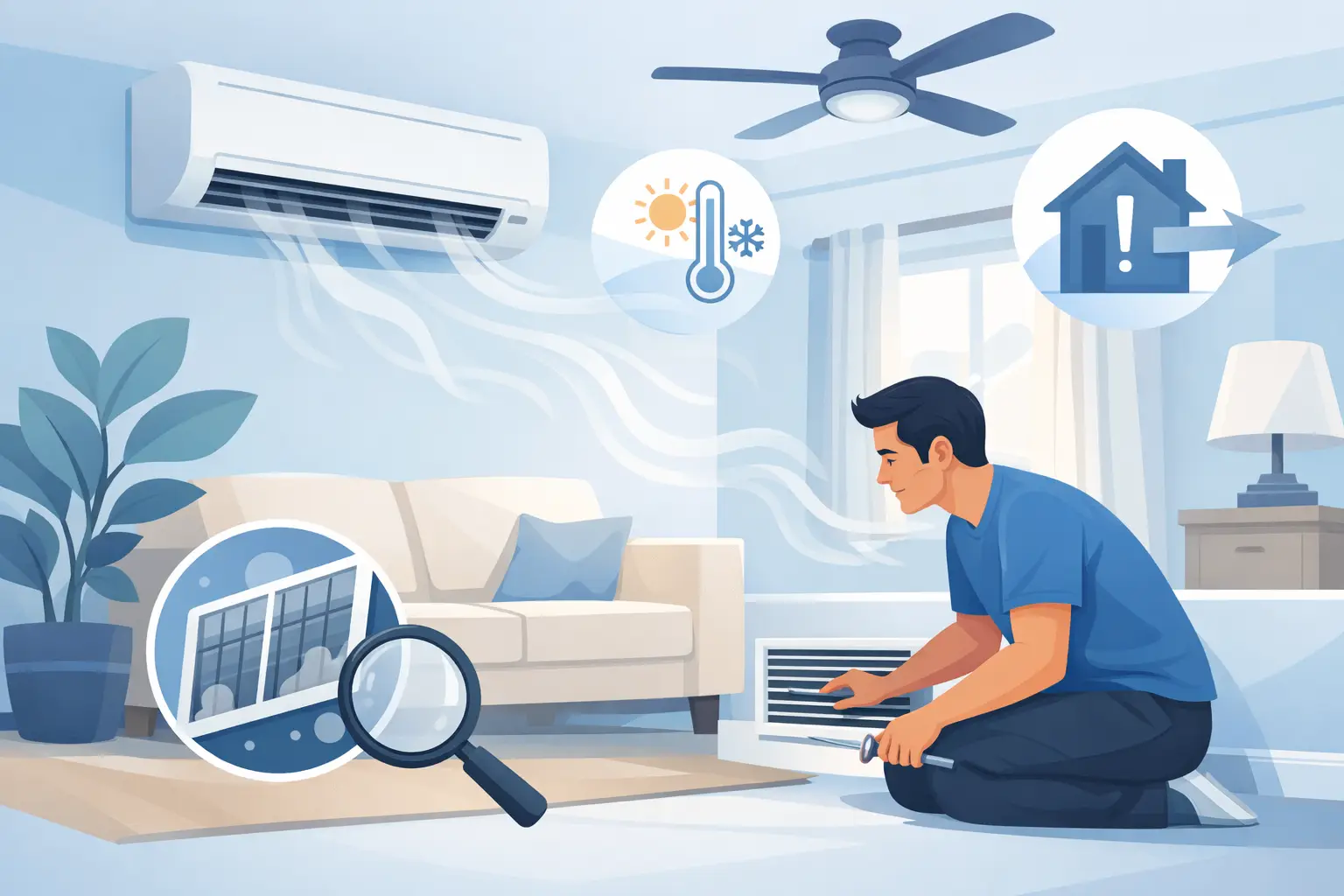
When one room feels stuffy, another barely cools, and your system seems to run longer without doing much, the issue is usually not the thermostat. If you are wondering how to fix weak airflow, the right approach is to start with the simple causes first, then work toward the parts of the system that need professional testing.
Weak airflow is one of the most common HVAC complaints in homes and small commercial spaces. It affects comfort, increases energy use, and puts extra strain on the equipment. The good news is that some causes are easy to spot. The harder part is knowing when weak airflow is a basic maintenance issue and when it points to a larger ductwork, blower, or system-sizing problem.
How to fix weak airflow: start with the basics
Before assuming the system is failing, check the items that most often restrict air movement. A clogged air filter is the first place to look. When the filter is packed with dust, the system cannot pull enough air through, and that reduction shows up at the vents. Replacing the filter may seem minor, but it can make a noticeable difference within minutes.
Next, check supply and return vents. Furniture, rugs, curtains, storage boxes, and even decorative covers can block airflow more than people realize. In homes, this often happens in bedrooms and living areas. In small offices or shops, it is common to see vents blocked by shelving or displays. Open all registers fully while testing airflow so you can rule out a simple restriction.
Then look at the thermostat settings and fan mode. If the fan is set incorrectly or the system is not calling properly for cooling or heating, airflow can seem weak when the unit is actually cycling normally. This is not always a repair issue, but it is worth confirming before moving on.
Common causes of weak airflow
If the basics do not solve it, weak airflow usually comes down to one of a handful of system issues.
Dirty evaporator coil
A dirty evaporator coil can restrict airflow inside the indoor unit. Dust and buildup on the coil reduce the system’s ability to move air and transfer heat. In some cases, the coil can also begin to freeze, which cuts airflow even further. If you see ice on the indoor unit or refrigerant lines, switch the system off and have it inspected. Running it in that condition can lead to bigger problems.
Blower motor or fan problems
The blower motor is what pushes conditioned air through the duct system. If the motor is wearing out, running at the wrong speed, or struggling because of a faulty capacitor, airflow drops throughout the property. You might hear humming, rattling, or inconsistent fan operation. Sometimes the system still runs, but it no longer has the force needed to distribute air properly.
Leaking or damaged ducts
Duct leaks are a major cause of poor airflow in ducted systems. If air escapes into a roof space, wall cavity, or storage area before it reaches the room, the vents inside the living or work area will feel weak. This is especially common in older systems or properties that have had renovations. Crushed, disconnected, or poorly sealed ducts can reduce performance significantly.
Undersized or poorly designed ductwork
Not all weak airflow issues come from wear and tear. Sometimes the original duct layout was never balanced correctly for the property. A large home addition, converted garage, or office reconfiguration can also throw off the airflow. In these cases, the equipment may still work, but the duct system cannot deliver enough air where it is needed. This is one of those situations where the fix depends on design, not just repair.
Blocked return air path
Supply vents get most of the attention, but return air is just as important. Your system needs to pull air back in to keep circulation moving. If return grilles are blocked or the return duct is undersized, rooms can feel stagnant even when the unit is on. Closed interior doors can also contribute, especially in tighter homes where the return setup is limited.
Signs the problem is bigger than a dirty filter
A single weak vent does not always mean the whole system is failing. The pattern matters. If one room has poor airflow, you may be dealing with a branch duct issue, damper position problem, or local obstruction. If the entire property has weak airflow, the issue is more likely related to the blower, coil, return air, or main duct system.
Watch for warning signs such as rooms that never reach the set temperature, rising power bills, whistling at vents, hot and cold spots, or a system that runs for long periods without much effect. In commercial spaces, employees or customers may notice stuffy areas near the back of the premises while the front feels overcooled. Those imbalances usually point to airflow distribution issues rather than temperature control alone.
How to fix weak airflow without making it worse
There is a point where DIY troubleshooting should stop. Replacing a filter, clearing vents, and visually checking accessible grilles are sensible first steps. Opening equipment panels, handling electrical parts, or trying to clean internal components without the right tools can create new problems.
For example, an evaporator coil needs proper cleaning methods. The wrong approach can bend fins, damage components, or leave debris where it should not be. The same goes for blower assemblies and duct modifications. Airflow problems are often interconnected, so changing one thing without testing static pressure, fan performance, and duct condition can lead to a partial fix at best.
A professional airflow diagnosis usually looks at filter condition, coil cleanliness, fan operation, duct leakage, return air sizing, and system balance. This matters because weak airflow is not a single fault code. It is a symptom with several possible causes.
Room-by-room weak airflow vs whole-system weak airflow
It helps to separate the issue into two categories.
If weak airflow affects one or two rooms, the likely causes include a closed damper, duct restriction, long duct run, disconnected branch, or poor register placement. In homes, upstairs bedrooms and rear extensions are common trouble spots. In small commercial properties, corner offices and storage zones often get the least air.
If weak airflow affects every vent, the focus shifts to central components. That could mean a dirty coil, clogged filter, blower issue, undersized return, or a major duct leak near the air handler. The distinction matters because it changes the repair path. Treating a whole-system problem like a room-level issue usually wastes time and money.
When age and system size are part of the problem
Sometimes weak airflow is not a maintenance failure. It is a sign the system no longer suits the property. If the building layout has changed, occupancy has increased, or the equipment is older and less efficient, airflow complaints can become more frequent. You may replace filters and service the unit regularly, yet still struggle with uneven delivery and long run times.
That does not always mean full replacement is the only answer. In some cases, duct upgrades, zoning adjustments, return air improvements, or fan-speed corrections are enough. In others, especially with older ducted equipment, replacing an underperforming indoor unit can be the more cost-effective long-term choice. Honest advice matters here because the right answer depends on condition, layout, and how the space is used.
When to call an HVAC professional
If you have changed the filter, cleared the vents, and still notice weak airflow after a full operating cycle, it is time for a proper inspection. The same applies if airflow has dropped suddenly, the indoor unit is making unusual noises, the coil is icing up, or some areas of the property are consistently uncomfortable.
An experienced contractor should be able to tell you whether the issue is maintenance-related, repairable, or tied to the design of the system itself. At Cool Air Tech, this kind of diagnosis is approached practically: identify the restriction, test the equipment, and recommend the fix that makes sense for the property instead of jumping straight to the most expensive option.
Weak airflow rarely improves on its own. If your system is struggling to push air where you need it, dealing with it early can protect comfort, lower operating costs, and reduce wear on the equipment before a small issue turns into a bigger repair.