
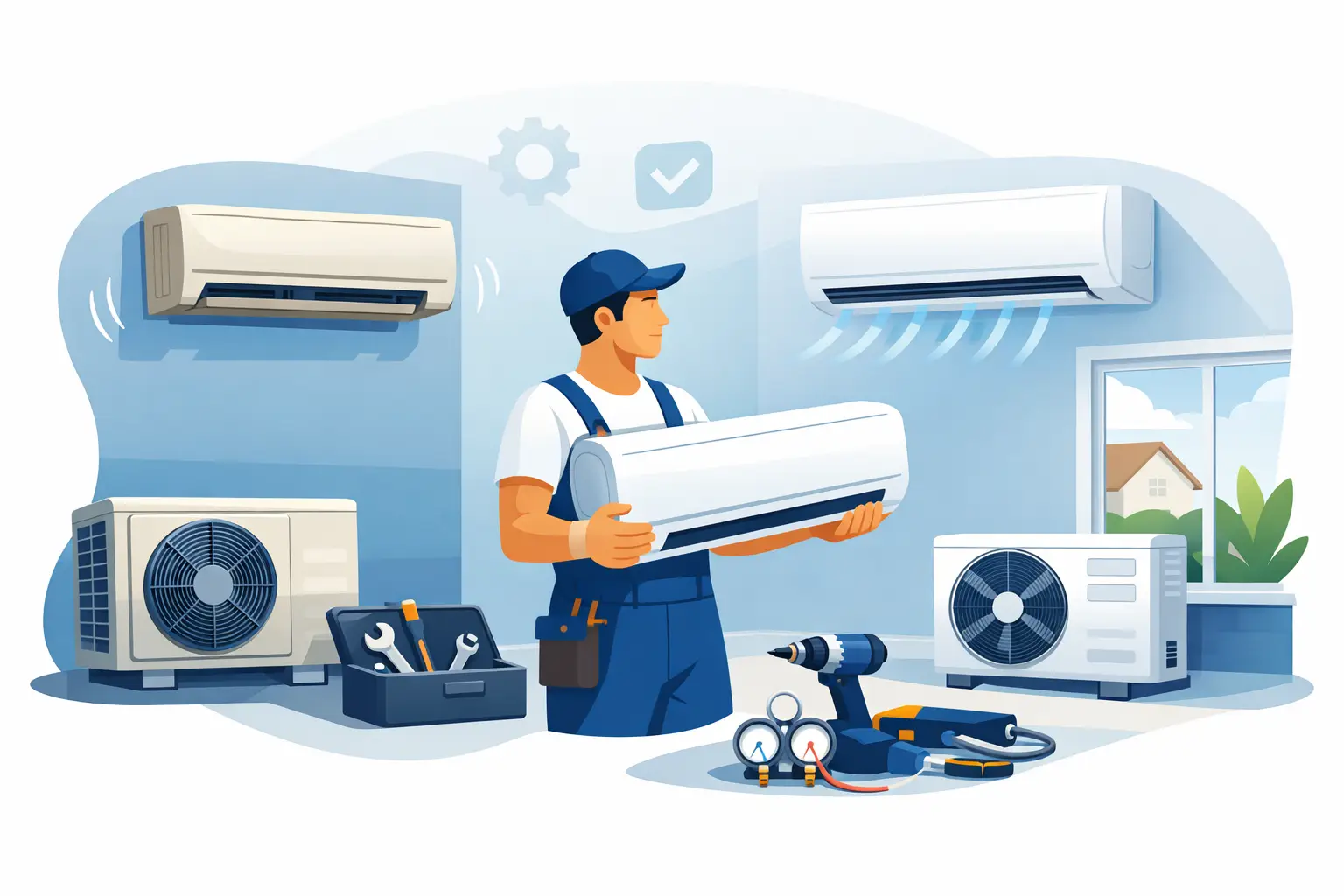
That old air conditioner usually gives you plenty of warning before it quits for good. Maybe the power bills keep climbing, one room feels fine while another never cools down, or the unit needs another repair every summer. A good guide to replacing old aircon starts there – not with brands or features, but with the real-world problems that tell you your current system is no longer doing its job efficiently.
Replacing an aging system is not just about getting cold air back. It is about improving comfort, lowering running costs, reducing breakdown risk, and making sure the next system actually suits the way your home or business is used. If you choose well, the upgrade should feel easier to live with from day one and cheaper to run over time.
When replacing old aircon makes more sense than repairing it
Some repairs are worth doing. If the issue is minor, the unit is relatively new, and parts are readily available, repair can still be the sensible option. But older systems reach a point where each repair just delays a larger and more expensive decision.
Age is one of the biggest signals. If your system is around 10 to 15 years old, efficiency standards, refrigerant types, and system design may all be outdated compared with current models. Even if it still runs, it may be using more power than necessary and delivering less consistent cooling.
Frequent callouts are another sign. One repair every few years is not unusual. Multiple repairs in a short period, especially involving the compressor, fan motor, control board, or refrigerant leaks, usually point to a system in decline. You can keep spending on parts and labor, but the value of that spend drops quickly when the rest of the unit is also wearing out.
Performance matters just as much as age. If airflow is weak, humidity feels harder to control, or temperature varies significantly between rooms, the problem may not be a simple fault. It may be that the original system was undersized, poorly designed, or no longer suitable for the current layout of the property.
A guide to replacing old aircon without overbuying
One of the most common mistakes is replacing like for like without asking whether the original setup worked well in the first place. Bigger is not always better, and the cheapest available unit is not always the most affordable once energy use and reliability are factored in.
The right replacement depends on the property, how many rooms need conditioning, insulation levels, ceiling height, sun exposure, occupancy patterns, and how the space is used during the day. A family home with several occupied bedrooms has different needs from a small office, a retail store, or an apartment where only one living area is used most of the time.
This is why proper assessment matters. A good installer will look at room sizes, heat load, existing pipework, electrical requirements, drainage, and whether the current system type still makes sense. Honest advice is often less about selling the largest unit and more about matching capacity and layout to actual demand.
Choosing the right replacement system
For many homeowners, a modern split system is the most practical upgrade when the goal is to cool or heat one main area or a single room. It is efficient, relatively straightforward to install, and available in a wide range of capacities. If your old wall-mounted unit has become noisy, inefficient, or unreliable, this can be a simple and effective replacement.
A multi-split system suits properties where several rooms need individual indoor units connected to one outdoor unit. This can work well when outdoor space is limited or when different rooms are used at different times. The trade-off is that design and installation need to be done carefully, because not every property layout is ideal for multi-split pipe runs and capacity sharing.
Ducted air conditioning is usually the better fit for larger homes, full-property climate control, or businesses wanting a cleaner look with more centralized operation. It offers strong whole-home coverage and, when designed properly, can include zoning so you are not conditioning every room at once. The upfront cost is higher, but comfort and visual appeal are often much better than piecing together several standalone units.
For larger commercial sites or more complex buildings, VRV or VRF systems may be the best long-term option. These are designed for flexible zoning, varied occupancy, and more sophisticated control. They are not necessary for every project, but in the right setting they deliver excellent efficiency and control.
What affects replacement cost
Most people ask about price first, and fairly so. The challenge is that air conditioning replacement cost depends on much more than the equipment itself.
System type is a major factor. Replacing a basic split system is usually far less involved than upgrading to a ducted or multi-zone setup. Capacity also affects pricing, because larger spaces require larger systems and sometimes more complex electrical work.
Installation conditions matter too. If the old unit is easy to remove and the new one can use similar locations, access, and services, labor may be more straightforward. If the job requires upgraded circuits, condensate drainage changes, ceiling modifications, duct replacement, new controls, or crane access for rooftop equipment, costs rise accordingly.
There is also the question of whether existing ductwork or pipework can be reused. Sometimes it can, but it should never be assumed. Older ducting may be undersized, leaking, poorly insulated, or simply near the end of its life. Reusing worn components to save money upfront can compromise the performance of a new system.
A transparent quote should explain what is included, what assumptions are being made, and whether there are any likely variations. That clarity matters just as much as the bottom-line number.
Timing your replacement
If your current unit still works, replacing it before peak summer or winter demand can make the process less stressful. You are less likely to be forced into a rushed decision during a breakdown, and installation scheduling is often easier when conditions are not extreme.
Planned replacement also gives you time to compare system options properly. That is especially useful for commercial clients, where downtime, customer comfort, and operating hours may all need to be considered before work is booked.
Emergency replacements do happen, of course. When a unit fails completely, the priority is getting a dependable solution in place quickly. Even then, it is worth taking a step back to make sure the replacement is sized and designed correctly rather than simply choosing the fastest available unit.
Questions to ask before you approve the job
A reliable contractor should be comfortable answering practical questions in plain language. Ask whether the recommended system capacity is based on a site assessment, whether the quote includes removal and disposal of the old unit, and whether any electrical upgrades are required.
It also helps to ask about noise, zoning options, filter access, maintenance needs, and expected operating efficiency. For homeowners, that can affect day-to-day convenience and long-term running costs. For business operators, it may affect staff comfort, customer experience, and how the system performs across trading hours.
Warranty support matters as well. A strong installation is only part of the picture. You also want clarity on manufacturer warranty, workmanship coverage, and who to call if something needs adjustment after commissioning.
Why installation quality matters as much as the unit itself
Even a premium system can underperform if it is installed poorly. Incorrect sizing, bad pipework practices, weak airflow design, poor duct sealing, or rushed commissioning can all lead to noise, inefficiency, uneven temperatures, and shorter equipment life.
This is where experience shows. A contractor that handles supply, installation, service, and maintenance is often better placed to recommend systems that perform well over time, not just on paper. At Cool Air Tech, that practical, end-to-end approach is central to helping clients avoid expensive mistakes.
A good replacement should feel balanced. It should cool or heat evenly, run quietly, respond properly to controls, and avoid the short cycling or constant strain that often shows up when systems are mismatched to the space.
The best replacement is the one that fits how you live or work
There is no single best air conditioning system for every property. The best choice is the one that matches the building, the budget, and the way the space is actually used. A homeowner may care most about bedroom comfort, appearance, and lower bills. A business owner may prioritize reliability, zoning, and minimal disruption during installation.
That is why a practical guide to replacing old aircon should focus less on sales language and more on fit. The right upgrade solves the issues your old system created. It should not leave you paying for features you will never use, and it should not cut corners that create problems later.
If your current air conditioner is getting louder, weaker, and more expensive to keep alive, replacing it is not just a cost. It is a chance to fix comfort problems properly and set the property up for years of more efficient, more reliable performance.