Water around an indoor unit usually gets noticed for the wrong reason – a ceiling stain, damp carpet, or a puddle near the wall. In many cases, air conditioner drainage problems start small and build quietly over time. What should be a simple process of removing condensation turns into leaking, musty odors, reduced performance, or even a system that shuts itself down.
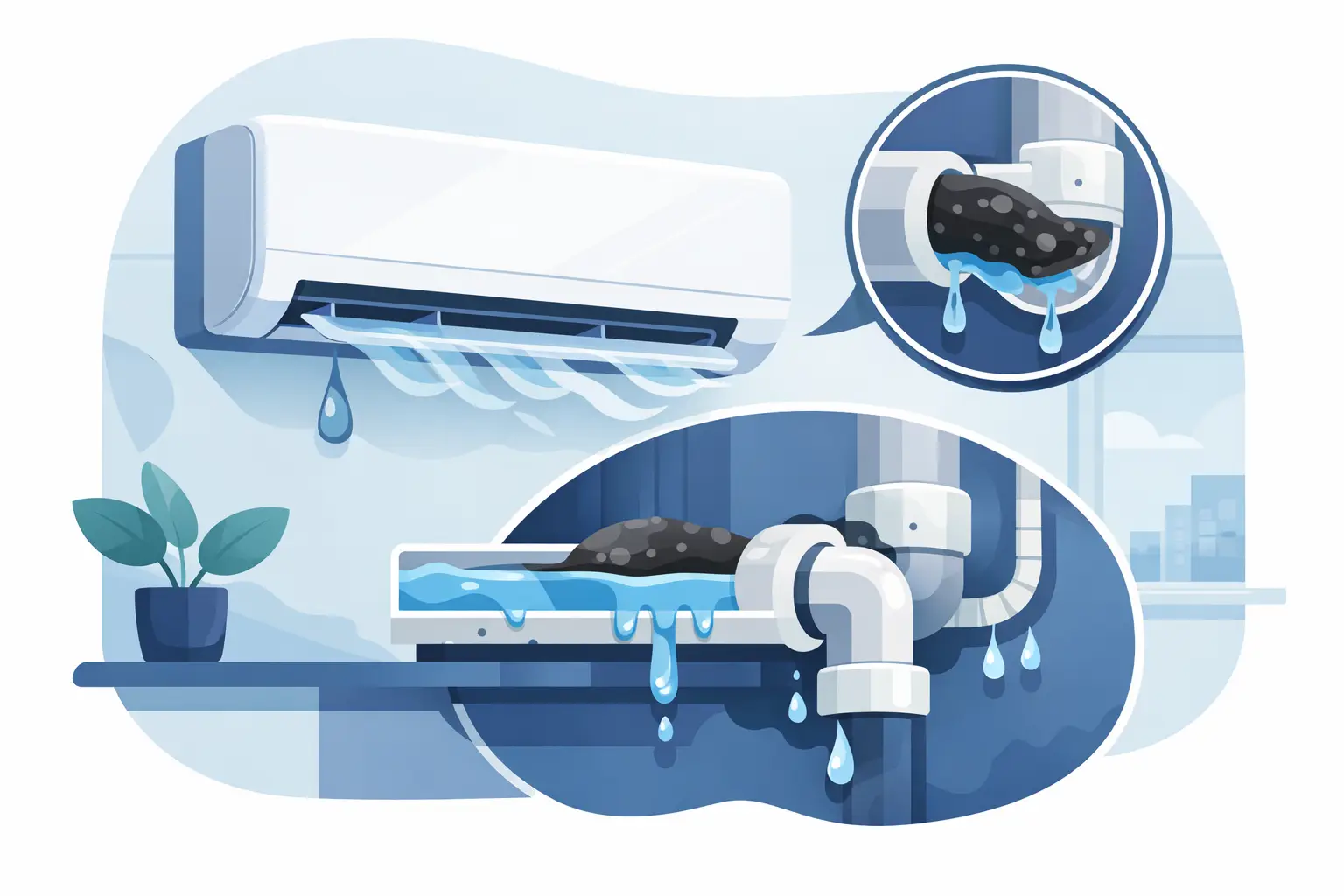
That drainage process matters more than most people realize. As your air conditioner cools warm indoor air, it also pulls moisture out of it. That moisture collects on the evaporator coil, drains into a pan, and then leaves through a condensate drain line. When any part of that chain is blocked, damaged, or poorly installed, water has nowhere to go except into the home or building.
Why air conditioner drainage problems happen
The most common cause is a clogged condensate drain line. Dust, dirt, algae, and sludge can build up inside the pipe over time, especially in systems that run hard through humid weather. Once that line narrows or blocks completely, water backs up into the drain pan and eventually overflows.
A cracked or rusted drain pan is another frequent issue, particularly in older systems. Even if the drain line itself is clear, a damaged pan lets water escape before it reaches the outlet. In some installations, the pan may not be properly aligned, which creates the same result.
Frozen evaporator coils can also lead to drainage trouble. When airflow is restricted by a dirty filter, blocked return, or blower issue, the coil can get too cold and ice over. Later, when that ice melts, the system produces more water than the drain can handle. What looks like a drainage fault may actually begin with an airflow problem.
Installation quality plays a role as well. A drain line needs the right slope to carry water away reliably. If it is pitched incorrectly, sagging, or trapped in a way that holds water, drainage slows down. This is especially relevant in attic installations, ducted systems, and some commercial fit-outs where pipe routing is more complex.
Signs your AC drainage issue is getting worse
Some warning signs are obvious, while others are easy to dismiss at first. Visible water around the indoor unit is the clearest one, but it is not the only clue. A damp smell near vents or the air handler can point to standing water in the pan or drain line.
You might also notice water stains on ceilings or walls near concealed ducted equipment. In a commercial setting, that can show up as marked ceiling tiles or moisture around a cassette or bulkhead unit. If the system starts turning off unexpectedly, a safety float switch may be doing its job by shutting the unit down before overflow causes more damage.
Higher indoor humidity can be part of the picture too. If condensation is not draining properly, the system may struggle to remove moisture as intended. The space can start to feel clammy even when the temperature setting looks right.
Common air conditioner drainage problems by system type
Split systems
Wall-mounted split systems often show drainage issues as dripping from the indoor head unit. The cause may be a blocked drain, an installation angle problem, or buildup inside the tray. In some cases, the unit is clean on the outside but heavily contaminated inside, which restricts normal water flow.
Ducted systems
Ducted systems can be harder to diagnose because the indoor unit is usually hidden in a ceiling or attic. By the time water becomes visible, the leak may already have affected plaster, insulation, or timber. A blocked drain line, cracked pan, or poor fall on the condensate pipe are all common causes.
Multi-split and VRF/VRV systems
These systems have more indoor units and more drainage points, so faults can be more localized. One room may have a drainage problem while the rest of the system appears to run normally. Diagnosis often comes down to isolating the affected unit and checking its tray, pump if fitted, and line condition.
What you can check before calling for service
A few basic checks can help you spot the issue early, but they do not replace proper servicing. Start with the air filter. If it is heavily clogged, restricted airflow may be contributing to coil freezing and excess water.
If your system has a visible drain outlet outside, check whether water is flowing during operation. No discharge at all can mean a blockage, though it depends on humidity levels and run time. If you can safely inspect around the indoor unit, look for obvious signs of dirt, slime, or standing water.
It is also worth checking the thermostat setting and how the unit has been performing overall. Poor cooling, weak airflow, and icing often sit alongside drainage faults. These details help narrow down whether the problem is only in the drain or part of a wider system issue.
That said, forcing a blockage clear without the right tools can create a bigger problem. Some homeowners try wire, pressure, or chemical cleaners and end up damaging the line or dislodging a joint. If water is already overflowing, the safer move is usually to turn the system off and have it inspected.
When drainage problems point to a bigger repair
Not every leak is just a blocked pipe. If the evaporator coil is freezing repeatedly, you may be dealing with a dirty coil, failed fan motor, refrigerant issue, or control fault. If the drain pan is rusted through, the age and overall condition of the system matter. Repair may be straightforward, but in older equipment it can be one of several signs that the unit is nearing the end of its practical life.
Drainage pumps add another layer. In some installations, condensate cannot drain by gravity and needs a pump to move water to a discharge point. If that pump fails, the system may leak or shut down even though the line itself is clear. Pumps are useful when needed, but they do introduce another component that requires maintenance and testing.
This is where experience matters. A proper diagnosis looks at the full chain – airflow, coil condition, drain pan, pipe slope, pump operation, and system cleanliness – rather than just treating the visible water.
Why professional maintenance makes a difference
Drainage faults are often preventable. Routine service helps remove the dirt and biological growth that clog drain lines, while also catching small issues before they become water damage claims. For homeowners, that means less risk of stained ceilings, warped flooring, and hidden mold. For businesses, it can mean avoiding interruptions, mess in customer-facing areas, and damage to fit-outs.
A good maintenance visit should include more than a quick filter rinse. It should assess how the system is actually draining, whether the pan is clean and sound, and whether the line is flowing correctly. On ducted and commercial systems, technicians may also check insulation condition, float switches, pumps, and concealed pipework where practical.
Cool Air Tech sees this often in both residential and light commercial systems – the leak that looked minor from the outside turned out to be the result of months of restricted drainage and missed maintenance. The earlier it is addressed, the simpler the fix usually is.
Repair or replace – it depends on the system
If the issue is limited to a blocked line, dirty tray, or minor installation correction, repair is usually the sensible path. These are common service issues and can often be resolved without major parts.
If the system is older and has multiple faults at once, the decision becomes less straightforward. A leaking drain pan, weak airflow, corrosion, poor efficiency, and ongoing breakdowns together may justify replacement rather than repeated patch repairs. That is especially true if the equipment is already costly to run or no longer suited to the layout of the space.
For commercial clients, the choice often comes down to downtime and risk. A low-cost repair may not be the best value if it leaves an aging system vulnerable during peak demand. For homeowners, the calculation is often about balancing immediate cost against long-term reliability.
The practical takeaway on air conditioner drainage problems
If your air conditioner is leaking water, smelling musty, or shutting down for no clear reason, do not assume it is minor. Air conditioner drainage problems can begin with a simple blockage, but they can also signal poor airflow, installation faults, or aging components that need closer attention. The right fix starts with finding the real cause, not just cleaning up the puddle.
The best time to deal with drainage issues is before they damage paint, ceilings, floors, or insulation. If something looks off, trust that early warning and have it checked properly. A well-maintained AC system should cool your space and remove moisture quietly in the background, not leave you chasing leaks.