
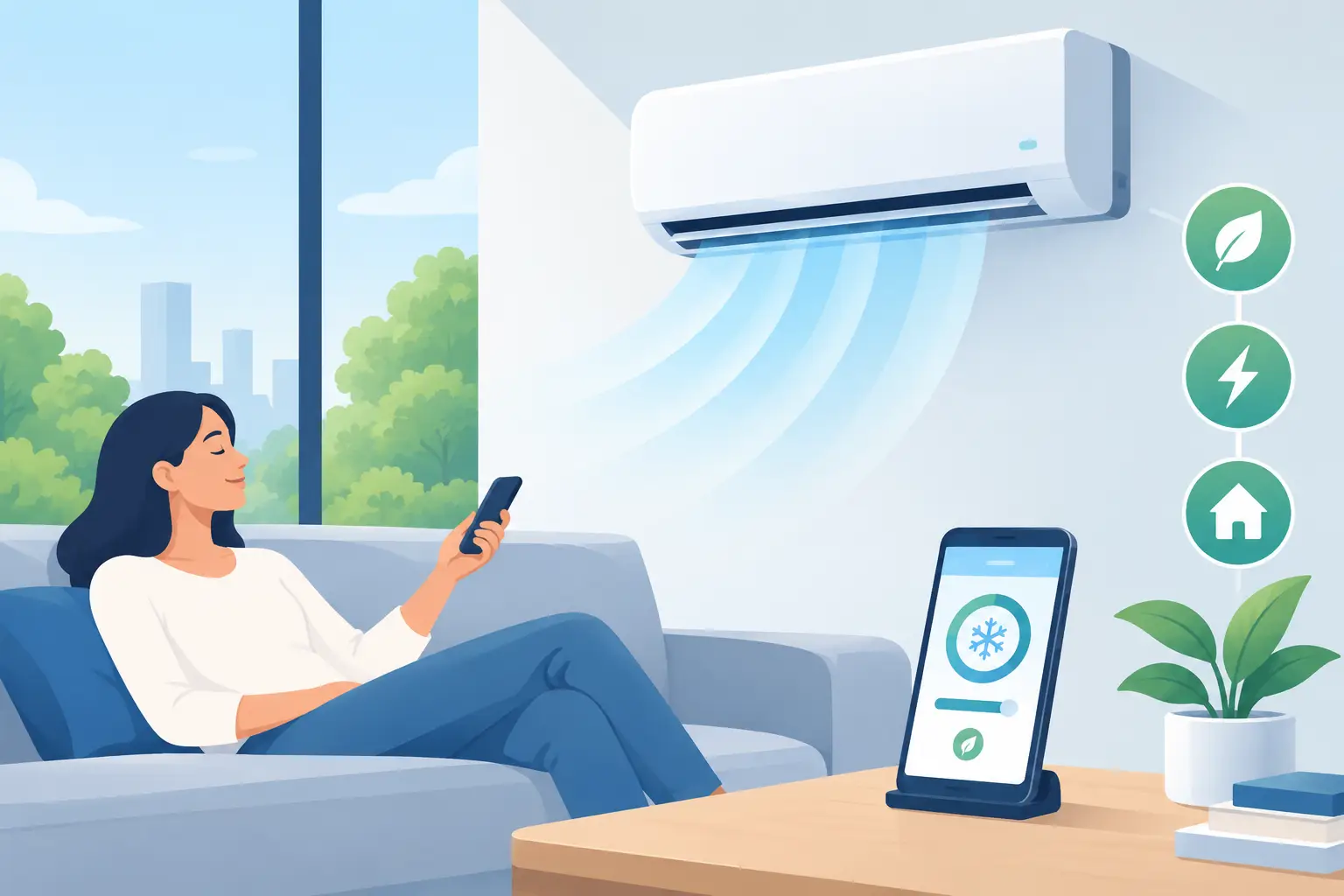
A thermostat that simply turns the system on and off is no longer the whole story. The most useful smart air conditioning trends help property owners control temperatures by zone, identify wasted energy, and catch performance issues before they become an inconvenient breakdown. For homeowners and business operators, the goal is not more technology for its own sake. It is dependable comfort with clearer control over operating costs.
Smart features can be built into a new ducted, split, multi-split, or VRF system, or added selectively to some existing equipment. The right approach depends on the age of the system, how the building is used, and whether the fundamentals – system sizing, airflow, insulation, and installation quality – are already in good shape.
Smart Air Conditioning Trends Worth Watching
Smarter zoning for rooms that are actually in use
Zoning has been a practical feature of ducted air conditioning for years, but modern controls make it more responsive. Instead of cooling an entire home because one bedroom is warm, users can set different schedules and temperatures for separate areas. A family may cool living spaces in the afternoon, bedrooms at night, and leave unused rooms inactive.
For larger homes, zoning can reduce unnecessary runtime while making comfort more consistent. It is especially useful where upstairs rooms overheat, west-facing areas receive strong afternoon sun, or household schedules vary.
Commercial systems can use the same principle. Offices, meeting rooms, retail floors, and back-of-house areas do not always need the same temperature or operating hours. With a well-designed multi-zone or VRF system, managers can better match conditioning to occupancy rather than relying on one setting for the entire premises.
Zoning is not a substitute for correct design. If a system is undersized, ducts are poorly balanced, or a room has excessive heat gain, adding an app will not fix the root cause. Professional assessment remains the first step.
Sensors that respond to occupancy and room conditions
Basic thermostats measure temperature in one location. Smart sensors can provide a more accurate picture by monitoring conditions in several rooms. Some controls also use occupancy detection to reduce cooling when spaces are vacant.
This is valuable in homes with uneven temperatures. The hallway thermostat may say the house is comfortable while a sun-exposed bedroom is still too warm. Room sensors help the control system prioritize the areas people are using, rather than relying on a single reading.
In commercial spaces, occupancy-based controls can help avoid running air conditioning at full capacity in empty meeting rooms or low-traffic areas. The trade-off is that sensor placement and setup matter. A sensor near a kitchen, exterior door, direct sunlight, or supply vent can create misleading readings and poor system behavior.
App controls with practical scheduling
Remote control through a phone app is one of the most familiar smart features. It allows users to adjust temperature, change modes, set schedules, and receive alerts without standing in front of the indoor unit or wall controller.
The real benefit is planning. Pre-cooling a home shortly before people arrive can be more comfortable than running the system all afternoon. A business can set weekday operating schedules and make quick adjustments for holidays, extended trading hours, or unexpected staff changes.
Remote access should be used thoughtfully. Constantly changing the set temperature can make a system run harder without improving comfort. A stable setting, sensible schedules, and a moderate temperature difference from outdoor conditions usually produce better results. Many households find that a setpoint around 72 to 75 degrees Fahrenheit during cooling season is a reasonable starting point, though personal preference, humidity, building design, and local climate all affect the best setting.
Energy monitoring that makes costs easier to understand
Energy use is often invisible until a utility bill arrives. Smart controllers and compatible systems can provide runtime data, energy estimates, filter reminders, and reports that show when demand is highest. This gives owners a clearer basis for changing schedules or identifying patterns that deserve attention.
If an air conditioner suddenly runs much longer than usual to maintain the same temperature, the issue may be a dirty filter, blocked outdoor unit, refrigerant problem, airflow restriction, or a change in the building itself. Data cannot diagnose every fault, but it can give an early warning that the system is no longer performing as expected.
For small businesses, monitoring is particularly useful when several indoor units or zones are operating across long hours. It can help management spot equipment left running after closing or areas that consistently consume more energy than expected.
Predictive maintenance alerts, not just breakdown alerts
A growing focus in smart HVAC is maintenance visibility. Instead of waiting for cooling to fail on a hot day, connected controls may flag filter issues, unusual operating patterns, communication faults, or service intervals.
These alerts are useful, but they do not replace scheduled maintenance. Filters still need cleaning or replacement, condensate drains need checking, electrical connections need inspection, and outdoor coils need adequate clearance. For ducted systems, technicians should also assess airflow, zoning operation, and overall performance.
The best use of a maintenance alert is as a prompt to act early. A filter reminder is simple. Repeated error codes, water leaks, reduced airflow, ice buildup, unusual noise, or poor cooling need professional attention before they place more strain on the system.
Smart Controls Work Best With Efficient Equipment
Many smart upgrades are being paired with inverter air conditioning. Unlike older systems that cycle fully on and fully off, inverter technology can adjust compressor output to better match the cooling load. That can improve temperature stability, reduce noise, and lower energy use under the right conditions.
This combination works well in split systems, multi-splits, ducted systems, and commercial VRF installations. The equipment modulates efficiently while the controls direct conditioning where and when it is needed.
However, replacing a controller will not deliver inverter-level efficiency from an older fixed-speed system. Compatibility varies by brand and model, and some aftermarket thermostats do not support every feature of proprietary equipment. Before purchasing a smart controller, confirm that it will work correctly with the existing unit, zoning setup, and heating functions.
Indoor Air Quality Is Becoming Part of the Conversation
Comfort is more than temperature. Many owners are paying closer attention to ventilation, filtration, humidity, and air movement, particularly in bedrooms, workplaces, and spaces with high occupancy.
Smart systems can remind users to clean filters and, in some cases, monitor humidity or air quality indicators. These features can be helpful, but they should be interpreted carefully. A sensor reading is not a full indoor air quality assessment, and no standard comfort system can solve every air-quality concern without the right filtration and ventilation design.
In humid conditions, proper system sizing is critical. An oversized air conditioner may cool a space too quickly and cycle off before removing enough moisture. That can leave rooms feeling clammy even when the thermostat displays the desired temperature. A correctly sized system with appropriate controls provides a better result than simply choosing the largest available unit.
What Homeowners and Businesses Should Prioritize
When considering smart upgrades or a new system, start with the property rather than the gadget. Look at room layout, insulation, glazing, occupancy, existing equipment, and the areas that create the most discomfort. From there, decide whether a single split system, multi-split, ducted solution, or VRF design offers the right level of control.
For a small apartment, a reliable split system with scheduling may be all that is needed. A larger home may benefit from ducted zoning and room sensors. A business with different trading areas and operating hours may see greater value in centralized controls and detailed monitoring.
It is also worth considering who will use the controls. The best system is easy for the household, staff, or tenants to understand. Complicated settings are often ignored, overridden, or left in inefficient modes. Clear programming and a straightforward handover after installation make smart features far more useful over the long term.
A well-planned air conditioning system should make the property feel easier to live or work in, not harder to manage. Start with a properly designed, professionally installed system, then choose smart controls that solve a real comfort or energy-use problem. That is where the technology earns its place.