A dusty vent cover is frustrating, but it does not automatically mean your entire HVAC system needs duct cleaning. For homeowners and business operators, the useful question is not whether dust exists inside the ductwork. It is whether that buildup is affecting indoor air quality, airflow, odors, or the reliable operation of the heating and cooling system.
Duct cleaning can be worthwhile in the right circumstances. It can also be oversold as a cure for problems caused by dirty filters, leaking ducts, incorrect system sizing, blocked returns, or equipment that needs repair. Knowing the difference helps you spend money where it will make a real improvement.
What Duct Cleaning Actually Involves
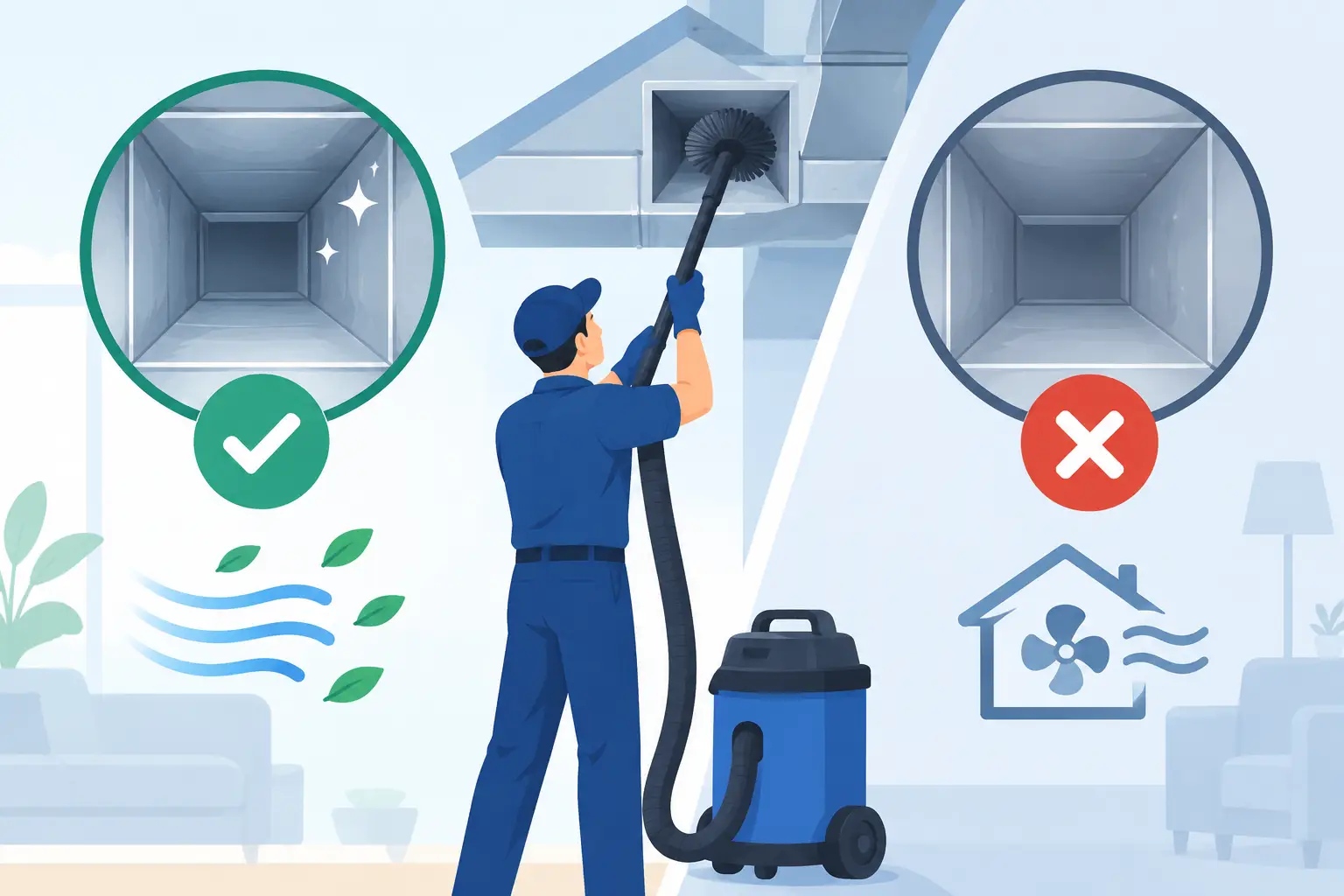
Professional duct cleaning is a whole-system service, not a quick vacuum at the register. A qualified technician accesses the supply ducts, return ducts, registers, grilles, and often accessible components around the air handler. Using negative-pressure equipment, brushes, air whips, and specialized vacuums, they dislodge and capture accumulated dust and debris.
The goal is to remove material from the duct system without spreading it through the building. A proper service should include protection for floors and furnishings, sealing or covering registers during the process, and a visual check of the ductwork where access allows.
The exact scope depends on the system. A ducted central system with multiple zones, a large home, or a commercial space can require more time than a compact residential setup. Older properties may also have fragile, poorly sealed, or hard-to-access ductwork that requires extra care.
When Duct Cleaning Makes Sense
There are situations where cleaning the duct system is a practical part of restoring a cleaner, more comfortable indoor environment. It is especially reasonable after a renovation, when drywall dust, sawdust, insulation fibers, and other construction debris may have entered open registers or duct runs.
Visible debris around several registers can also justify an inspection, particularly if the system has not been maintained for years. The same applies when a property has been vacant for an extended period, has undergone water damage, or has experienced pest activity in the ceiling, crawlspace, or ductwork.
Persistent odors are another reason to investigate. A musty smell when the system starts may be related to moisture, microbial growth, a dirty evaporator coil, a blocked condensate drain, or contaminated duct insulation. Cleaning may be part of the solution, but the moisture source must be corrected first. Otherwise, the odor is likely to return.
For commercial properties, duct cleaning can be useful after fit-outs, ceiling work, or dusty warehouse operations. Offices and retail spaces also benefit from a planned inspection when occupants report recurring odors or unusual debris at supply vents. The key is to assess the building and HVAC equipment together rather than treating the ducts as an isolated problem.
Signs That Need More Than a Cleaning
Reduced airflow, uneven temperatures, high energy bills, and frequent system shutdowns are not reliable proof that ducts are dirty. In many cases, they point to a mechanical or design issue.
A clogged filter can restrict airflow far more than ordinary dust inside a duct. Leaks in attic or crawlspace ductwork can waste conditioned air before it reaches the rooms that need it. A failing blower motor, undersized return air path, dirty coil, damaged damper, or incorrect thermostat settings can create comfort problems that cleaning alone will not resolve.
If one room is consistently warmer or cooler than the rest of the building, a technician should check airflow balance, duct sizing, zoning controls, insulation, and equipment capacity. This is particularly important in additions, converted garages, multi-story homes, and commercial spaces where the original system may no longer suit the layout.
What a Good Inspection Should Cover
Before agreeing to duct cleaning, ask for an inspection and a clear explanation of what has been found. A reputable provider should be able to describe the condition of accessible ductwork and identify whether there is meaningful debris, evidence of pests, moisture concerns, disconnected sections, or damaged insulation.
They should also review the parts of the HVAC system that influence air quality and airflow. That includes the air filter, return grilles, blower area, evaporator coil where accessible, drain system, and supply registers. If the system is producing poor airflow because of a dirty coil or a failing component, that issue deserves attention before or alongside duct work.
Photos can be helpful, especially where ducts are located above ceilings or in confined spaces. They provide a more useful basis for a decision than a vague claim that every system needs cleaning on a fixed schedule.
There is no universal interval for duct cleaning. A well-maintained home with quality filtration may go years without needing it. A property with pets, smokers, ongoing renovation activity, high dust exposure, or occupants sensitive to airborne particles may need assessment sooner. Regular filter changes and preventive HVAC maintenance usually have a greater day-to-day impact than scheduling duct cleaning too often.
Choosing a Duct Cleaning Provider
Price matters, but unusually low offers often exclude the work needed to clean an entire system properly. Some providers advertise a low starting figure, then add pressure-based charges once they are inside the property. Others clean only the visible vents rather than the ducts, returns, and air-handling components that were represented in the offer.
Ask what is included before work begins. The provider should explain how many supply and return vents are covered, whether the air handler area is included, what equipment will be used, and whether there are extra charges for access, multiple systems, heavy contamination, or repairs. You should receive a clear price range or written quote based on the actual property.
Be cautious of anyone who promises that duct cleaning will cure allergies, eliminate every indoor pollutant, or dramatically reduce utility bills without inspecting the system. Indoor air quality is influenced by ventilation, humidity, filtration, cleaning practices, outdoor air conditions, and the condition of HVAC equipment. Honest advice recognizes those limits.
A qualified HVAC contractor can also help determine whether duct cleaning should be paired with duct sealing, filter upgrades, coil cleaning, drain maintenance, or airflow adjustments. That broader view is often more valuable than a standalone cleaning because it addresses the reason a comfort or performance issue developed in the first place.
Keeping Ducts Cleaner After Service
Once the system has been inspected or cleaned, routine maintenance helps protect the result. Use the correct filter size and replace it on the schedule recommended for your equipment, household, and filter type. A filter that is too restrictive can harm airflow, while one that is left in place too long can become a source of restriction and dust bypass.
Keep return grilles unobstructed by furniture, boxes, or curtains. During remodeling, cover registers when practical and avoid running the HVAC system while heavy dust is being created unless the work area is properly contained. After the project, inspect or replace filters promptly.
For homes with recurring humidity or musty odors, focus on moisture control. Repair roof or plumbing leaks, make sure condensate drains correctly, and address damp conditions in attics, basements, or crawlspaces. Cleaning ducts without correcting moisture is a short-term response to a long-term problem.
Businesses should include filters, drain lines, coils, belts where applicable, controls, and duct condition in a preventive maintenance plan. A system that is inspected regularly is less likely to develop the airflow restrictions, odor issues, and unexpected downtime that disrupt staff and customers.
Common Questions About Duct Cleaning
Will duct cleaning lower my energy bill?
It may help if heavy debris is restricting airflow, but it is not a guaranteed energy-saving service. Leaky ducts, dirty coils, failing motors, poor insulation, and aging equipment are often more significant causes of high operating costs.
Does duct cleaning remove mold?
Cleaning can remove visible debris, but suspected mold requires careful diagnosis. The source of moisture must be corrected, and contaminated materials such as duct insulation may need replacement rather than cleaning. A contractor should not make broad claims without evidence.
Can I clean my own ducts?
You can vacuum accessible register covers and replace filters, but household equipment cannot usually reach or contain debris throughout a duct system. Improper brushing can damage flexible ducts or dislodge material without removing it. Professional equipment and system knowledge are valuable when a full cleaning is warranted.
The best next step is simple: if you are noticing odors, visible debris, uneven airflow, or a recent renovation, arrange an HVAC inspection that looks beyond the vents. A clear diagnosis gives you a practical path to cleaner air, dependable comfort, and a system that is maintained for the way your property is actually used.