
A room that never seems to cool, dusty vents, and utility bills that keep climbing can all point to the same hidden problem: leaking ductwork. Your HVAC system may be producing the right amount of conditioned air, but gaps at duct joints, disconnected runs, and damaged insulation can let a significant portion escape before it reaches the rooms where you need it.
Sealing ducts correctly can improve comfort and reduce waste, but the job is not always as simple as wrapping tape around a visible seam. The location of the leak, the duct material, the condition of the system, and access to the attic, crawlspace, or ceiling all affect the right repair.
Why Leaking Ducts Cause More Than High Energy Bills
Ductwork is the pathway that carries heated or cooled air from your indoor unit to each room. When that pathway leaks, the system must run longer to satisfy the thermostat. In summer, cooled air can spill into a hot attic or unconditioned crawlspace. In winter, heated air can be lost in exactly the same way.
The result is often uneven temperatures. Bedrooms at the far end of the home may feel stuffy, while rooms near the air handler become too cold or too warm. In a commercial space, air loss can create uncomfortable work areas, hot spots near windows, and poor airflow in offices or retail rooms.
Leaks on the return side of the system can be just as troublesome. Rather than losing conditioned air, return leaks pull dusty, humid, or unconditioned air into the duct system. This can affect indoor air quality, increase filter loading, and make it harder for the equipment to control humidity.
A duct leak does not always mean the HVAC unit is failing. However, it can make a properly sized system appear undersized. Before replacing equipment because it seems unable to keep up, it is worth checking whether the duct system is delivering the air it produces.
Signs You May Need to Seal Leaking Ductwork
Some duct leaks are obvious, especially when a flexible duct has come loose from a ceiling boot or a metal connection has separated. Many others are hidden behind drywall, above ceilings, or inside inaccessible parts of an attic.
Common warning signs include rooms that are consistently harder to heat or cool, weak airflow from one or more vents, unusually high utility costs, and a system that runs for long periods without delivering comfortable temperatures. You may also notice excessive dust around supply registers, musty odors when the system starts, or temperature differences between floors.
Listen for whistling, rattling, or rushing air around accessible ducts and vents. These sounds do not prove there is a leak, but they are worth investigating. Visible tape peeling away from duct joints is another concern, particularly if standard cloth duct tape was used. Despite its name, cloth duct tape is not designed to provide a lasting seal on HVAC ductwork.
Where Duct Leaks Usually Occur
The most common trouble spots are connections rather than the straight sections of duct. Plenums, branch connections, elbows, takeoffs, boots, and joints near the air handler experience movement, pressure changes, and temperature swings. Over time, screws loosen, mastic cracks, flexible duct straps sag, or old tape loses adhesion.
Flexible ductwork needs special attention. If it is kinked, crushed, poorly supported, or stretched too tightly, airflow is restricted even when there is no actual hole. A repair should address both the air leak and the airflow path. Simply sealing a damaged flexible duct may not restore performance if the run is still sagging or sharply bent.
Ducts in unconditioned spaces deserve priority because every leak loses air into an area that is already hot, cold, or humid. Leaks inside conditioned walls can still matter, but an open connection in a 130-degree attic can have a much greater effect on system efficiency and comfort.
How to Seal Leaking Ductwork Properly
For accessible, minor leaks, the most reliable approach is typically a combination of mechanical fastening and approved sealing materials. Duct connections should be secure before any sealant is applied. If a flexible duct has slipped off a collar, it may need to be repositioned fully over the collar and tightened with a proper draw band or clamp.
Mastic is a thick, durable sealant made for duct joints. It is brushed or spread over seams and reinforced connections, then allowed to cure. It works particularly well on metal duct joints, boots, and irregular gaps. For larger openings, mastic can be used with fiberglass mesh tape designed for duct sealing.
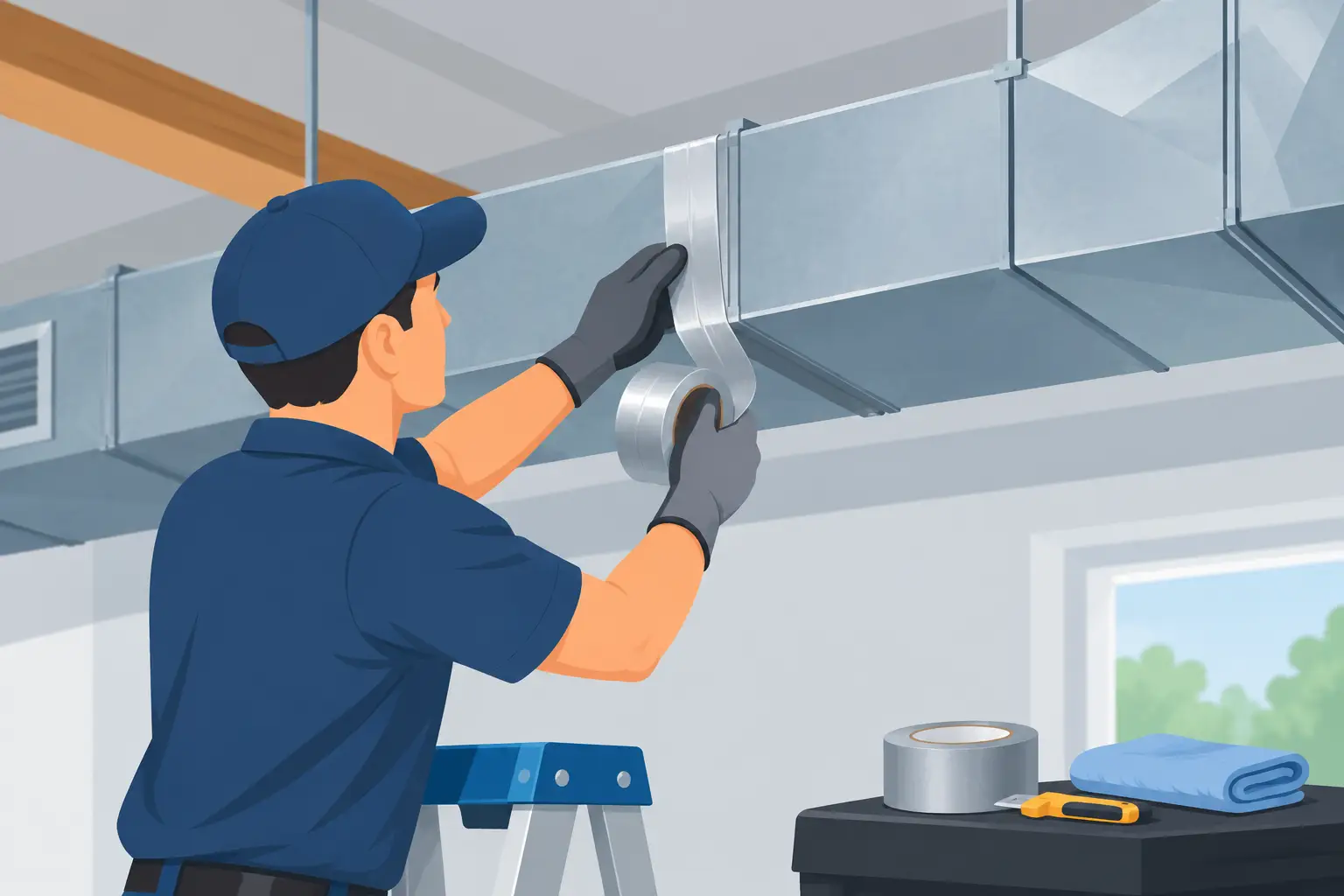
Foil-backed HVAC tape rated for ductwork can also be useful on clean, dry surfaces and smaller seams. Look for tape that is specifically intended for HVAC use rather than general-purpose tape. Surface preparation matters. Dust, oil, loose insulation, or moisture can prevent tape and mastic from adhering properly.
Do not cover access panels, service doors, drain connections, or components that require future maintenance. A repair should make the system tighter without making it difficult or unsafe to service. Any work near gas appliances, electrical connections, refrigerant lines, or the air handler itself is better left to a qualified HVAC professional.
Why Insulation Comes After the Seal
Duct insulation reduces heat gain and heat loss, but insulation alone does not stop air leakage. A common mistake is wrapping an unsealed joint with insulation and assuming the problem is fixed. Air can still escape beneath it.
Seal the duct first, allow the material to cure as directed, then restore or replace insulation. In attics and crawlspaces, damaged insulation should be repaired so the duct is protected from extreme temperatures and condensation risk.
When DIY Duct Sealing Makes Sense
A homeowner with safe attic access may be able to seal a few exposed joints, reconnect a loose register boot, or replace deteriorated approved foil tape. Small, visible repairs can be worthwhile when the ductwork is otherwise in good condition.
The trade-off is that visible ductwork is not necessarily where the biggest losses are occurring. Many systems have leaks at concealed connections, inside wall cavities, or near the air handler where access is limited. A DIY repair can improve one problem while leaving the main source of air loss untouched.
Avoid walking on unsupported attic surfaces, compressing insulation, or working around damaged wiring. If the duct system contains older materials you cannot identify, has signs of moisture or mold, or is extensively deteriorated, stop and arrange an inspection rather than sealing over the symptoms.
When to Call an HVAC Professional
Professional duct testing is especially useful when comfort problems affect several rooms, energy bills have changed unexpectedly, or you are planning a new HVAC installation. A technician can inspect accessible sections, measure airflow and static pressure, identify disconnected or undersized runs, and determine whether the duct design is contributing to the issue.
This matters because not every airflow complaint is caused by leakage. A dirty filter, failing blower motor, blocked return, poorly balanced zoning system, undersized return duct, or incorrectly selected equipment can produce similar symptoms. Accurate diagnosis prevents spending money on a repair that does not solve the real problem.
For larger homes and commercial properties, duct sealing may be part of a broader efficiency upgrade. Repairs can be paired with duct modifications, insulation improvements, zoning adjustments, or equipment maintenance. The right scope depends on the building layout, the age of the system, and how consistently each area is used.
Keep Duct Leaks From Returning
Ductwork should be checked during routine HVAC maintenance, particularly after roof work, remodeling, pest activity, or any work in the attic or crawlspace. Contractors and other trades can accidentally move flexible duct runs or disturb connections while accessing the building.
Change filters on schedule, keep supply and return vents clear, and pay attention when a familiar room starts feeling different. Early action is usually less disruptive than waiting until a loose connection becomes a major comfort problem or puts extra strain on the HVAC equipment.
If your system is running longer than it should or certain rooms never feel right, a careful duct inspection is a practical next step. A properly sealed, well-supported duct system gives your heating and cooling equipment a fair chance to do the job it was installed to do.