
A bedroom that stays warm after the rest of the house cools down, a home office that is uncomfortable by midafternoon, or a retail space with one sunny storefront can all point to the same solution: split systems. These compact heating and cooling systems give you direct temperature control where you need it most, without the cost and disruption of adding ductwork throughout the property.
For many homeowners and small-business owners, the appeal is straightforward. A properly selected split system can cool a room quickly, provide efficient heat in cooler weather, run quietly, and avoid conditioning areas nobody is using. The right result, however, depends on more than choosing the largest unit or the lowest advertised price. Room size, insulation, sun exposure, layout, electrical capacity, and installation quality all affect comfort and operating costs.
What Are Split Systems?
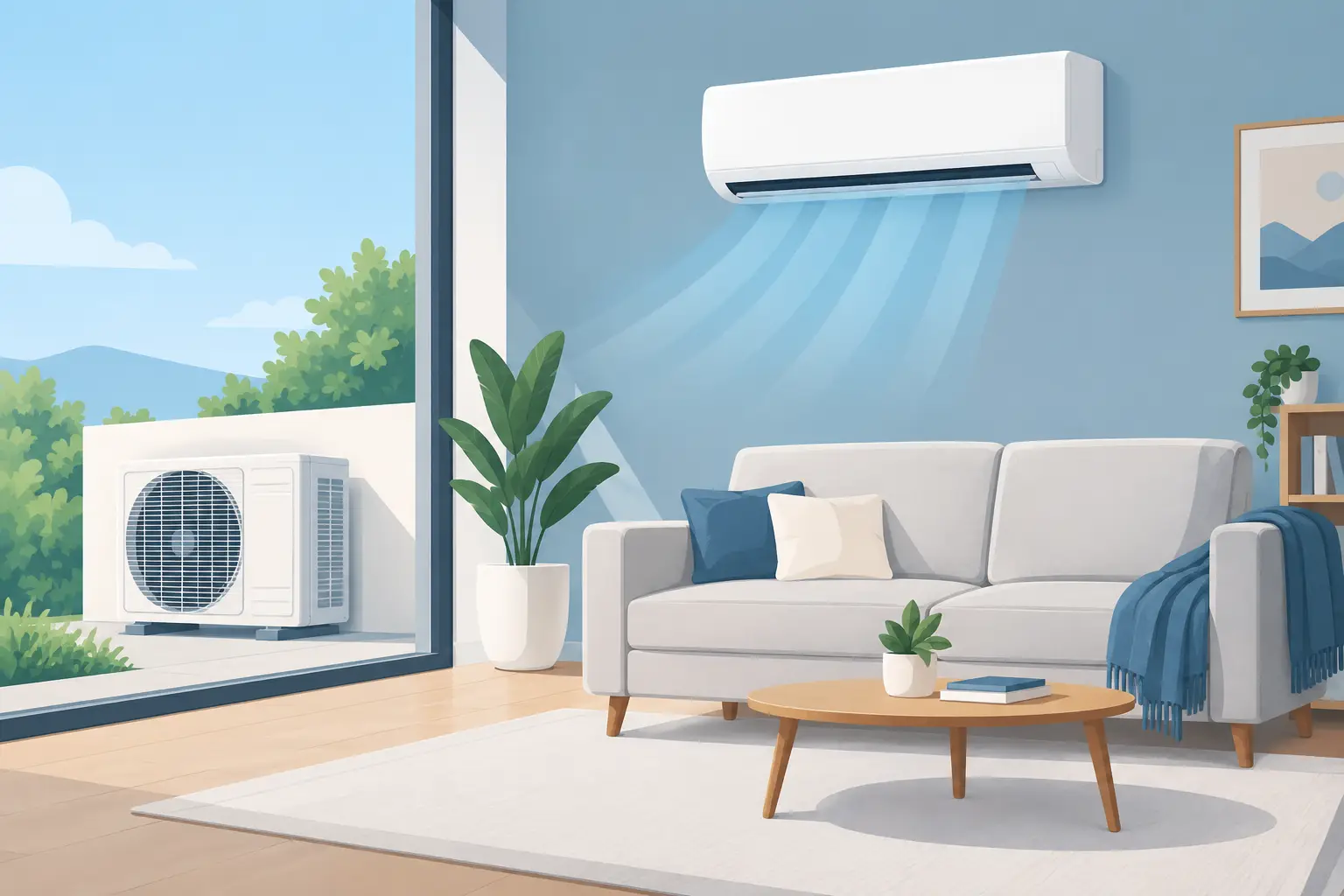
A split system has two main components: an indoor air handler and an outdoor condenser. Refrigerant lines and electrical wiring connect the two. The indoor unit draws room air across a coil, then delivers cooled or heated air back into the space. The outdoor unit releases heat during cooling mode and gathers heat from outside air when the system is operating in heating mode.
Most modern residential split systems are reverse-cycle heat pumps. That means one system can provide both air conditioning and heating. Instead of creating heat through electric resistance alone, a heat pump transfers heat, which is why it can be an efficient option for year-round comfort.
Unlike a ducted system, a standard split system serves one defined area from one indoor unit. It is often a practical fit for bedrooms, living rooms, apartments, additions, converted garages, small offices, and retail spaces. A multi-split system uses one outdoor unit to serve multiple indoor units, while ducted and VRF systems are generally better suited to broader whole-building or multi-zone requirements.
Where Split Systems Work Best
Split systems are particularly useful when a property has one or two rooms with different comfort needs from the rest of the building. A west-facing living room, for example, may need more afternoon cooling than nearby bedrooms. An upstairs office may heat up because warm air rises. A small shop may need dependable cooling during trading hours without paying to condition storage areas that are rarely occupied.
They can also be a sensible choice when extending existing ductwork would be expensive or impractical. Older homes, apartments, and buildings with limited ceiling cavities may not have an easy path for ducts. A wall-mounted indoor unit and carefully routed line set can offer a less invasive alternative.
That said, a split system is not automatically the right answer for every property. If you want consistent conditioning throughout a large home, have many frequently used rooms, or prefer concealed supply grilles, a ducted system may be the better long-term solution. For several separately used rooms, a multi-split setup may reduce the number of outdoor units, although it can cost more to install and may be more complex to service.
Sizing Matters More Than Bigger
One of the most common mistakes in air conditioning is assuming a larger capacity always delivers better comfort. An oversized system may cool a room too quickly, switch on and off more often, and remove less humidity during cooling. The room can feel cold but clammy, while unnecessary cycling may increase wear and energy use.
An undersized system has the opposite problem. It may run continuously during hot or cold weather, struggle to reach the selected temperature, and place added stress on components. The result is often higher utility bills with less comfort.
A professional assessment should consider more than floor area. Ceiling height, window size, glass orientation, insulation, room use, occupancy, appliance heat, and local climate all influence the required capacity. Kitchens, server rooms, sunrooms, and open-plan living areas need special attention because their heat loads can vary significantly.
The location of the indoor unit matters too. It should distribute air across the occupied part of the room rather than blow directly onto a bed, desk, or dining table. The outdoor unit needs adequate clearance for airflow and service access. Putting it in a cramped, poorly ventilated corner can reduce efficiency and make future repairs more difficult.
Efficiency Is About System Design and Daily Use
Modern inverter split systems adjust compressor output to match the room’s demand. Rather than running at full capacity every time they start, they can reduce output once the room approaches the set temperature. This generally improves comfort, lowers noise, and reduces wasted energy compared with older fixed-speed equipment.
Efficiency still depends on how the system is used. Setting cooling extremely low does not make a room cool faster. It simply asks the unit to run longer. A reasonable setpoint, closed windows and doors, drawn blinds on sunny glass, and clean filters can make a noticeable difference.
For heating, avoid placing furniture directly in front of the indoor unit and allow warm air to circulate. If a room is rarely used, there is little reason to run the system there all day. This room-by-room control is one of the main advantages of split systems over central systems that condition large areas at once.
Look beyond the purchase price when comparing models. A lower-cost unit may be appropriate for a lightly used spare room, while a frequently used living area or business premises may justify a quieter, higher-efficiency model with better filtration, stronger low-temperature heating performance, and more advanced controls. The best value is the system that suits the room and how it is actually used.
Installation Quality Protects Performance
A good air conditioner can underperform if installation shortcuts are taken. Refrigerant piping must be correctly sized, sealed, pressure-tested, and evacuated before the system is commissioned. The condensate drain needs the correct fall so water leaves the indoor unit reliably. Electrical work must be properly protected and comply with applicable local requirements.
Poor drainage can lead to dripping water, stains, odors, and damage to walls or ceilings. Poor refrigerant work may cause weak cooling, ice buildup, compressor strain, or premature failure. An indoor unit mounted out of level may also create drainage issues that do not appear until months after installation.
For commercial spaces, installation planning should also account for access, operating hours, equipment noise, customer areas, and the location of outdoor units. A system that is technically functional but disrupts staff, customers, or neighboring tenants is not a well-planned solution.
At Cool Air Tech, the focus is on matching the equipment and installation approach to the property, rather than treating every room as the same. Clear recommendations and transparent scope help property owners understand what is being installed and why.
Maintenance Keeps Small Problems Small
Split systems need regular care, even when they appear to be working normally. The simplest task is cleaning or washing the return-air filters as directed by the manufacturer. Dirty filters restrict airflow, reduce efficiency, and can contribute to musty odors.
Professional maintenance goes further. A technician can inspect coils, drains, electrical connections, fan operation, refrigerant performance, mounting hardware, and outdoor-unit condition. This is especially valuable before peak cooling or heating seasons, and for commercial systems that operate for long hours.
Arrange a service visit if you notice reduced airflow, unusual noise, water leaks, ice on the unit, persistent odors, rising energy bills, or a system that repeatedly trips a breaker. Waiting until complete failure can turn a manageable repair into an urgent replacement decision.
Choosing the Right Path for Your Property
Start by identifying the rooms that cause the most discomfort and when the problem occurs. Is it only during the late afternoon? Does the room need heating as well as cooling? Is the area open to a hallway, kitchen, or second story? These details help determine whether one split system, multiple units, a multi-split configuration, or a ducted approach makes the most sense.
Ask for recommendations based on capacity, installation location, noise level, controls, energy performance, and maintenance access. A clear quote should explain the equipment, included installation work, electrical requirements, drainage approach, and any property-specific considerations. Comfort is easier to achieve when there are no surprises after work begins.
The best split system is not necessarily the most expensive model or the highest-capacity unit. It is the one that is properly sized, carefully installed, and suited to the way your home or business operates. Addressing the uncomfortable room before another summer or winter season arrives gives you more time to choose a solution based on performance, not urgency.