
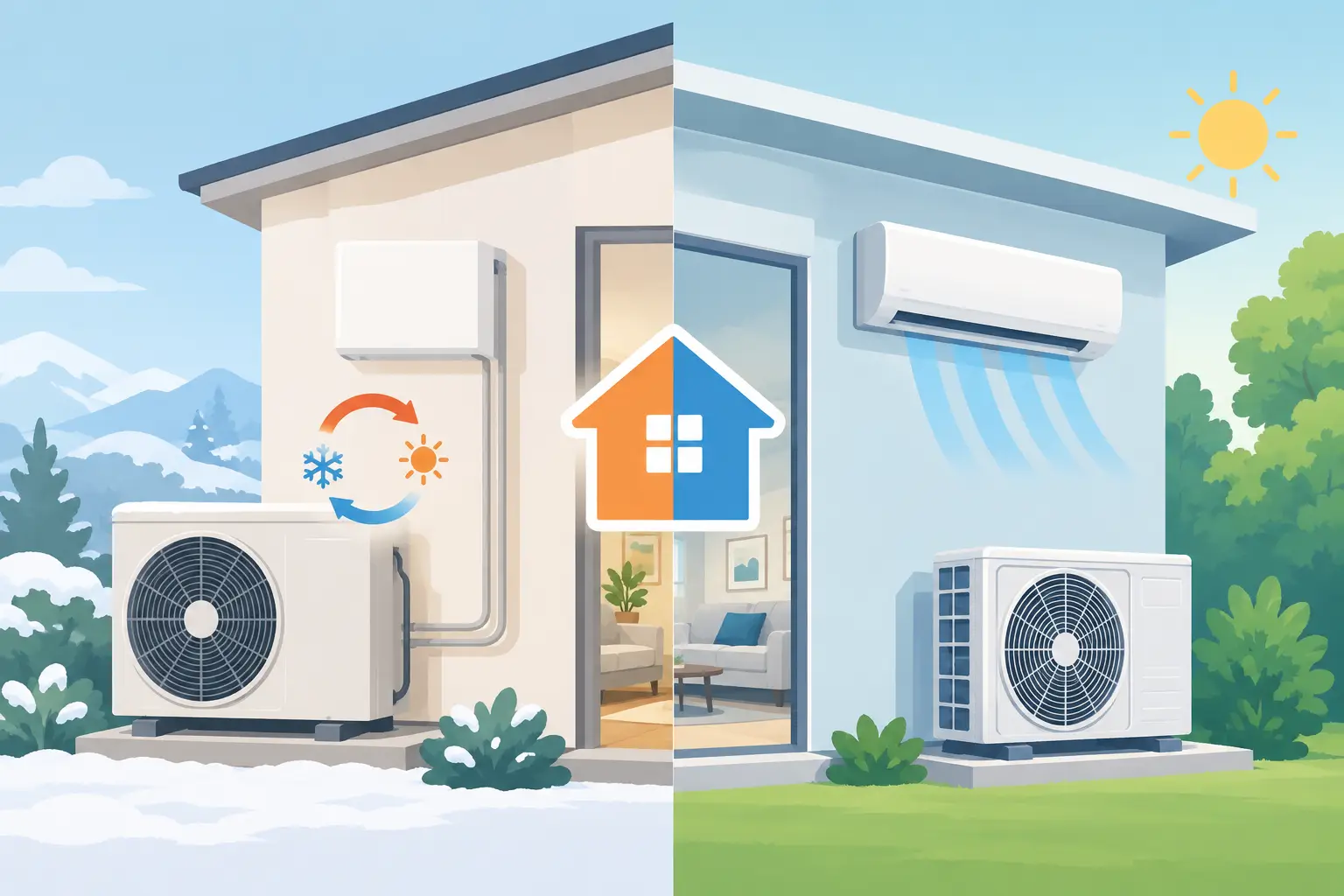
A summer cooling system can feel like a simple purchase until you also need reliable heat in January. That is where the heat pump versus aircon decision matters. Both systems cool your space, but only one may be designed to heat it efficiently as well. The right choice depends on your climate, existing equipment, building layout, utility costs, and how you use the property.
For homeowners, the decision often comes down to year-round comfort and long-term operating costs. For a small business, it can also affect staff comfort, customer experience, maintenance requirements, and the ability to control temperatures in different rooms or zones.
Heat Pump Versus Aircon: The Core Difference
An air conditioner moves heat out of a building to make the indoor space cooler. A conventional central air conditioning system or cooling-only ductless mini-split does this job very well, but it cannot provide heat on its own. It is normally paired with a gas furnace, electric resistance heater, boiler, or another heating source.
A heat pump uses similar refrigeration technology, but it can reverse its operation. In cooling mode, it removes heat from indoors just like an air conditioner. In heating mode, it pulls available heat from outdoor air and brings it inside.
That distinction can be confusing because many modern systems are marketed as air conditioners even when they are heat pumps. A ductless wall-mounted unit, ducted split system, multi-zone system, or VRF system may provide both heating and cooling. The equipment specification, rather than the indoor unit’s appearance, tells you whether it is cooling-only or reversible.
How a Heat Pump Heats When It Is Cold Outside
A heat pump does not create heat in the same way a furnace burns fuel. It transfers heat. Even cold outdoor air contains usable thermal energy, and the system captures that energy through its outdoor unit and moves it indoors.
This approach is why heat pumps can be highly efficient in mild and moderate climates. For every unit of electricity used, a properly selected heat pump can deliver multiple units of heat into the building. Electric resistance heating, by comparison, converts electricity directly into heat and generally costs more to operate.
Performance changes as temperatures fall. Older heat pumps could struggle in sustained freezing weather, but modern cold-climate models are far more capable. Still, a property in an area with long, severe winters may need a backup heat source or a dual-fuel design that combines a heat pump with a gas furnace. Proper load calculations are essential here. Installing a system based only on square footage can lead to weak heating, short cycling, excess noise, and higher bills.
When a Conventional Air Conditioner Makes More Sense
A cooling-only air conditioner can be the sensible choice when you already have dependable, cost-effective heating. For example, a home with a newer gas furnace may only need to replace its aging central AC unit. In that situation, a cooling-only replacement can have a lower upfront equipment cost while allowing the existing furnace to continue handling winter heating.
Air conditioning can also be a straightforward fit for commercial spaces with separate heating equipment, particularly where the cooling demand is the immediate problem. A retail shop with a functional heating system but unreliable summer cooling may be best served by an appropriately sized air conditioning upgrade rather than a complete system change.
The trade-off is flexibility. A cooling-only system solves one comfort need. A heat pump can consolidate heating and cooling into one primary system, reducing reliance on fossil fuels where electric rates and climate conditions make that practical.
Efficiency and Operating Cost: Look Beyond the Purchase Price
It is tempting to compare systems only by the installed price, but the more useful comparison includes seasonal energy use, expected maintenance, equipment life, and the condition of your current heating system.
For cooling, both high-efficiency air conditioners and heat pumps can perform very well. Their efficiency is commonly measured by SEER2, with higher numbers generally indicating lower electricity use under standardized seasonal conditions. For heating performance, heat pumps use HSPF2 ratings. These ratings help compare equipment, but they do not replace good system design.
A highly rated unit can still waste energy if ducts leak, airflow is restricted, refrigerant levels are incorrect, or the system is oversized. In homes with older ductwork, addressing duct leakage and insulation may deliver meaningful comfort improvements regardless of whether you choose a heat pump or air conditioner.
Operating cost also depends on local electricity and gas prices. In some areas, a heat pump provides lower heating costs than gas or electric resistance heat. In others, especially during very cold weather or where electricity is expensive, a dual-fuel setup may be the better balance. An experienced HVAC contractor should assess those conditions rather than promise that one technology will always cost less.
System Types for Homes and Businesses
The heat pump versus aircon choice is also a system-design choice. The best equipment format depends on the building, not just the brand or unit capacity.
A ducted central system distributes conditioned air through concealed ducts and works well for whole-home comfort, larger offices, and properties where a clean, low-visibility finish is important. Zoning can improve control by allowing different sections of the property to operate independently.
Ductless mini-splits are effective for apartments, additions, converted garages, individual offices, and rooms that never seem to reach the right temperature. They avoid major ductwork changes and give room-by-room control, although indoor units need to be placed carefully for appearance, airflow, and service access.
Multi-split systems connect several indoor units to one outdoor unit, making them useful where multiple rooms need separate temperature control but outdoor space is limited. For larger commercial applications, VRF systems can provide sophisticated zoning and efficient part-load operation. They require careful design and qualified installation, particularly when refrigerant piping runs are long or the building has many independently controlled areas.
Installation Quality Has a Direct Effect on Comfort
The system itself is only part of the investment. Incorrect installation can undermine even premium equipment. Refrigerant piping must be properly sized and pressure-tested, electrical supply must be adequate, condensate drainage needs to be reliable, and airflow must be balanced across the system.
For ducted equipment, the contractor should consider static pressure, return-air sizing, supply register locations, and the condition of existing ducts. A system that is too large may cool quickly but fail to remove enough humidity, leaving rooms cold and clammy. One that is too small may run continuously during peak conditions and still fall behind.
For heat pumps, outdoor-unit location deserves special attention. The unit needs clear airflow, stable mounting, and adequate drainage. In snowy climates, it may need elevation above expected snow levels. In dense residential areas, sound levels and placement relative to bedrooms or neighboring properties should also be considered.
Maintenance Is Similar, but Heating Adds More Reasons to Stay Proactive
Both air conditioners and heat pumps benefit from regular service. Filters should be checked regularly, outdoor coils kept clear of leaves and debris, drains inspected, and airflow verified. A professional maintenance visit can identify refrigerant leaks, worn electrical components, dirty coils, and drainage issues before they become a mid-season breakdown.
Because a heat pump operates in both summer and winter, it often has more annual run time than a cooling-only air conditioner. That makes routine maintenance especially worthwhile. In heating mode, the outdoor coil may periodically enter a defrost cycle in cold, damp conditions. This is normal, but frequent or prolonged defrosting can signal an issue that should be checked.
Businesses should also consider service access and downtime. A climate-control failure during trading hours can affect customers, inventory, and staff productivity. Preventive maintenance is usually easier to schedule than an emergency repair.
Choosing the Right Option for Your Property
Choose a heat pump when you want one primary system for heating and cooling, have suitable electrical capacity, and live in a climate where its heating performance matches your needs. It is particularly compelling when replacing electric resistance heat, upgrading an older system, adding comfort to a new addition, or moving toward a lower-emission heating approach.
Choose a conventional air conditioner when your existing heating system is in good condition, your main need is cooling, or a separate furnace remains the most practical heating source for your climate and utility rates. A dual-fuel system can offer a middle ground, using the heat pump through milder weather and the furnace when temperatures drop far enough to make fuel-based heat more economical.
The best next step is not selecting equipment from a brochure. Have the property assessed for heating and cooling load, duct condition, room usage, electrical requirements, and the comfort problems you actually want solved. A properly designed system should make the hottest and coldest days feel less like a compromise.