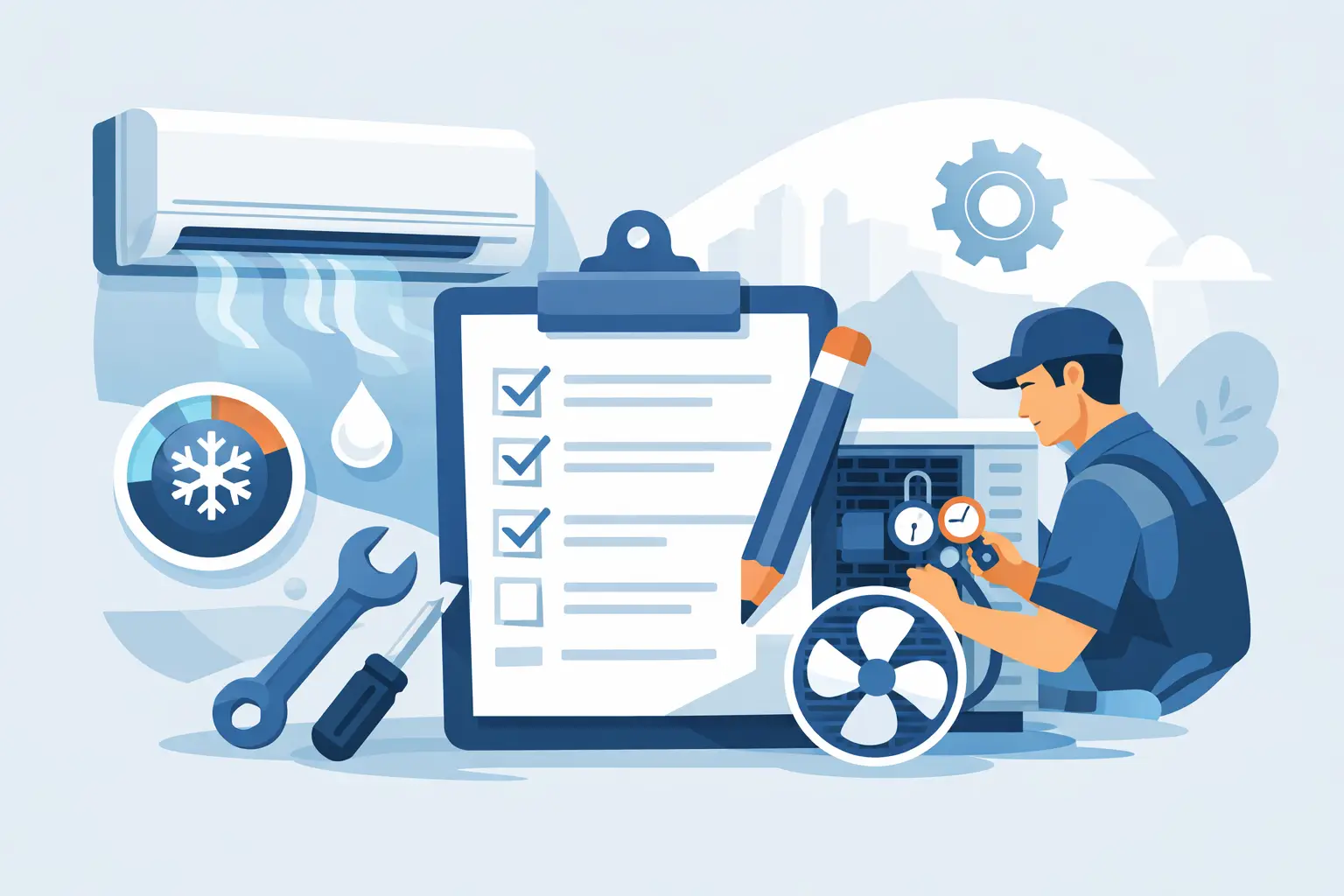
That first blast of warm air from a system that should be cooling is usually when maintenance starts to matter. By then, airflow is already weak, energy use is climbing, and a small issue may have turned into a repair. A solid air conditioning maintenance checklist helps you catch problems earlier, protect system performance, and keep your home or business consistently comfortable.
Maintenance is not just about making an air conditioner last longer, although that matters. It also affects day-to-day comfort, indoor air quality, noise levels, and operating cost. For homeowners, that can mean fewer hot rooms and lower summer bills. For commercial spaces, it often means fewer disruptions for staff, customers, or tenants.
Why an air conditioning maintenance checklist matters
Air conditioning systems rarely fail without warning. More often, performance slips gradually. A filter gets clogged, coils collect dirt, drainage slows, or refrigerant problems start affecting cooling capacity. Because the change can be slow, many people do not notice it until the unit struggles during peak heat.
Regular maintenance gives you a better chance of spotting those issues before they become expensive. It also helps your system run closer to the way it was designed to run. That is especially important for ducted systems, split systems, multi-zone setups, and commercial equipment that operate for long hours.
There is also a practical trade-off to keep in mind. Some maintenance tasks are safe and reasonable for an owner or facility manager to handle. Others should be left to a licensed HVAC technician. Knowing the difference is part of maintaining the system properly.
Air conditioning maintenance checklist for owners
A useful air conditioning maintenance checklist starts with the basics you can observe without opening sealed components or interfering with electrical parts.
Check and replace the air filter
This is the simplest task and one of the most important. A dirty filter restricts airflow, forces the system to work harder, and can lead to uneven cooling. In some cases, it can even contribute to coil freezing.
For many homes, checking the filter every one to three months makes sense, especially during heavy summer use. If you have pets, ongoing renovation dust, or high occupancy, you may need to replace it more often. In a commercial setting, usage patterns and indoor air conditions usually determine the schedule.
If the filter looks gray, clogged, or dusty across most of the surface, do not wait. Replace it with the correct size and type recommended for the system. A filter that is too restrictive can create its own airflow problems, so higher filtration is not always better.
Inspect supply and return vents
Walk through the property and make sure vents are open, unobstructed, and reasonably clean. Furniture, rugs, storage boxes, and curtains often block airflow more than people realize.
If one room feels much warmer than the rest, that does not automatically mean the system is failing. It could be a balancing issue, duct leakage, solar heat gain, or a blocked return path. Maintenance includes noticing those patterns early rather than assuming the thermostat is the only problem.
Clean around the outdoor unit
Outdoor condensers need space to reject heat effectively. Leaves, grass, dirt, and overgrown plants can reduce airflow around the unit and hurt efficiency.
Keep the area around the condenser clear and gently remove visible debris from the exterior. If the coil fins are packed with dirt, bent, or damaged, that is usually a job for a technician. A light rinse may help in some cases, but high-pressure cleaning can do more harm than good.
Look for signs of drainage issues
Air conditioners remove moisture as they cool. That moisture has to drain properly. If it does not, you may notice water stains, musty smells, dampness near the indoor unit, or visible overflow from the drain pan.
A blocked condensate drain can shut some systems down or lead to water damage. If you notice recurring drainage problems, do not ignore them. The cause may be as simple as a clog, or it may point to a larger issue such as poor installation, heavy dirt buildup, or an iced coil.
Listen for changes in sound
Most owners notice a major breakdown. Smaller sound changes are easier to overlook. Buzzing, rattling, grinding, hissing, or repeated clicking can all indicate developing problems.
Not every noise means immediate failure, but unusual sounds should not be dismissed. A loose panel is very different from a failing motor or refrigerant leak, and it takes proper inspection to tell the difference.
What a professional AC maintenance visit should include
A homeowner checklist is valuable, but it does not replace scheduled service. A trained technician can test, clean, and inspect components that are not practical or safe for most property owners to handle.
Electrical and control checks
Air conditioning systems rely on capacitors, contactors, relays, wiring connections, and control boards to operate correctly. Loose or deteriorating electrical components can reduce reliability and create safety issues.
During maintenance, a technician should inspect electrical connections, test operating components, and check whether the system starts and cycles correctly. Catching a weak capacitor before peak season can prevent a no-cooling call on a hot day.
Coil cleaning and airflow assessment
Evaporator and condenser coils need to stay clean to transfer heat efficiently. Dirty coils reduce cooling performance and increase energy use. In some systems, even moderate buildup can make a noticeable difference.
A proper service visit should include inspection of both indoor and outdoor coil condition, along with blower performance and overall airflow. If airflow is too low, the cause may be a dirty filter, a failing motor, duct restrictions, or incorrect fan settings. This is where experience matters, because similar symptoms can come from very different faults.
Refrigerant and temperature checks
Low refrigerant does not happen from normal use alone. If refrigerant is low, there is usually a leak or another system fault. Topping it up without identifying the cause is rarely the right long-term fix.
Professional maintenance should include checking operating pressures or system temperatures where appropriate, verifying cooling performance, and looking for signs of refrigerant-related issues. Weak cooling, ice buildup, and longer run times can all point in this direction, but proper diagnosis is essential.
Drain and condensate inspection
Technicians should inspect the condensate drain, clear blockages where needed, and check that moisture is draining away as intended. This step is often underestimated until a leak damages ceilings, walls, or flooring.
For commercial properties, drain issues can be especially disruptive because they may affect occupied spaces, finishes, and business operations.
Seasonal timing makes a difference
The best time to service an air conditioner is usually before heavy cooling season starts. Spring is ideal for most properties because it gives you time to correct issues before the first heat wave. If that window has passed, servicing the unit during the season is still worthwhile.
For systems that run year-round, including many commercial setups and homes with heat pump functions, maintenance should be scheduled based on hours of use rather than season alone. Heavily used equipment may need more than one service visit per year.
Maintenance tips for homes vs. commercial spaces
Residential and commercial clients often have different priorities, even when the checklist overlaps.
In a home, comfort complaints usually show up as hot bedrooms, noisy operation, or rising power bills. Appearance and quiet performance also matter, particularly with wall-mounted split systems or visible indoor units.
In a commercial setting, the focus is often reliability, occupancy comfort, and minimizing downtime. A retail shop cannot afford a failed unit on a busy weekend. An office dealing with poor airflow may see productivity and customer experience suffer before anyone calls it an HVAC problem.
That is why maintenance plans should fit the actual site. A small apartment split system does not need the same schedule or service scope as a ducted office system serving multiple rooms all day.
When to call for service sooner
Even if you follow a strong air conditioning maintenance checklist, some signs mean the system should be inspected promptly. These include noticeably weaker airflow, inconsistent temperatures, bad odors, higher-than-usual energy use, water leaks, short cycling, or a unit that runs constantly without reaching set temperature.
Age matters too. Older systems can still perform well with proper care, but they often need closer attention as components wear. If repairs are becoming frequent, maintenance may also help clarify whether continued service makes sense or whether replacement is the more cost-effective path.
For property owners who want dependable year-round performance, professional maintenance is less about ticking a box and more about protecting comfort, efficiency, and peace of mind. If your system has not been checked in a while, getting ahead of the next hot spell is usually the smarter move.