
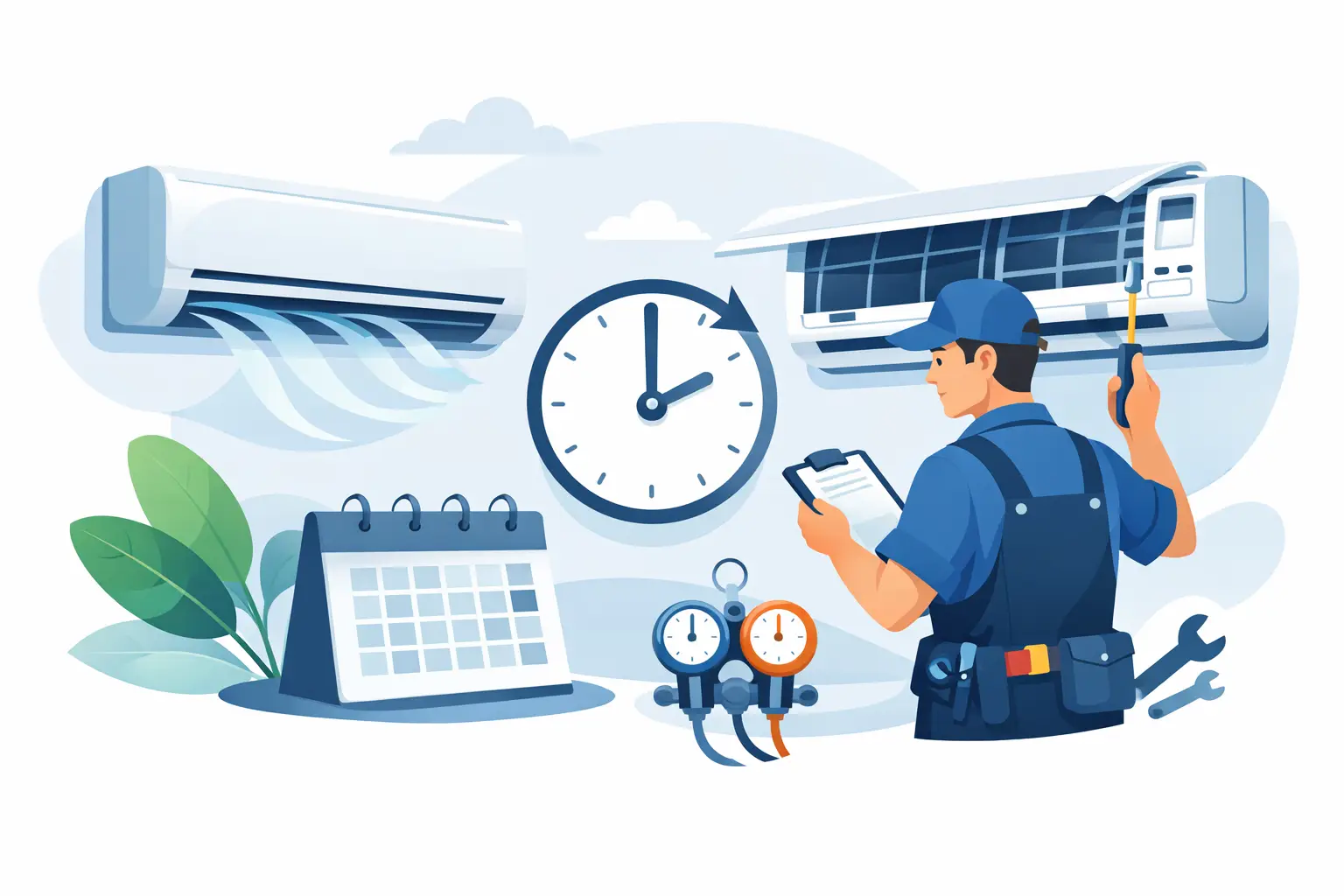
A lot of air conditioning problems do not start with a sudden breakdown. They start with slower cooling, higher electric bills, a bit more noise, or rooms that never quite reach the set temperature. That is usually when people ask, how often should air conditioner be serviced? The short answer is at least once a year for most systems, but the right schedule depends on how the system is used, the type of equipment, and how much strain it handles through the year.
How often should air conditioner be serviced for most properties?
For the average home, annual servicing is the standard. A professional check once every 12 months gives the system a chance to be cleaned, tested, and adjusted before small issues turn into expensive repairs. If you rely heavily on cooling through long summers, or if the same system also supports heating, servicing every 6 months is often the better choice.
For commercial spaces, the answer is usually more frequent. Offices, retail stores, and light commercial properties often run their systems for longer hours than a home does. That extra run time means more wear on filters, electrical parts, coils, and fans. In many cases, a 6-month service interval is the practical minimum, and some high-use environments benefit from quarterly inspections.
The goal is not just to avoid breakdowns. Regular maintenance helps protect efficiency, airflow, indoor comfort, and system life. A unit that is technically still running can still be costing more than it should.
Why service frequency is not the same for every system
Two air conditioners of the same brand and age can need very different maintenance schedules. Usage is the biggest reason. A split system in a guest room that runs only on the hottest days will not need the same attention as a ducted system cooling a busy family home every afternoon and night.
System type also matters. Ducted air conditioning has more components to inspect, including zoning controls, return air paths, and duct condition. Multi-split and VRV or VRF systems can be highly efficient, but they also depend on proper balancing, clean coils, and accurate refrigerant performance across multiple indoor units. The more complex the setup, the more important regular servicing becomes.
Your environment plays a role as well. Homes with pets, renovation dust, nearby traffic, or occupants with allergies tend to put more strain on filters and indoor air quality. Coastal conditions can also accelerate wear on outdoor units. In these situations, waiting a full year may be too long.
A simple rule of thumb
If your system runs occasionally, once a year is usually enough. If it runs hard for long periods, twice a year is safer. If it serves a business, a larger property, or a multi-zone setup, ask your HVAC provider to recommend a schedule based on actual use rather than a generic calendar reminder.
The best time of year to schedule service
Many people wait until the first heat wave to book maintenance. That is understandable, but it is also when HVAC companies are busiest and when problems become most disruptive. The better approach is to service your air conditioner before peak cooling season starts.
Spring is often the ideal time for a cooling-focused service. It allows the technician to clean the system, check refrigerant levels, test electrical components, and confirm the unit is ready for summer demand. If your system also handles heating, a second visit in the fall can make sense.
Commercial clients may prefer fixed scheduled maintenance throughout the year. That approach works well because it reduces surprises and makes it easier to plan around operating hours.
What happens during an air conditioner service?
A proper service is more than a quick filter rinse. The technician should inspect the indoor and outdoor units, check airflow, clean critical components, test operating pressures and temperatures, inspect electrical connections, and look for early signs of wear.
In a residential split system, this often includes cleaning filters, checking the evaporator and condenser coils, clearing the condensate drain, inspecting the fan motor, and confirming the thermostat and remote settings are working correctly. For ducted systems, service may also include checking zoning, return air performance, and visible duct issues.
On commercial systems, the checklist can go further depending on the equipment type and usage profile. That may include controls testing, drain inspections, more detailed coil cleaning, and review of multiple indoor units or branches.
Good maintenance is not just about cleaning. It is also about diagnosis. A trained technician can spot a contactor beginning to fail, a capacitor weakening, or a drain issue that could lead to water damage before the customer notices anything unusual.
Signs your system needs service sooner
Even if you had a recent maintenance visit, some symptoms mean the system should be checked again rather than waiting for the next routine appointment.
If your air conditioner is taking longer to cool the space, producing weak airflow, cycling on and off too often, leaking water, making new noises, or causing an unexplained jump in utility costs, it is worth booking service. Strange smells, uneven room temperatures, and ice on the indoor coil are also warning signs.
A common mistake is assuming the unit is fine because it still turns on. Air conditioning systems can keep operating while efficiency drops and internal stress rises. That is often when repair costs begin to build quietly in the background.
How often should air conditioner be serviced in homes with pets, kids, or allergies?
In family homes, air conditioning often does more than cool the space. It also affects air circulation, dust movement, and general indoor comfort. If you have pets, young children, allergy concerns, or a household that keeps windows open often, filters and coils can get dirty faster than expected.
In that case, an annual service is still the minimum, but it is wise to check filters more often and consider a 6-month maintenance schedule if the system runs heavily. This is especially true for ducted systems serving the whole home, where any reduction in airflow can affect multiple rooms at once.
Cleaner components usually mean steadier performance and better air quality. That matters just as much as temperature control for many households.
How servicing affects energy bills and system lifespan
One of the clearest benefits of regular maintenance is efficiency. A clean, properly adjusted system does not have to work as hard to reach the set temperature. Dirty coils, blocked filters, low airflow, and neglected parts force the unit to run longer and consume more power.
That does not mean every service will create dramatic savings overnight. The bigger value is consistency. Over time, routine maintenance helps the system hold its design performance more closely instead of gradually slipping into wasteful operation.
There is also the lifespan factor. Air conditioners are expensive assets, whether you own a single wall-mounted split system or a full commercial VRF setup. Skipping service may save money in the short term, but it can shorten the life of compressors, fan motors, and electrical components. Replacing a failed major part is rarely cheap, and in older systems it may push you toward full replacement sooner than expected.
Service schedules by property type
For most single-family homes and apartments, once a year is the baseline. If the system is used for both heating and cooling or runs daily for extended hours, every 6 months is more appropriate.
For larger homes with ducted systems, zoning, or multiple indoor units, twice-yearly servicing is often worthwhile because there are more components that affect comfort and efficiency across the property.
For small offices, shops, clinics, and similar business spaces, every 6 months is a sensible standard. For higher-use commercial environments, quarterly checks may be the better fit. The right answer depends on operating hours, system type, occupancy, and how costly downtime would be.
If you are unsure, a contractor that handles both residential and commercial maintenance can recommend a schedule based on the actual load on the system rather than a one-size-fits-all answer.
Is annual service enough if the system seems fine?
Sometimes yes, sometimes no. If the unit is lightly used, cooling effectively, and showing no signs of airflow or drainage problems, annual service may be perfectly adequate. But appearance can be misleading. Many performance issues build gradually and are hard to spot until comfort drops or a part fails.
That is why routine maintenance works best as prevention, not reaction. You are not only servicing the parts you can see. You are also checking the parts that fail quietly.
For property owners who want a practical standard, this is the most reliable answer: service your air conditioner at least once a year, increase that to every 6 months for heavy use or shared heating and cooling, and shorten the interval further for commercial or high-demand systems.
If your system has been running harder than usual, your bills are climbing, or your cooling just does not feel as consistent as it used to, that is usually the right time to stop guessing and have it checked properly. For many homes and businesses, regular maintenance is less about fixing problems and more about keeping comfort predictable when you need it most.