
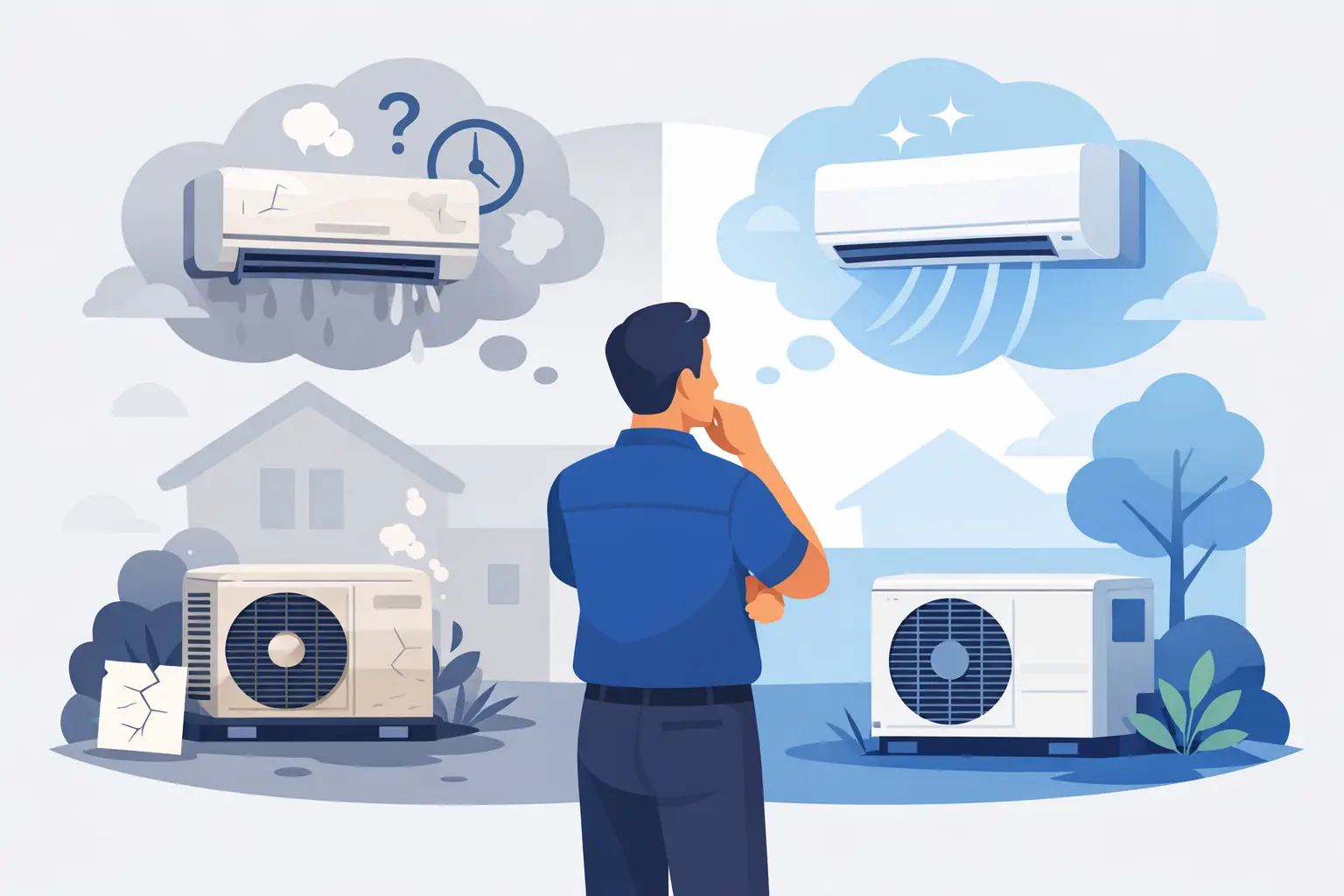
That moment usually starts with a repair quote. Your air conditioner is still running, but not well, and the question changes from “Can this be fixed?” to whether it makes sense to replace old air conditioning system equipment before it fails at the worst possible time. For homeowners and business operators, that decision is rarely about age alone. It comes down to reliability, energy use, comfort, and whether the current system still suits the space.
A replacement is a bigger upfront investment than a repair, so the right answer depends on what the existing unit is costing you now and what it is likely to cost you next. In many cases, an older system can keep limping along for another season. In others, keeping it means paying more for weaker performance.
When it makes sense to replace old air conditioning system equipment
Age matters, but it is only one part of the picture. Many systems start showing their limits after 10 to 15 years, especially if maintenance has been inconsistent or the original installation was not well matched to the property. Older units often lose efficiency gradually, so owners get used to longer run times, uneven cooling, and rising power bills without realizing how much performance has slipped.
Frequent repairs are one of the clearest signs. A single failed capacitor or blocked drain line does not mean the whole system should go. But if you are dealing with recurring refrigerant issues, compressor problems, failing motors, or repeated electrical faults, the repair pattern matters. Once repair costs begin stacking up across multiple visits, replacement often becomes the more practical long-term move.
Comfort problems also deserve attention. If some rooms are too warm, airflow is weak, noise levels have increased, or the system struggles on very hot days, the issue may not be a simple parts repair. Sometimes the system is undersized, sometimes ductwork is leaking, and sometimes the equipment is simply outdated compared with modern efficiency and zoning options.
Repair or replacement is not always a simple call
There are situations where repair is still the smart choice. If the unit is relatively new, the fault is isolated, and the system has otherwise performed well, repairing it is usually reasonable. The same applies when the equipment was properly sized and installed, and the issue is clearly minor.
Replacement becomes more compelling when the system has reached the point where every repair only buys limited time. This is especially true for businesses that cannot afford downtime or for households with children, older adults, or anyone sensitive to heat. In those cases, reliability has real value beyond the price of the equipment.
There is also the refrigerant question. Some older air conditioners use refrigerants that are being phased out or are more expensive and difficult to source. If a leaking older system needs major refrigerant work, replacing it may be more sensible than investing in outdated technology.
The real cost of keeping an old unit
Many people compare a repair bill with a replacement quote and stop there. That is understandable, but it misses the operating cost side of the decision. Older systems generally draw more power to deliver less cooling, and that gap becomes more noticeable during long summer periods when the unit runs daily.
Even a system that still turns on can be expensive to own if it cycles poorly, runs constantly, or fails to control temperature properly. Commercial properties feel this quickly because staff comfort, customer experience, and equipment heat loads can all be affected. At home, the signs often show up as hot spots, muggy rooms, and utility bills that keep drifting upward.
A well-chosen replacement can reduce energy use, improve airflow, and maintain temperature more consistently. That does not mean every new unit delivers dramatic savings in every building. Results depend on insulation, layout, sun exposure, operating habits, and whether the original issue was with the equipment or the system design as a whole. Honest advice matters here because replacing like for like is not always the best option.
Choosing the right replacement system
The best replacement is not automatically the biggest or most expensive model. It is the one that suits the size of the area, the way the space is used, and the expectations for comfort and control.
For a single room or a smaller area, a split system can be an efficient and cost-effective option. For homes or businesses that need climate control across several rooms, a multi-split setup may provide flexibility without requiring full ductwork. Ducted air conditioning suits whole-home comfort and cleaner aesthetics, especially where zoning is important. In larger homes, offices, or commercial sites with varied usage patterns, VRV or VRF systems can offer more precise control and better efficiency across multiple zones.
This is where proper assessment matters. A replacement should account for room size, ceiling height, window exposure, insulation levels, occupancy, and heat-generating equipment. If those factors are ignored, even a brand-new unit can disappoint.
What to expect during an air conditioning replacement
One reason some owners delay replacement is the fear of disruption. In practice, the process is usually more straightforward when it is planned before a complete breakdown.
The first step is assessing the current system and the space it serves. That includes checking capacity, installation quality, duct condition if relevant, drainage, electrical requirements, and whether the existing setup supports the best replacement option. From there, the scope becomes clearer – direct swap, redesign, duct modification, or a move to a different system type.
Installation timelines vary. A simple split-system replacement may be completed relatively quickly, while ducted or multi-zone upgrades can take longer depending on access, controls, and any building constraints. Commercial work may also require staging to limit disruption to staff or trading hours.
A good installation is not just about fitting new equipment. Commissioning, airflow checks, refrigerant setup, thermostat calibration, condensate management, and system testing all affect how the unit performs over time. That is one reason installation quality matters as much as the brand name on the box.
Signs you should not ignore
If you are unsure whether to act now or wait, a few warning signs usually tell the story. Higher energy bills with no clear explanation, repeated service calls, weak or uneven cooling, strange noises, bad odors, and visible water leaks all suggest the system needs more than routine attention.
Another sign is poor fit for the property. Many older homes and small commercial spaces have air conditioning that was installed in stages over the years. What made sense at one point may no longer suit the current layout, occupancy, or comfort expectations. Renovations, added rooms, open-plan changes, or increased equipment loads can all leave an older setup underperforming.
Why expert advice matters before you replace old air conditioning system units
The quality of the recommendation matters as much as the equipment itself. A trustworthy contractor should explain whether the problem is truly with the air conditioner, or whether airflow restrictions, duct leakage, controls, or installation defects are driving the issue. Not every uncomfortable building needs a full replacement.
At the same time, not every old unit deserves another repair. The right advice is practical, not pushy. It should cover expected lifespan, likely repair risk, operating efficiency, installation requirements, and what level of performance improvement you can realistically expect.
For property owners who want clarity, that means asking direct questions. Is the system correctly sized? Are replacement parts still readily available? Is the ductwork worth keeping? Will a new unit solve the hot and cold spots, or is zoning needed? Clear answers help you make a better decision and avoid spending twice.
If you are weighing your options, a professional assessment from an experienced contractor such as Cool Air Tech can help separate a repairable issue from a system that is simply past its useful life.
A better time to replace is before failure
Emergency replacement is rarely the cheapest or easiest path. When a system fails during peak heat, choices narrow, schedules fill up, and comfort becomes urgent. Planning ahead gives you time to compare system types, consider efficiency, and choose a setup that actually improves the property rather than just restoring basic cooling.
If your current air conditioner is aging, unreliable, or expensive to run, the smartest next step is not guessing. It is having the system evaluated properly so you can decide with real numbers, real conditions, and a clear view of what comes next.