
If you’re trying to compare inverter and non inverter air conditioners, the real question is not which one is “better” in every case. It is which one fits the way you use your space, how long you run the system, and what matters more to you – lower upfront cost or lower long-term operating cost.
That distinction matters because many buyers hear “inverter” and assume it is automatically the right choice. Often it is. But not always. For a bedroom used every night, a busy office, or a family home where the AC runs for long stretches, inverter technology usually makes strong financial and comfort sense. For a rarely used room or a tight replacement budget, a non-inverter unit can still be a practical option.
Compare inverter and non inverter: the basic difference
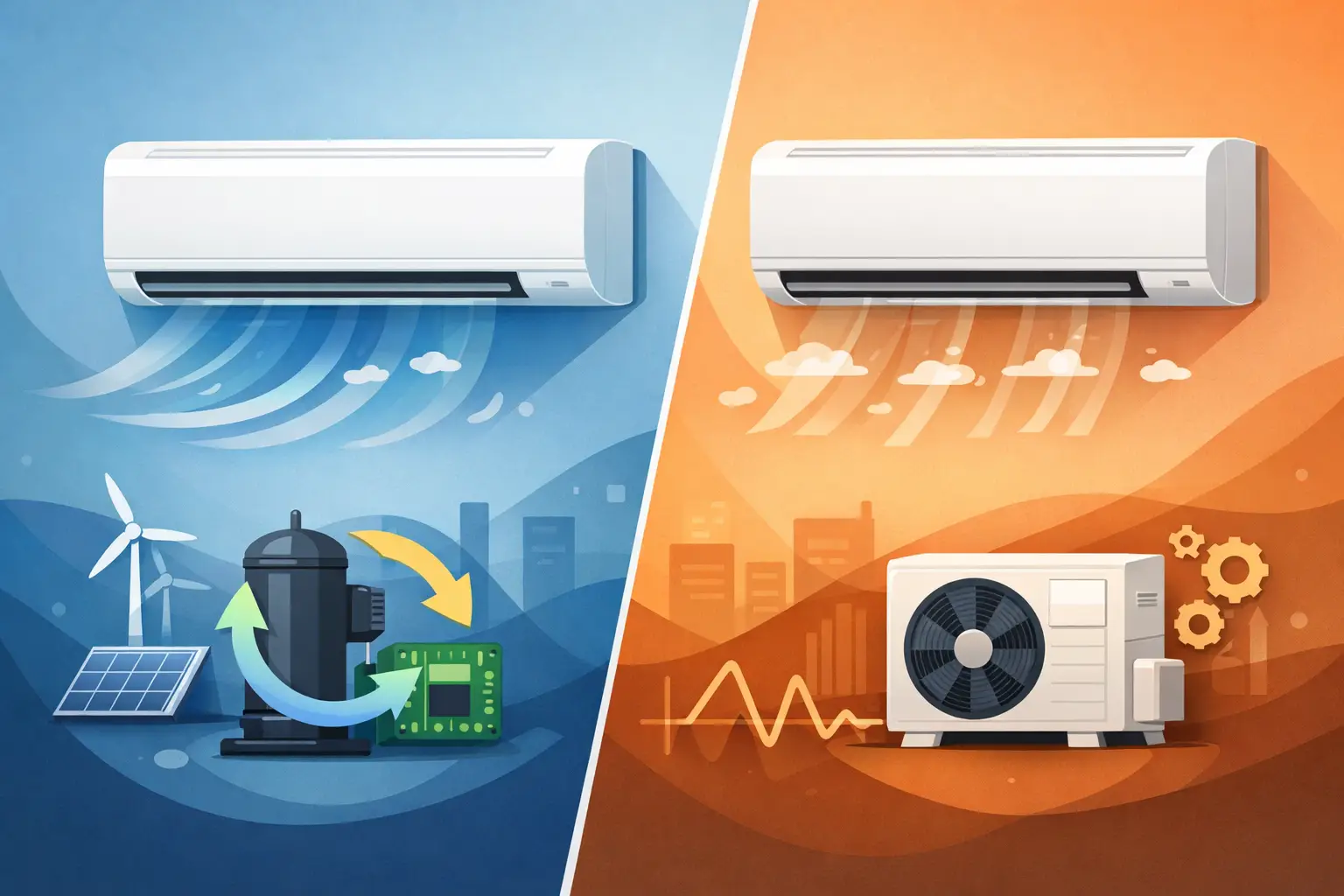
The main difference is how the compressor operates. In a non-inverter air conditioner, the compressor typically runs at full speed until the room reaches the set temperature, then switches off. When the room warms up again, it switches back on at full power. That start-stop cycle repeats throughout operation.
An inverter air conditioner works differently. Instead of simply turning fully on and off, it adjusts compressor speed to match the cooling or heating demand. Once the room reaches the target temperature, the system can keep running at a lower speed to maintain it more steadily.
That sounds like a small change, but it affects energy use, noise, temperature stability, and wear on the system.
Energy efficiency and running cost
For most homes and small businesses, this is where inverter systems pull ahead.
Because a non-inverter unit repeatedly starts at full power, it tends to use more electricity during ongoing operation, especially when the system runs for hours at a time. Those repeated restarts are less efficient than modulating output based on actual demand.
An inverter system uses more controlled compressor operation. After bringing the room to temperature, it can throttle back instead of shutting down completely and restarting hard. In real-world use, this often translates to lower power consumption, particularly in spaces that need regular climate control during hot summers or cold winters.
That said, the savings depend on usage. If you only cool a guest room a few hours a week, the efficiency advantage may not be dramatic enough to offset the higher purchase price quickly. If you run AC daily in a living area, open-plan office, retail shop, or bedroom, the difference is usually much more noticeable on utility bills.
Comfort is not just about temperature
A lot of people focus on energy first, but comfort is often the bigger day-to-day difference.
Non-inverter systems can cool a room effectively, but the temperature tends to swing more. You may feel the room get cool, then slightly warm, then cool again as the compressor cycles on and off. Some people do not mind that. Others notice it immediately, especially at night.
Inverter systems usually hold a more consistent indoor temperature because they are constantly adjusting rather than stopping and starting. That can mean fewer hot and cold spots, less stuffiness, and a more stable environment overall.
For bedrooms, nurseries, home offices, and customer-facing commercial spaces, that steady performance is often worth paying for. If comfort expectations are high, inverter technology generally delivers a better experience.
Noise levels and day-to-day livability
Noise is another area where the operating style matters.
When a non-inverter compressor starts, it often does so more abruptly. That can create more noticeable sound from both the indoor and outdoor units, depending on the system design and installation quality. The repeated cycling can also be more obvious in quiet settings.
Inverter systems tend to run more smoothly and at lower speeds once the room is conditioned. That usually means quieter operation over time. It does not mean every inverter model is whisper quiet or every non-inverter model is loud. Brand, model, capacity, and installation all play a role. Still, if quiet performance is high on your list, inverter units generally have the edge.
This matters in bedrooms, meeting rooms, consulting spaces, and open living areas where background noise can become irritating.
Upfront price vs long-term value
Non-inverter air conditioners are usually less expensive to buy upfront. For some buyers, that is the deciding factor.
If you need to replace a failed unit quickly, have a strict budget, or are fitting out a space with light and occasional use, a non-inverter system may be the more realistic choice. There is nothing wrong with choosing the simpler option when the use case supports it.
Inverter units usually cost more initially, but they can offer better long-term value through lower energy consumption, quieter operation, and improved comfort. If the system will run often, the higher upfront investment may be recovered over time through reduced operating costs.
This is where honest advice matters. The “best” system is not the one with the longest feature list. It is the one that suits the room size, usage pattern, and budget without creating unnecessary expense.
Reliability and maintenance considerations
Many buyers assume one technology is always more reliable than the other. In practice, reliability depends on far more than whether the system is inverter or non-inverter.
Installation quality is critical. An excellent unit installed poorly will underperform. A correctly sized and properly installed system will usually last longer, run more efficiently, and experience fewer avoidable issues. Refrigerant charge, pipework, drainage, electrical work, airflow, and placement all matter.
Non-inverter systems are mechanically simpler in some respects, and some people see that as a reliability advantage. Inverter systems use more advanced electronic controls, which can improve performance but may add complexity. That does not make them unreliable. It simply means product quality and installation standard become even more important.
Routine maintenance also matters either way. Dirty filters, blocked coils, poor airflow, and neglected servicing will affect both types of systems. If you want dependable performance, regular maintenance is part of the equation.
Which one is better for homes?
For most primary living spaces in homes, inverter systems are usually the stronger choice.
If you are cooling a master bedroom every night, running a split system in the family room most afternoons, or installing ducted air conditioning for whole-home comfort, inverter technology generally offers better control and lower ongoing cost. Families who care about comfort, noise, and efficiency tend to appreciate the difference.
Non-inverter units can still make sense in a garage conversion, workshop, spare room, or other area with occasional use. They can also be suitable where purchase price matters more than refinement.
The key is not to overgeneralize. A lightly used room does not always need premium operating technology. A heavily used room usually benefits from it.
Compare inverter and non inverter for commercial spaces
Commercial decisions often come down to hours of use and the importance of consistent indoor conditions.
For offices, shops, medical suites, and service businesses where the air conditioning runs through much of the day, inverter systems are often the better fit. They can help manage power costs while keeping staff and customers more comfortable. Stable temperatures also matter for productivity and customer experience.
For storage areas, back rooms, or low-occupancy spaces used only occasionally, a non-inverter option may still be workable if the load is simple and budget is tight.
Larger or more complex commercial environments often move beyond this basic comparison and into multi-zone or VRV/VRF system design. In those cases, system planning should be based on building layout, occupancy patterns, and control needs rather than compressor type alone.
When a non-inverter AC still makes sense
It is easy to dismiss non-inverter systems, but that would be too simplistic.
They can be a sensible option when initial cost is the priority, when the room is used infrequently, or when the unit is intended as a short-term solution. They may also suit owners who want a basic, functional system without focusing heavily on premium comfort features.
The trade-off is that you are usually giving up some efficiency, temperature stability, and acoustic comfort. If those issues are not critical in the space you are conditioning, a non-inverter unit may still represent good value.
How to choose without overpaying
A good AC decision starts with usage, not marketing terms.
Ask yourself how many hours a day the system will run, whether the space is occupied consistently, how sensitive you are to noise, and whether lower utility bills matter more than lower upfront cost. Then consider room size, insulation, sun exposure, ceiling height, and whether the space needs cooling only or year-round heating and cooling.
If the system will be used often, inverter is usually the smarter investment. If usage will be light and budget is the main constraint, non-inverter can still be appropriate. The right answer depends on the space, the load, and your priorities.
If you want guidance based on actual property conditions rather than guesswork, a contractor with installation and aftercare experience can help you size the system properly and avoid paying for capacity or features you do not need. That practical approach is what matters most.
The best air conditioner is the one that feels right every day after installation – not just the one that looked cheapest or most advanced on paper.