
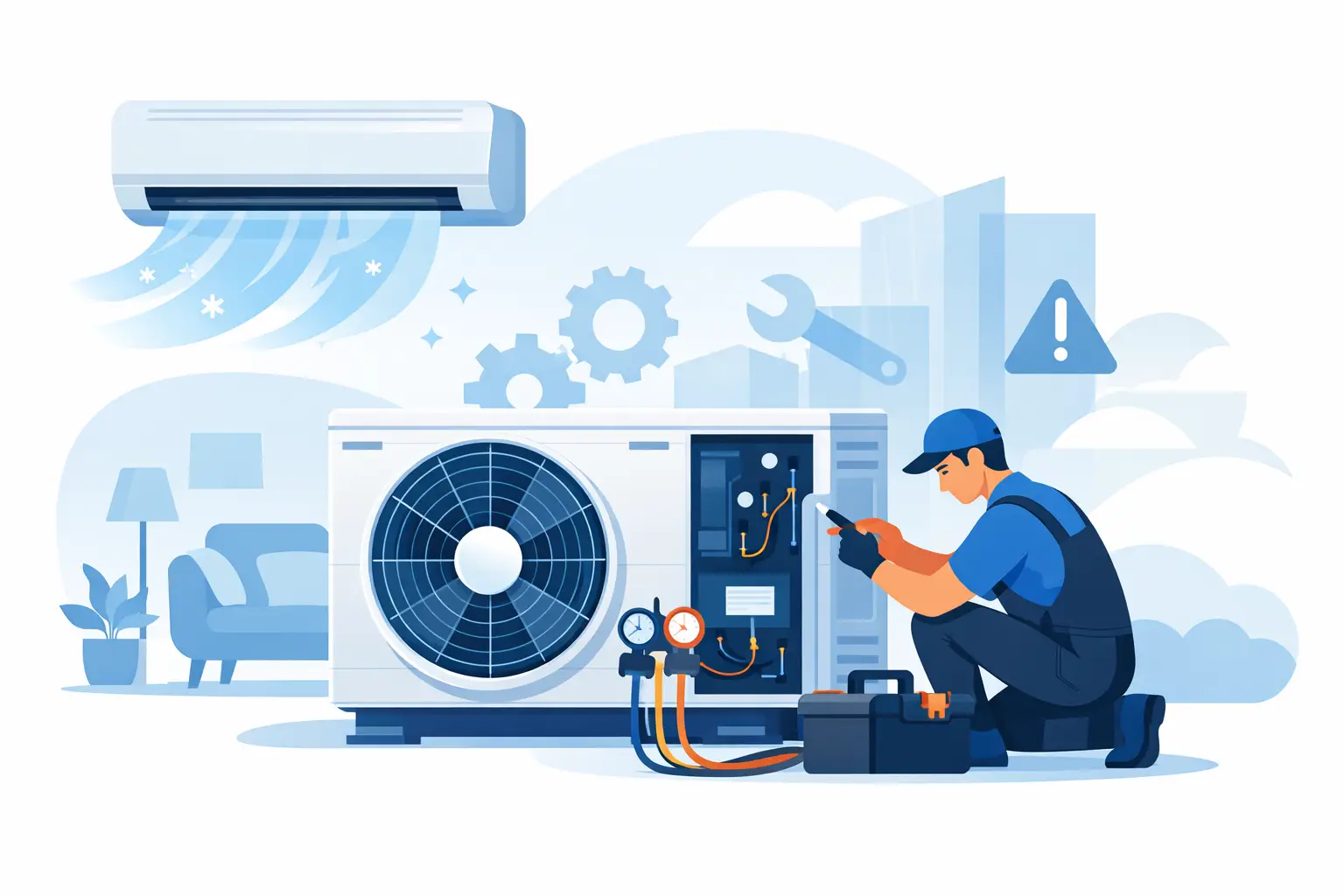
A system that still turns on is not always a system that is working well. In many homes and commercial spaces, air conditioner servicing gets delayed until airflow drops, rooms cool unevenly, or a unit stops on the hottest week of the year. By that point, what could have been routine maintenance often becomes a repair call, and sometimes a much more expensive one.
For homeowners and business operators, regular servicing is less about ticking a box and more about protecting comfort, efficiency, and reliability. Whether you have a single split system, a multi-zone setup, ducted air, or a larger VRV or VRF system, maintenance plays a direct role in how well the equipment performs over time.
Why air conditioner servicing matters
Air conditioners work hard, especially in properties where they run for long hours through warm seasons. Dust builds up on filters and coils, condensate drains can clog, electrical connections can loosen, and moving parts naturally wear. None of this is unusual. The problem is that small issues tend to create bigger ones if they are ignored.
A dirty filter can restrict airflow and force the system to work harder. A coil coated in grime loses efficiency and can reduce cooling capacity. A blocked drain may lead to water leaks and moisture damage. Electrical faults can affect startup, temperature control, or system safety. In each case, the unit may keep running for a while, but not at its best.
That is why servicing should be seen as preventive care. It helps identify wear early, keeps the system cleaner, and gives you a clearer picture of whether your air conditioner is operating as it should.
What professional air conditioner servicing usually includes
The exact scope depends on the type of system, its age, and the condition it is in, but a proper service is more than a quick filter rinse. A technician will usually inspect the key components that affect performance, efficiency, and reliability.
For split and multi-split systems, servicing often includes cleaning filters, checking indoor and outdoor coils, inspecting the condensate drain, testing refrigerant performance, examining electrical connections, and confirming the thermostat and controls are responding correctly. On ducted systems, the service may also include checking zone operation, inspecting return air paths, reviewing duct condition where accessible, and confirming the fan and static pressure are within acceptable ranges.
Commercial systems often require a broader approach because runtime is heavier and the consequences of failure are greater. In offices, retail spaces, and light industrial settings, servicing may involve multiple indoor units, larger outdoor condensers, more complex controls, and closer attention to load performance.
A good technician is not just cleaning parts. They are looking for signs that the system is trending toward failure, wasting energy, or no longer delivering the comfort it was designed to provide.
Signs your system is overdue for servicing
Some signs are obvious, and others are easy to dismiss. If your unit is making unusual noises, struggling to reach the set temperature, short cycling, leaking water, or producing weak airflow, it should be checked sooner rather than later.
Higher energy bills can also be a warning sign. When an air conditioner becomes less efficient, it often runs longer to do the same job. That extra runtime adds up. The same is true if one room feels fine but another stays warm. Uneven performance can point to airflow restrictions, control issues, duct problems, or a system that is no longer operating evenly across zones.
Odors matter too. A musty smell may indicate moisture buildup or contamination within the indoor unit. A burnt smell could suggest an electrical issue and should be taken seriously.
Even if none of these problems are obvious, age and usage matter. A heavily used unit in a family home or business may need attention before symptoms show up.
How often should air conditioner servicing be done?
For most residential systems, annual servicing is a sensible baseline. If the unit gets heavy seasonal use, serves multiple rooms, or operates in a dusty environment, more frequent maintenance may be worthwhile. Commercial properties often benefit from scheduled servicing more than once a year because continuous operation places greater strain on the equipment.
There is no perfect one-size-fits-all interval. A lightly used split system in a small apartment may not need the same service schedule as a ducted system cooling a large family home, and neither will match the demands of a retail store that runs air conditioning every day. Usage patterns, property size, indoor air quality, and system design all affect maintenance needs.
This is where practical advice matters. A trustworthy HVAC contractor should recommend a service schedule based on how the system actually operates, not just a generic calendar reminder.
The cost of skipping service
Many people put off maintenance to save money, but the savings are often short-lived. Neglected systems typically use more energy, experience more breakdowns, and wear out sooner. In some cases, poor maintenance can also affect warranty coverage, depending on the manufacturer and the terms provided.
The larger cost is often disruption. For a homeowner, that can mean losing cooling during extreme heat, dealing with water leaks, or facing an urgent repair when contractors are busiest. For a business, a failure can affect staff comfort, customer experience, or temperature-sensitive operations.
Servicing does not guarantee that a part will never fail. Components can still reach the end of their life. What it does do is reduce avoidable strain and improve the chances of catching issues before they become urgent.
Why DIY maintenance only goes so far
There are a few things property owners can do themselves. Cleaning or replacing accessible filters, keeping outdoor units clear of debris, and paying attention to changes in noise or performance are all useful habits. Those steps help, and they should not be overlooked.
Still, DIY care is not the same as professional servicing. Most of the important checks involve electrical components, system pressures, coil condition, drainage, fan operation, and performance testing. These are not areas where guesswork is a good idea.
If a system is underperforming, adding refrigerant without diagnosing the cause is not a fix. If water is leaking, clearing what looks like a blockage may not address the real issue. A professional service is about diagnosis as much as maintenance.
Servicing older systems versus newer ones
Newer units generally benefit from regular servicing because it helps preserve efficiency and supports long-term reliability. Older systems need it for a different reason. As components age, tolerances change, wear increases, and parts may become more vulnerable to failure under load.
That does not always mean an older air conditioner should be replaced. Sometimes a well-maintained older unit still has useful life left, especially if the core components remain sound. In other cases, repeated repairs and declining efficiency make replacement the more practical choice.
This is one of those areas where honest advice matters most. The right recommendation depends on repair history, energy use, parts availability, and how well the system still meets the needs of the property. A service visit should help clarify that decision, not pressure you into one outcome.
Choosing the right company for air conditioner servicing
Not all service visits are equally thorough. A low-cost inspection that only cleans a filter and leaves within minutes may not give you much value. What you want is a technician who understands the system type you have, explains findings clearly, and gives practical recommendations without overselling.
Experience across different setups is important. Split systems, ducted installations, and commercial VRV or VRF systems each have different service requirements. So do homes with zoning issues, apartments with limited access, and businesses that cannot afford long downtime.
This is where a company with both installation and maintenance experience can offer a real advantage. When technicians understand how systems are designed, fitted, and expected to perform, they are better placed to spot faults, airflow issues, and efficiency losses. That practical, end-to-end knowledge is part of what property owners value from an established contractor like Cool Air Tech.
When to book servicing
The best time is before you need the system at full capacity. Servicing ahead of peak summer use gives you a better chance of identifying problems early and avoiding delays during busy periods. That said, if your system is already showing signs of trouble, it is worth booking sooner rather than waiting for a complete failure.
For businesses, planned maintenance is usually the smarter option. It helps reduce reactive callouts and makes it easier to schedule work around trading hours or operational needs.
A reliable air conditioner should not have to fight through dirt, restricted airflow, or hidden faults just to keep a room comfortable. A timely service keeps the system working closer to the way it was meant to, and that is usually the difference between hoping it gets through another season and knowing it is ready for one.