
If you are comparing systems or getting quotes, an air conditioner installation process guide helps you ask better questions before any equipment arrives. The installation itself is only one part of the job. The bigger difference in comfort, efficiency, and long-term reliability usually comes from what happens before the unit is mounted and after it is switched on.
For homeowners and business owners, that matters because two systems with the same brand name can perform very differently once installed. Poor sizing, weak airflow planning, rushed pipework, or bad drain placement can lead to uneven cooling, higher utility bills, and service calls that could have been avoided. A proper installation process is designed to prevent those issues from the start.
What happens before installation starts
The first step is not drilling a wall or lifting a condenser into place. It is assessing the property properly. A contractor should look at the size of the space, ceiling height, insulation, sun exposure, window placement, occupancy patterns, and how many rooms need conditioning. In a commercial setting, equipment heat loads, opening hours, and internal zoning matter just as much.
This is also where system selection happens. A single-room split system may be the most practical option for a bedroom, office, or small retail space. A multi-split system can work well where several rooms need individual control but roof space is limited. Ducted air conditioning suits whole-home comfort and a cleaner visual finish, while VRV or VRF systems are often chosen for larger or more complex commercial layouts.
There is always some trade-off. Ducted systems offer discreet airflow and broad coverage, but they usually involve a larger upfront investment and enough ceiling space for duct runs. Split systems are often more affordable and efficient for targeted areas, though they do leave visible indoor units on the wall. The right answer depends on the building, the budget, and how the space is actually used.
Air conditioner installation process guide for system design
Once the right system type is chosen, the next stage is design and quote preparation. This should be more detailed than a model number and a total price. Good system design covers unit sizing, indoor and outdoor unit placement, drain routing, pipe length, electrical requirements, controller location, and access for future servicing.
Placement decisions are not cosmetic only. Indoor units need to deliver air where it will circulate effectively without blowing directly onto beds, desks, or seating areas all day. Outdoor units need adequate clearance, stable mounting, and enough airflow around them. They should also be positioned with noise, weather exposure, and maintenance access in mind.
For ducted systems, design becomes even more important. Return air location, supply grille placement, zoning layout, and static pressure all affect how balanced the system feels in daily use. A house with hot upstairs bedrooms or a business with cold front rooms and warm back rooms usually needs a smarter layout, not just a bigger machine.
Preparing the site
Before installation day, the site may need basic preparation. That can include confirming electrical capacity, checking roof or wall access, protecting floors and furniture, and making sure there is a clear path for technicians and equipment. In occupied homes and businesses, planning around access times and minimizing disruption is part of doing the job properly.
Permits and code requirements vary by location and project type. That is one reason professional installation matters. Refrigerant handling, electrical work, mounting, clearances, and condensate drainage all need to meet applicable requirements. If a system is installed without proper compliance, the risk is not just performance issues. Warranty problems and safety issues can follow.
The installation day: step by step
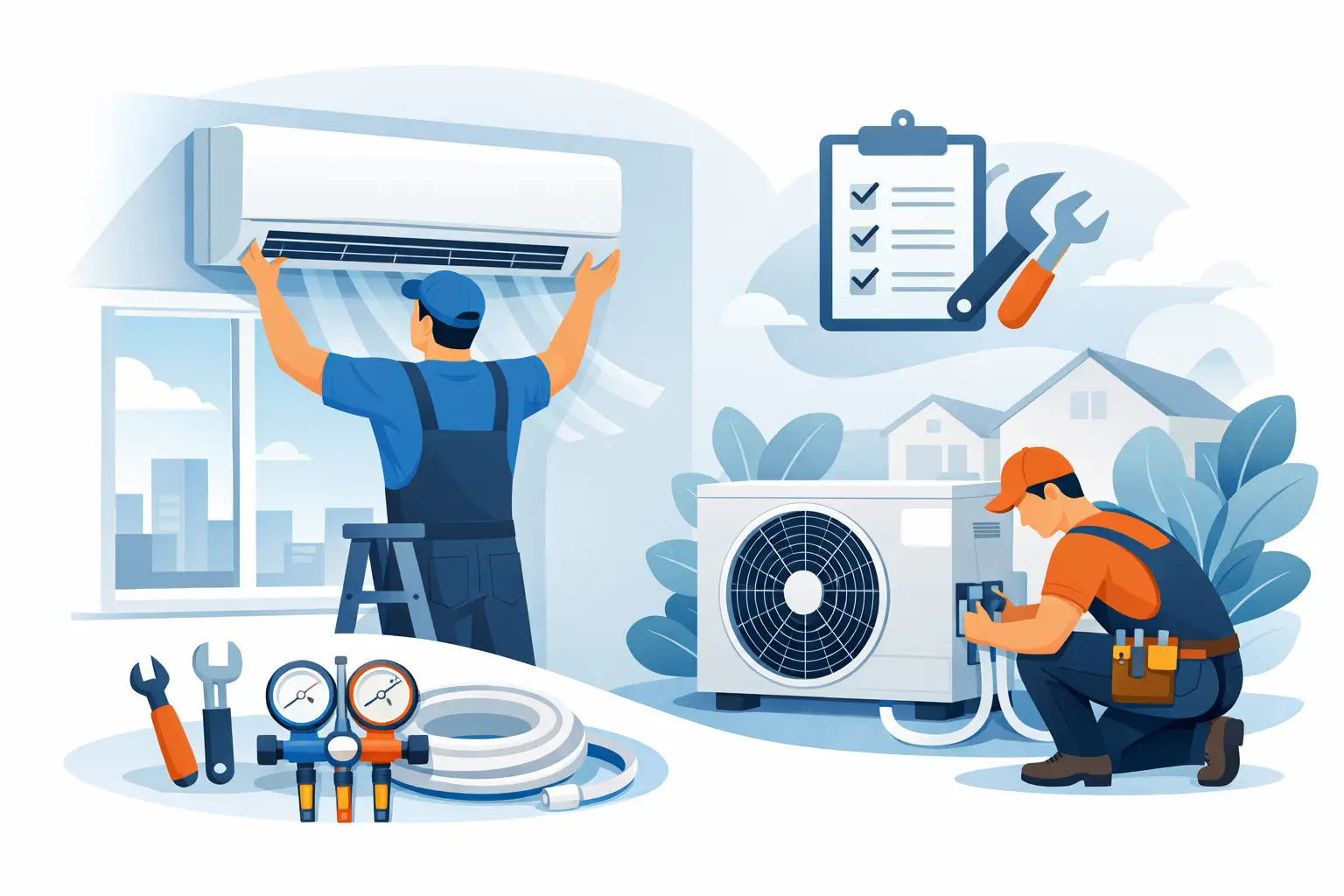
A typical split-system installation starts with marking the indoor unit position and preparing the wall penetration for refrigeration lines, power cabling, and condensate drain. The indoor mounting plate is secured carefully so the unit sits level. That small detail matters because poor leveling can affect drainage and create water leaks later.
Next, the outdoor unit is placed on a slab, brackets, or other approved mounting base. It needs to be stable and correctly spaced from surrounding surfaces so it can reject heat effectively. Refrigerant pipework and control wiring are then run between the indoor and outdoor units, usually with protective trunking where visible sections need a cleaner finish.
The drain line is installed with the right fall so condensation can leave the system reliably. This sounds simple, but bad drainage is one of the more common reasons for post-installation callouts. If gravity drainage is not practical, a condensate pump may be needed, though that adds another component that may require maintenance over time.
For ducted systems, the process is broader. The indoor fan coil is positioned in the ceiling or roof space, duct runs are installed, supply and return grilles are fitted, zone motors are connected if zoning is included, and the outdoor condenser is connected to the indoor unit through refrigerant and electrical lines. Because there are more components, the installation timeline is usually longer and the workmanship details matter even more.
Testing, commissioning, and cleanup
A professional install is not finished when the units are mounted. The system should be pressure tested, evacuated with a vacuum pump, and commissioned according to manufacturer specifications. These steps help remove moisture and non-condensable gases from the line set, which protects performance and compressor life.
After startup, the technician should verify cooling operation, airflow, temperature split, drain performance, controls, and overall system response. If zoning is installed, each zone should be checked to confirm it opens, closes, and balances correctly. Small adjustments at this stage can make a noticeable difference in comfort.
The handover matters too. You should be shown how to use the controller, change basic settings, clean accessible filters, and understand what normal operation sounds like. A good installer also explains what to watch for, such as reduced airflow, unusual noise, or water leaks, so minor issues can be addressed early.
How long does installation usually take?
Installation time depends on the system type and the complexity of the property. A straightforward back-to-back split-system installation may take only part of a day. A more involved split installation with long pipe runs, difficult access, or electrical upgrades can take longer.
Ducted systems commonly take one to two days, sometimes more for larger homes or staged commercial work. Multi-split and VRV or VRF systems can also extend beyond a single day because there are more indoor units, more controls, and more commissioning work. If someone promises a very fast turnaround without inspecting the site properly, that is usually a reason to ask more questions.
What affects installation cost?
Equipment cost is only one part of the total. Installation pricing is influenced by system capacity, brand, access difficulty, pipe run length, electrical work, mounting method, number of zones, ceiling or wall conditions, and whether old equipment must be removed.
This is where honest quoting matters. A low initial number can look attractive until extras start appearing for brackets, trunking, power upgrades, drain pumps, or longer refrigerant lines. A clear quote should explain what is included and what could change if site conditions are different from the original assessment.
The cheapest installation is rarely the best value if it creates noise, drainage problems, poor airflow, or high operating costs. Quality installation often saves money over the life of the system by reducing breakdown risk and improving efficiency from day one.
Common mistakes this air conditioner installation process guide can help you avoid
The most common mistake is choosing capacity based on guesswork. An oversized unit may short cycle and leave the room feeling clammy, while an undersized unit runs too hard and struggles in peak weather. Another mistake is treating placement as an afterthought. Good unit location affects comfort every day.
Homeowners also sometimes focus only on upfront price and miss the value of aftercare. Filters need cleaning, outdoor coils need to stay clear, and systems should be maintained to protect performance and warranty coverage. For businesses, skipped maintenance can turn into downtime at the worst possible time.
A final issue is assuming all installers deliver the same standard. They do not. Experience with the specific system type, attention to commissioning, and willingness to explain the job clearly all matter. A dependable contractor will tell you when a plan needs to change rather than forcing a poor fit.
Choosing the right installer
When comparing contractors, look for clear site assessment, detailed recommendations, transparent scope, and a practical explanation of why one system suits your property better than another. You want a company that can install, service, and support the system over time, not just sell a unit and move on.
For many clients, that is the real value of working with a specialist such as Cool Air Tech. The equipment matters, but so does the advice behind it, the workmanship during installation, and the support after the job is complete.
A well-installed air conditioning system should feel easy to live with. It cools the space evenly, runs efficiently, and does not give you reasons to think about it every week. That is the standard worth aiming for when you start planning your project.