
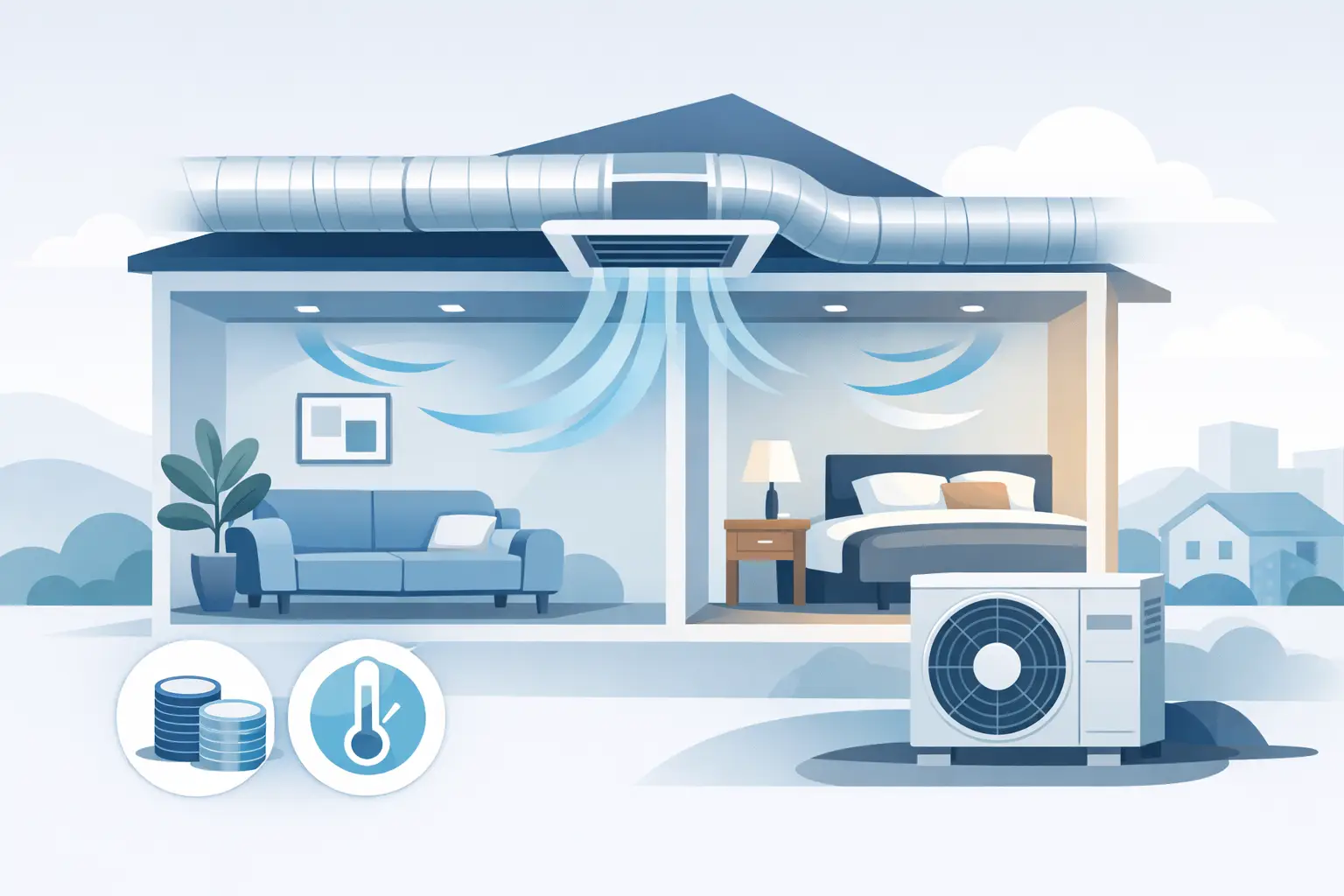
If you are comparing whole-home cooling options, the big question is simple: is ducted air conditioning worth it? For some properties, it is the most comfortable and practical long-term solution available. For others, it can be more system than you need, especially if your layout, budget, or usage patterns point toward split systems instead.
The right answer usually comes down to how you use your space, how many rooms you need to condition, and whether you value whole-home comfort, clean aesthetics, and zone control enough to justify the upfront cost.
When ducted air conditioning is worth it
Ducted air conditioning tends to make the most sense when you want one integrated system to cool or heat multiple rooms consistently. If you have a larger home, an open-plan layout with bedrooms branching off, or a commercial space where comfort across several areas matters, ducted is often a strong fit.
One of the biggest advantages is coverage. Instead of installing multiple wall-mounted indoor units, a ducted system uses a concealed central unit with ducts running to ceiling or floor outlets. That means you can condition the entire property with a cleaner look and more even airflow.
For many homeowners, that visual benefit matters more than they expect. You are not working around bulky wall units in bedrooms, living rooms, or shared areas. In offices and retail spaces, it also creates a neater, more professional finish.
Ducted systems are especially worthwhile if you plan to stay in the property for years. The upfront investment is higher, but the daily comfort, discreet design, and whole-home control can make it feel like money well spent over time.
Is ducted air conditioning worth it for smaller homes?
Not always. This is where honest advice matters.
If you live in a smaller apartment, a compact townhouse, or a home where you mainly use one or two rooms at a time, a split or multi-split system may deliver better value. You could spend significantly less on installation and still get efficient cooling where you actually need it.
Ducted air conditioning can still work in a smaller property, but the return depends on your priorities. If you want uniform comfort throughout the home, low indoor noise, and a system that stays mostly out of sight, it may still be worth considering. If your main goal is simply lowering the temperature in a bedroom and living room, it may not be the most cost-effective choice.
This is why property size alone does not decide the issue. Usage patterns matter just as much. A small home used all day by a family may benefit more from ducted zoning than a larger home where only a few rooms are occupied regularly.
The real cost difference
Ducted systems usually cost more to install than split systems because they involve more design work, more labor, duct runs, grille placement, electrical work, and commissioning. If the property is an existing home rather than a new build, installation complexity can increase further depending on roof space, access, ceiling type, and the path for ductwork.
That higher upfront price is often what makes buyers hesitate. It should. Cost matters, and there is no value in pretending ducted is the right answer for every budget.
At the same time, cost should be measured against scope. A ducted system is not directly comparable to a single split system. A fairer comparison is ducted versus multiple split units across several rooms. Once you start pricing out enough wall-mounted systems to serve a whole home, the difference may narrow, especially when you factor in appearance, controls, and long-term convenience.
Operating costs also depend on system size, insulation quality, thermostat settings, zoning setup, and how often the system runs. A poorly designed ducted system can be expensive to operate. A properly sized and zoned one can be efficient and practical.
Comfort is where ducted systems stand out
The strongest case for ducted air conditioning is usually comfort.
A good ducted design delivers more even temperature control across the home or workplace. It reduces hot and cold patches, handles larger spaces more effectively, and can maintain a steadier indoor climate. That matters in homes with multiple bedrooms, large living zones, or areas that are hard to cool with a single unit.
Ducted systems are also typically quieter in the rooms you occupy because the main indoor components are concealed in the ceiling or another service space. You hear airflow, but not the same type of direct indoor unit noise you get from wall-mounted systems.
Then there is zoning. With the right setup, you can run only the areas you need rather than the entire property. That improves day-to-day practicality and can help manage energy use. For example, a family might cool living areas during the day and bedrooms at night without conditioning unused rooms.
Energy efficiency depends on design, not just the system type
People often ask whether ducted air conditioning is more expensive to run. Sometimes it is. Sometimes it is not.
The bigger issue is whether the system is designed correctly for the property. Oversized units, poor duct layout, air leakage, weak insulation, and limited zoning can all push running costs up. On the other hand, a well-designed ducted system with efficient equipment and sensible controls can perform very well.
This is one reason expert assessment matters before installation. The best results come from matching the system to the home or building, not choosing a unit based on guesswork or headline capacity alone.
If efficiency is a top concern, ask practical questions about zone configuration, duct insulation, return air design, and how the system will perform in both peak summer heat and milder conditions. Those details make a bigger difference than broad claims about one system type always being cheaper than another.
Installation and maintenance considerations
Ducted air conditioning is a larger project than a standard split installation. In a new build or major renovation, it is often easier and more cost-effective because access is better and the system can be planned around the property from the start.
In an existing home, installation is still common, but the installer needs to assess roof space, structural limitations, ceiling clearances, and how to position outlets for balanced airflow. Good workmanship matters here. Even premium equipment can disappoint if the duct layout and airflow design are poor.
Maintenance is straightforward but important. Filters need regular attention, and the system should be serviced to protect efficiency, airflow, and reliability. Like any air conditioning setup, ducted systems benefit from preventive care rather than waiting for a breakdown in peak season.
For commercial spaces, maintenance matters even more because comfort issues can affect staff, customers, and equipment. A properly maintained ducted system is generally reliable, but neglect will eventually show up in performance and energy use.
Who should seriously consider ducted air conditioning?
Ducted air conditioning is usually worth serious consideration if you want whole-home or whole-site comfort, prefer a clean interior look, and expect to use climate control across several rooms on a regular basis.
It is often a good fit for larger family homes, renovated properties where aesthetics matter, offices with multiple enclosed rooms, and businesses that want even comfort without several visible indoor units. It can also suit homeowners who are thinking long term and want one integrated solution rather than a patchwork of separate systems.
It may be less worthwhile if your budget is tight, your property has major installation constraints, or you only need air conditioning in one or two zones. In those cases, split or multi-split systems can be a smarter use of money.
The question is not just price – it is fit
A lot of buyers frame this as a yes-or-no question, but it is really a fit question.
If you want premium whole-home comfort, discreet design, and the convenience of a centralized system, ducted air conditioning often justifies the investment. If your needs are more limited, the better choice may be a smaller and simpler system that matches how you actually live or work.
That is the value of getting advice based on the property rather than a generic sales pitch. An experienced contractor should be able to tell you when ducted is the right call, when it is not, and what trade-offs come with each option.
For many homes and small commercial spaces, ducted air conditioning is worth it when the system is designed well and used the way it was intended. The best outcome is not the most expensive system. It is the one that gives you reliable comfort, reasonable operating costs, and a setup that still makes sense years from now.