
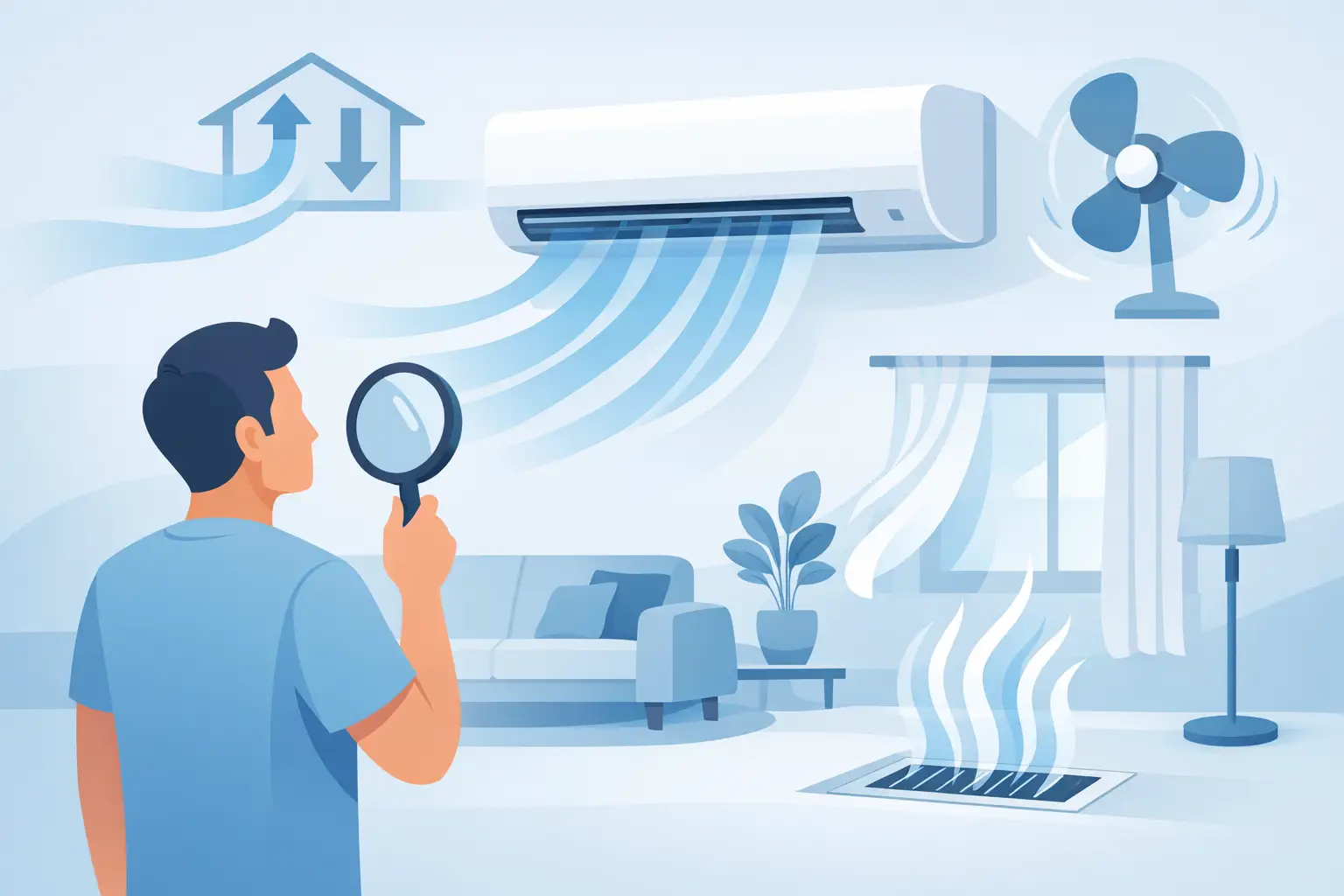
A room that never seems to cool down, weak air coming from the vents, and an AC system that runs longer than it should usually point to one thing – poor airflow. If you are wondering how to improve AC airflow, the good news is that some causes are simple to fix. Others need a trained HVAC technician, especially when the problem involves ductwork, fan components, or system sizing.
Better airflow is not just about comfort. It affects how evenly your home or business cools, how hard the system works, and how much you pay to run it. When airflow drops, the AC has to stay on longer to reach the thermostat setting, and that extra strain can shorten equipment life over time.
Why AC airflow gets worse over time
Most airflow problems build gradually. A filter collects dust, a return vent gets blocked by furniture, or supply ducts start leaking air into the ceiling or crawl space. Because the change is often slow, many people adapt to it until one room is always warm or energy bills start climbing.
Airflow can also be affected by the type of system you have. A ducted system may struggle because of crushed flexible ducting, dirty dampers, or poor balancing. A split system may have restricted airflow from a clogged indoor coil or blower wheel. In commercial spaces, layout changes, shelving, and closed-off rooms can alter how air moves through the property.
That is why the right fix depends on where the restriction is happening. The goal is not simply to make the fan blow harder. It is to help the system move the right amount of air, in the right direction, without unnecessary resistance.
How to improve AC airflow without replacing the system
The first place to look is the air filter. A dirty filter is one of the most common reasons for weak airflow, and it is also one of the easiest to address. If the filter is loaded with dust, the system cannot pull enough air through the return side. That reduces supply airflow at the vents and can sometimes lead to coil freezing.
Check the filter size and type as well. A filter that is too restrictive can create airflow problems even when it looks clean. High-MERV filters can be useful in some homes, but if the system is not designed for that level of resistance, airflow can drop. For many households, the best choice is the filter recommended by the manufacturer or your HVAC contractor rather than the most aggressive filter on the shelf.
Next, walk through the property and inspect the supply and return vents. Closed or blocked vents are a frequent issue. Rugs, sofas, curtains, storage boxes, and shelving can all interfere with air movement. Make sure vents are fully open and have enough clearance around them to distribute air properly.
Return vents matter just as much as supply vents. If the system cannot pull air back easily, overall circulation suffers. A common mistake is focusing only on the vents blowing cool air while ignoring a return grille hidden in a hallway or behind a door. Keep those return paths clear.
If your system has adjustable registers, avoid closing too many in an effort to force more air into another room. That can increase static pressure and make the system less efficient. In some cases, it can create more noise and less comfort overall. Room balancing should be done carefully, especially on ducted systems.
Check for duct issues if airflow is weak in some rooms
If one part of the property feels comfortable and another stays warm, the problem may be inside the ductwork. Leaky ducts can waste a surprising amount of conditioned air before it ever reaches the room. Disconnected joints, damaged flex duct, poor insulation, or long duct runs can all reduce airflow where you need it most.
This is especially common in older homes and in buildings where renovations changed the layout but the duct system was never redesigned. A back bedroom, second floor office, or converted retail area may simply not be getting enough air volume.
Visible duct sections can sometimes reveal obvious problems, such as loose connections or crushed flexible ducting. But many duct issues are hidden in attics, ceilings, or under floors. If airflow is consistently poor in certain rooms, a professional inspection is usually more useful than guessing.
A proper duct assessment can also identify whether the issue is leakage, undersized ductwork, or balancing. Those are different problems, and they need different solutions. Sealing a duct leak can help a lot. Undersized ducting may require modification. Poor balancing may need damper adjustment rather than replacement work.
The indoor unit may need cleaning or repair
Weak airflow is not always caused by the ducts. Sometimes the indoor unit itself cannot move air properly. In split and ducted systems, the evaporator coil can collect dust and debris over time. When that coil gets dirty, airflow drops and cooling performance goes with it.
The blower assembly can also become dirty, which reduces how much air the fan can move. In other cases, the fan motor, capacitor, or control settings may be the source of the problem. If the fan speed is wrong, or if a component is failing, the system may still run but never deliver strong airflow.
A frozen evaporator coil is another possibility. If you notice weak airflow along with ice on the indoor unit, water around the air handler, or the system blowing less and less as it runs, turn the AC off and have it checked. Running it in that condition can lead to further damage.
This is one area where professional maintenance makes a real difference. Cleaning internal components, checking fan performance, measuring static pressure, and confirming refrigerant conditions go beyond what most property owners can do safely on their own.
Thermostat settings and layout can affect airflow too
Sometimes the complaint sounds like airflow when the larger issue is control strategy. If the thermostat is in a spot that cools quickly, the system may shut off before distant rooms are comfortable. That can make airflow feel weak simply because runtime is too short.
Fan settings also matter. In some homes, switching the fan from auto to on can improve circulation between cooling cycles, although it may increase energy use and indoor humidity in certain climates. Whether that is helpful depends on the system type, the home layout, and your comfort priorities.
Zoning adds another layer. A zoning system can solve uneven airflow, but only if it is designed and set up correctly. Poorly configured dampers or bypass arrangements can create pressure problems that affect the whole system. If you have zones and notice inconsistent airflow, it is worth having the controls and dampers checked.
How to improve AC airflow in commercial spaces
Commercial properties often have airflow issues for reasons that do not show up in homes. New partitions, added workstations, high shelving, server heat loads, and changing occupancy patterns can all disrupt the original air distribution plan.
An office with enclosed rooms may need different balancing than an open-plan fit-out. A retail shop can have hot and cold spots caused by display placement, entry doors, or solar exposure. In a small warehouse, destratification and air movement may matter as much as cooling capacity.
In these spaces, improving airflow may involve more than maintenance. It could require diffuser changes, return air improvements, duct modifications, or a review of whether the current system is still suitable for the way the space is being used.
Signs it is time to call an HVAC professional
Some airflow problems are worth troubleshooting yourself first, especially filters and blocked vents. But if you have already handled the basics and the issue remains, a service visit usually saves time and prevents avoidable wear on the system.
Call a professional if airflow is suddenly much weaker than normal, certain rooms are consistently undercooled, the system is noisy when running, the coil is icing up, or your energy bills have climbed without a clear reason. Those signs often point to problems that need testing, not trial and error.
At Cool Air Tech, this is usually where a proper diagnostic matters most. Airflow issues are rarely solved well by replacing parts at random. The better approach is to inspect the whole path of air movement, from return grille to filter, fan, coil, ductwork, and supply outlets.
If you want better comfort from your AC, start with the simple checks, but do not ignore a system that keeps showing the same symptoms. Good airflow is what makes cooling feel consistent, efficient, and reliable – and when it is restored properly, the whole system works the way it should.