
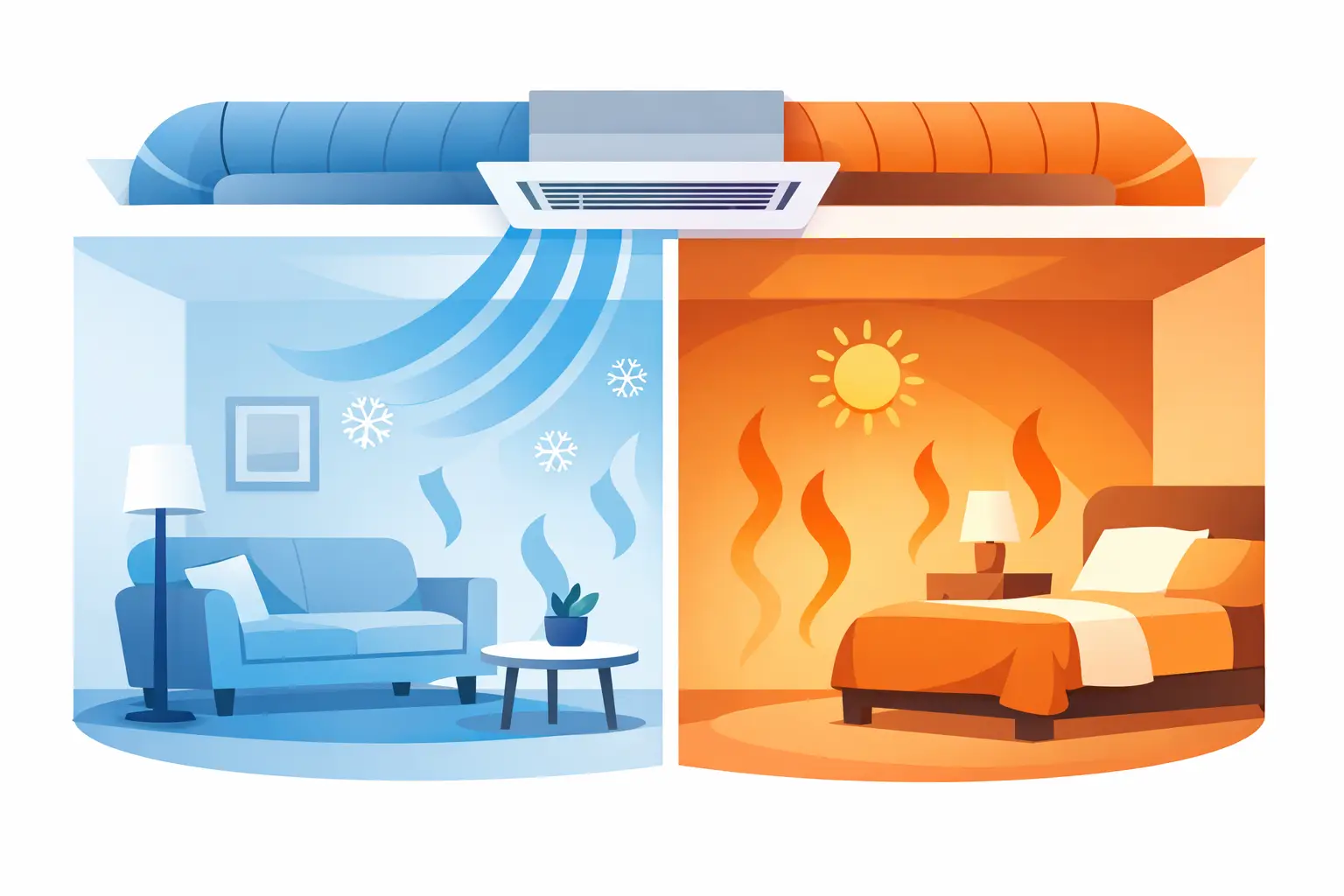
You notice it first in the rooms you use most. The living room feels fine, the back bedroom stays warm, and the office is somehow freezing. If you’re asking why is ducted cooling uneven, the short answer is that your system is not delivering the same amount of conditioned air where and when it is needed. The real reason, though, usually comes down to airflow, duct design, zoning settings, insulation, or equipment sizing.
Uneven cooling is one of the most common complaints with ducted systems because even a well-installed setup has to work against changing conditions inside the property. Sun exposure shifts through the day. Doors open and close. Filters collect dust. Dampers move. In some cases, the system itself is fine, but the house or building layout creates hot and cold spots that need to be managed properly.
Why is ducted cooling uneven in some rooms?
A ducted system depends on balance. Air has to leave the unit at the right volume, move through the ductwork with minimal resistance, and reach each outlet in a way that matches the room’s size and heat load. When one part of that chain is off, some spaces get too much cooling while others get too little.
One of the most common causes is poor airflow. If a filter is clogged, the system may struggle to push enough air through the ducts. If a duct has come loose, been crushed, or has a leak, cooled air can escape into the ceiling or wall cavity before it reaches the room. This often shows up as one or two problem rooms rather than the whole property feeling uncomfortable.
Outlet placement also matters more than many people realize. A room with large west-facing windows or high ceilings may need more airflow than a smaller shaded bedroom. If both rooms are getting similar supply air, the hotter room will feel undercooled. That does not always mean the unit is failing. It may mean the original design did not fully account for how that room gains heat.
Zoning issues are another frequent culprit. Ducted systems with multiple zones rely on dampers and controls to direct air where it is needed. If a damper is stuck, a zone is incorrectly set, or the controls are not calibrated properly, some areas may receive less air than intended. In homes and small commercial spaces, this can look like one zone consistently lagging behind the others.
Common reasons ducted cooling becomes uneven
System size is a big one. An undersized unit may run constantly and still fail to cool the warmest rooms. An oversized unit can create a different problem by cooling the main area too quickly and shutting off before air is distributed evenly through the whole duct network. Bigger is not always better in HVAC. Correct sizing is about matching the equipment to the building, not just installing a stronger system.
Insulation and air leakage in the property also affect performance. If one room has poor ceiling insulation, drafty windows, or more afternoon sun, it will heat up faster than the rest of the building. The ducted system then has to work harder to keep that room comfortable. In many cases, uneven cooling is partly an HVAC issue and partly a building-envelope issue.
Return air design can be overlooked too. Supply vents push cool air into rooms, but return air has to make its way back to the system. If return airflow is restricted, pressure imbalances can develop and reduce overall comfort. Closed doors can make this worse, especially in rooms without a dedicated return path.
Then there is maintenance. Dirty coils, worn blower components, low refrigerant, and sensor problems can all reduce performance. These issues may not cause a full breakdown right away, but they can absolutely create uneven cooling. A system that is operating below spec often shows comfort problems before it stops working altogether.
What you can check before calling for service
Start with the simple things. Check whether the air filter is dirty. A clogged filter can reduce airflow throughout the system and is one of the easiest issues to correct. If it looks dusty or blocked, replace it with the correct type and size recommended for your system.
Next, check the vents and grilles. Make sure supply outlets are open and not blocked by furniture, rugs, or curtains. In homes, it is common for a room to feel warm simply because a bed, bookshelf, or tall cabinet is interrupting airflow. In offices or retail spaces, boxes and display fixtures can cause the same problem.
If your system has zones, look at the controller settings. Confirm the correct zones are turned on and set to realistic temperatures. Sometimes uneven cooling is tied to scheduling conflicts or a control setting that was changed and forgotten. If one zone has been limited or turned off, nearby areas may feel overcooled while that zone stays warm.
Pay attention to patterns. If the same room is always hot in the afternoon, sun load may be a major factor. If airflow suddenly dropped in one part of the building, a duct issue or damper fault is more likely. These details help narrow down whether the problem is related to the equipment, the ductwork, or the building itself.
When uneven cooling points to a ductwork problem
Ductwork problems are especially common in older systems or properties that have had renovations. Flexible duct can sag, kink, or tear over time. Joints can separate. Poorly sealed connections can leak conditioned air where you never feel it. Even a relatively small leak can reduce airflow enough to affect room comfort.
The layout of the duct system matters as well. Long duct runs, too many bends, or undersized branches can starve distant rooms of air. This is one reason uneven cooling is not always a quick thermostat fix. Sometimes the issue is built into the distribution system and needs a proper inspection.
Balancing is another factor. Dampers may need adjustment so airflow is distributed more evenly across the property. This has to be done carefully. Closing vents or dampers too aggressively in one area can create static pressure problems and reduce efficiency elsewhere. A professional balancing check is usually the safest approach.
Why is ducted cooling uneven even after thermostat changes?
If you keep lowering the thermostat and the same rooms are still uncomfortable, the thermostat is probably not the main issue. Lowering the setpoint may make already-cool rooms colder without solving the real problem in the warmer spaces. That often points back to airflow, zoning, insulation, or equipment performance.
Thermostat location can still play a role. If the thermostat is installed near a naturally cooler part of the house, close to a supply vent, or away from the warmest rooms, it may tell the system to shut off before those rooms reach the desired temperature. In commercial spaces, this can happen when the sensor is located in a hallway or interior office rather than the main occupied area.
Smart controls can help in some properties, but they are not a cure-all. If the ducts are leaking or the system is poorly sized, better controls may improve operation slightly without fixing the underlying problem.
When to bring in an HVAC professional
If basic checks do not improve comfort, it is worth having the system assessed properly. A technician can test airflow, inspect duct condition, verify refrigerant levels, check fan performance, and review zoning operation. That matters because uneven cooling can come from several smaller issues at once rather than one obvious fault.
For homeowners, this kind of inspection can prevent months of frustration and unnecessary energy use. For business owners, it can improve comfort for staff and customers while reducing strain on the equipment. A professional should also be able to tell you whether the fix is a simple adjustment, a duct repair, a control issue, or a sign that the system design needs upgrading.
At Cool Air Tech, this is the kind of problem we encourage clients to investigate early rather than pushing the system harder and hoping it evens out on its own. Uneven cooling rarely resolves by itself, and the longer it continues, the more likely it is to affect energy bills and long-term system wear.
The good news is that uneven ducted cooling is usually fixable. Sometimes it is as straightforward as replacing a filter or adjusting zone settings. Other times it takes duct repairs, rebalancing, or a closer look at how the system matches the building. Either way, the goal is the same: consistent comfort that feels right in the rooms where you actually spend time.