
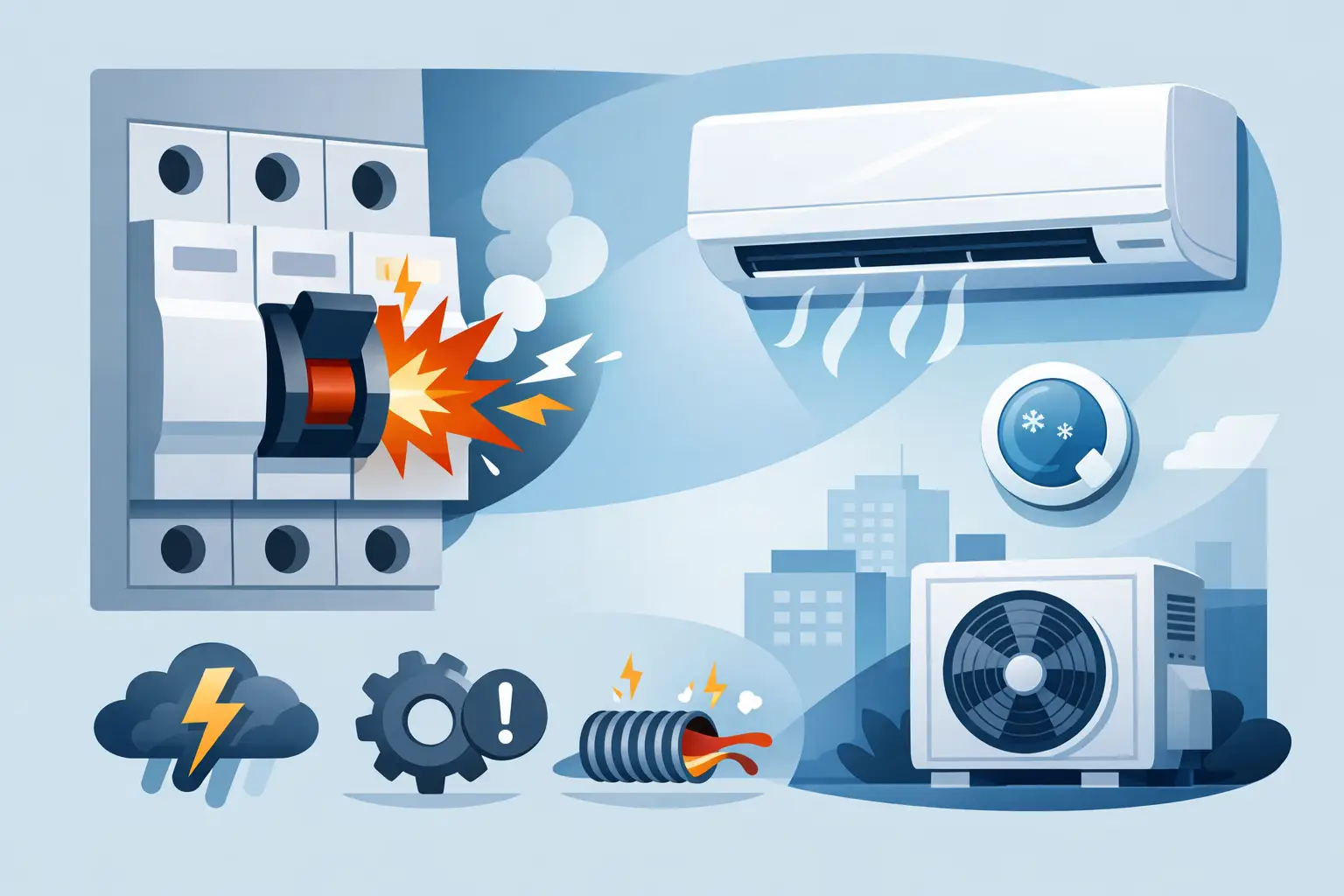
When your air conditioner shuts off and the breaker has tripped, it is rarely a random glitch. In most cases, what causes AC circuit breaker trips is an electrical or mechanical problem that is forcing the system to draw more current than it should. The breaker is doing its job by cutting power before wiring, components, or the unit itself are damaged.
For homeowners and business owners, the key is knowing the difference between a one-time nuisance trip and a warning sign of a larger fault. Resetting the breaker once may get the system running again, but repeated trips usually mean the AC needs inspection before the problem gets more expensive.
What causes AC circuit breaker trips most often?
Air conditioners trip breakers when something in the system creates overheating, overcurrent, or a short. That can happen at the indoor air handler, the outdoor condenser, or in the electrical supply feeding the equipment.
A dirty air filter is one of the simplest causes, and one of the most overlooked. When airflow is restricted, the system has to work harder to move air across the evaporator coil. That strain can increase operating temperature and create conditions that contribute to breaker trips, especially during heavy cooling demand.
Dirty condenser coils are another common issue. The outdoor unit needs to reject heat efficiently. If the coil is packed with dirt, dust, grass, or debris, the compressor can overheat while trying to maintain pressure. Compressors already use a high amount of power, so any added strain can push the system beyond safe limits.
Low refrigerant can create a similar problem, although the reason is different. Refrigerant does not get “used up” in normal operation, so low charge usually points to a leak. When charge is off, pressures inside the system change and the compressor may run hotter or longer than intended. That extra load can trip the breaker, particularly in older equipment.
Electrical faults are also high on the list. Loose connections, damaged wiring, worn contactors, failed capacitors, and shorted components can all cause sudden trips. These issues are less visible than a dirty filter, but often more serious. If the breaker trips immediately when the system starts, or instantly after you reset it, an electrical fault is more likely.
Airflow problems can overload the system
Not every breaker trip starts with an electrical defect. In many cases, poor airflow creates the strain that leads to one.
A clogged return filter is the first thing to check. So are blocked supply vents, crushed duct sections, and a blower motor that is not moving enough air. In ducted systems, closed registers across too many rooms can also affect static pressure and force the blower to work outside its normal range.
When airflow drops, the evaporator coil can get too cold and begin to freeze. Ice on the coil reduces heat transfer even more, which makes the unit run longer while delivering less cooling. That longer runtime can raise amp draw and increase the chance of a trip. By the time the breaker goes, the original issue may still be something as simple as neglected maintenance.
For small commercial spaces, airflow issues can be harder to spot because comfort complaints show up first. One office may feel warm, another too cold, and the system cycles unpredictably. Breaker trips in that situation are often the last symptom, not the first.
Compressor problems are a major red flag
If you are asking what causes AC circuit breaker trips after several resets, the compressor deserves serious attention. The compressor is one of the most power-hungry components in the system, and when it starts failing, breaker trips become more common.
Hard starting is a typical example. A weak capacitor, voltage issue, or aging compressor can make startup draw spike beyond normal levels. The breaker may hold for a while, then trip during the next cycle when the compressor tries to start under load.
In other cases, the compressor may be overheating internally. Dirty outdoor coils, low refrigerant, high ambient temperatures, or worn internal parts can all contribute. Sometimes the compressor still runs, but inefficiently. Sometimes it trips the breaker the moment it tries to engage. Either way, this is not a reset-and-ignore problem.
Compressor replacement can be costly, so proper diagnosis matters. A technician needs to confirm whether the compressor itself has failed or whether another issue, such as a capacitor or coil condition, is creating the symptoms.
The breaker itself can be the problem
It is easy to assume the AC is always at fault, but sometimes the breaker is weak or defective. Circuit breakers wear over time. If a breaker has tripped repeatedly, it can become more sensitive and start tripping below its proper threshold.
That said, breaker replacement should never be treated as the default fix. If the underlying problem is excessive current draw, installing a new breaker without diagnosing the equipment only hides the real issue for a short time. In the worst case, it creates a safety risk.
There is also the question of sizing. If an AC system was installed on the wrong breaker size, or if wiring is undersized for the equipment, nuisance trips can happen from day one. This is especially relevant in replacement jobs, renovations, and commercial fit-outs where electrical modifications may have been made over time.
What you can safely check before calling for service
There are a few practical steps you can take before scheduling a repair. Start with the filter. If it is dirty, replace it and see whether airflow improves. Then check that supply and return vents are open and not blocked by furniture, stock, curtains, or rugs.
Next, inspect the outdoor unit visually. Remove leaves, dirt buildup, and obvious debris around the condenser, but do not open electrical panels or attempt to wash internal components without the right method. Bending fins or forcing water into electrical parts can create a second problem.
You can also note the pattern of the trip. Does it happen immediately, after ten minutes, or only during the hottest part of the day? Does the indoor fan run while the outdoor unit fails? Does the system hum before shutting down? Those details help narrow the cause faster.
If the breaker has only tripped once, resetting it one time is reasonable. If it trips again, stop there. Repeated resets can stress the equipment and increase the chance of component damage.
When breaker trips mean you should stop using the AC
Some signs point to a higher-risk electrical issue and should not be ignored. If you smell burning, hear buzzing from the panel or outdoor unit, see melted insulation, or notice the breaker will not stay engaged at all, leave the system off and arrange professional service.
The same applies if the breaker feels hot, if lights dim sharply when the AC starts, or if the system is paired with an older panel that has had previous electrical issues. These conditions may involve the equipment, the circuit, or both.
For business owners, the decision often comes down to continuity. It may be tempting to keep resetting the system to get through the day, but that can turn a manageable repair into a compressor or wiring failure. Downtime is disruptive, but uncontrolled electrical faults are more disruptive.
How professional diagnosis usually works
A proper AC breaker-trip diagnosis goes beyond checking whether the unit turns on. A technician will typically measure amp draw, inspect capacitors and contactors, test wiring and terminals, evaluate refrigerant pressures, verify blower performance, and look at coil condition.
That process matters because the same symptom can come from very different causes. A tripped breaker could be tied to a dirty coil, a seized fan motor, a weak capacitor, a refrigerant leak, or a failing compressor. Replacing the wrong part wastes time and money.
For newer systems, the fix may be straightforward if the issue is caught early. For older systems, the right recommendation may depend on repair cost, unit age, energy use, and how often similar faults have already occurred. Honest advice should weigh all of those factors rather than pushing a repair that does not make long-term sense.
Preventing future AC breaker trips
The best way to reduce breaker trips is routine maintenance. Clean filters, unobstructed coils, tested electrical components, and verified refrigerant performance all help the system run within its design limits.
It also helps to pay attention to early warning signs. Longer cooling cycles, weak airflow, rising electric bills, warm supply air, hard starts, and unusual noises often appear before breaker trips begin. Acting on those signs early is usually cheaper than waiting for a shutdown.
For both homes and small commercial properties, preventive service is not just about comfort. It protects the electrical side of the system as well. That matters more during peak summer demand, when minor issues are most likely to become trip-causing faults.
If your AC has tripped the breaker more than once, treat it as the system asking for help. A careful inspection now can protect your comfort, your equipment, and your repair budget later.