
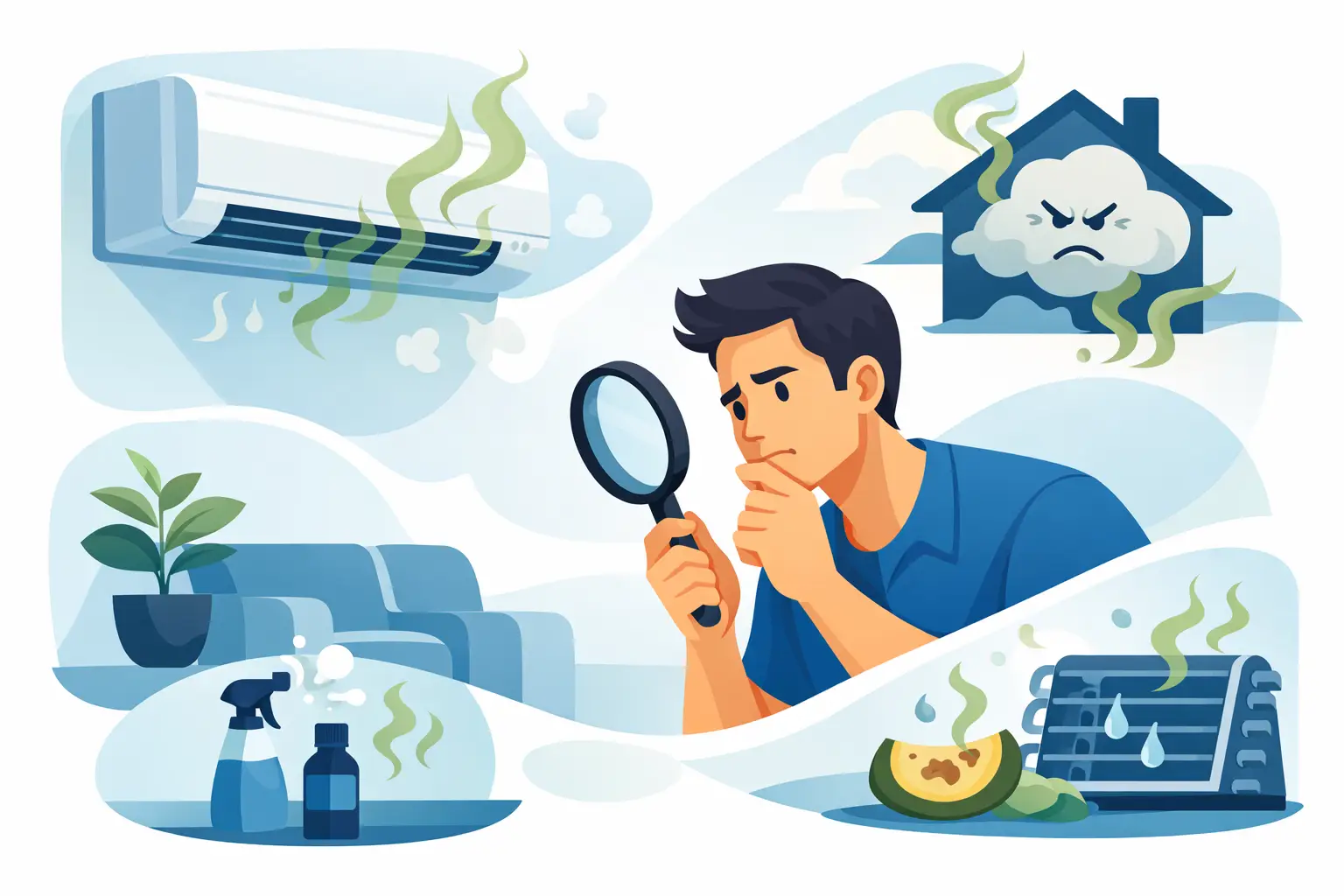
A strange odor from the air conditioner can turn a comfortable room into a concern quickly. Knowing how to troubleshoot AC smells helps you separate a simple maintenance issue, such as a dirty filter, from a problem that needs prompt professional attention. The key is to notice what the odor resembles, when it appears, and whether it comes with other warning signs like weak airflow, water leaks, or unusual system noise.
Do not ignore a persistent AC smell, especially in a home with children, older adults, pets, customers, or employees. Some odors point to moisture and microbial growth, while others can indicate electrical damage or a pest issue inside the system.
How to Troubleshoot AC Smells Safely
Start by turning the system off if the odor is strong, sudden, or smells like burning, melting plastic, gas, or chemicals. Do not keep running the AC simply to see whether the smell goes away. A system that is overheating or has an electrical fault can become more expensive to repair if it continues operating.
Once the system is off, think about the pattern. Does the smell begin only when cooling starts? Does it happen after the AC has been unused for several days? Is it limited to one room, one air handler, or one zone? These details help narrow down whether the source is likely the filter, evaporator coil, drain line, ductwork, electrical components, or something outside the HVAC equipment.
A homeowner can safely check accessible filters, supply vents, return grilles, and the area around an indoor air handler. Avoid opening sealed electrical panels, handling wiring, or applying household cleaners directly to coils and internal components. Those jobs are better handled during a professional maintenance or repair visit.
Match the Smell to the Likely Cause
Musty, damp, or “dirty sock” smell
A musty odor is one of the most common air conditioning complaints. It often occurs when moisture remains on the indoor evaporator coil, in the condensate pan, or within a drain line. Dust and organic debris can collect on damp surfaces, creating an odor that becomes noticeable as air moves over the coil.
The familiar “dirty sock” smell is especially common when cooling first starts. It does not necessarily mean there is visible mold throughout your ductwork, but it does mean the system should be inspected and cleaned properly. A clogged filter, restricted airflow, an overdue coil cleaning, or poor drainage can all contribute.
Replace a dirty disposable filter or clean a reusable filter according to the manufacturer’s instructions. If the odor returns quickly, the coil and condensate system may need professional cleaning. Simply spraying fragrance into vents will mask the issue temporarily, not correct it.
Sour, vinegar-like, or stale smell
A sour or vinegar-like smell may also point to microbial buildup around the evaporator coil or drain pan. In some cases, bacteria can develop in standing condensate water, particularly where a drain line is partially blocked or incorrectly pitched.
Look for signs of drainage trouble near the indoor unit, including water stains, dripping, a full drain pan, or moisture around the cabinet. Turn the system off if water is leaking near electrical equipment. A technician can clear the drain safely, inspect the condensate pump if your system has one, and address the underlying moisture source.
Burning, smoky, or melting-plastic smell
A burning smell requires more caution than a musty odor. Dust can burn off heating components when a heat pump or furnace is first used after a long break, but an AC system that smells like burning during cooling operation should be shut down.
Possible causes include an overheating blower motor, damaged wiring, a failed capacitor, loose electrical connections, or debris contacting a hot component. If you see smoke, hear buzzing or crackling, or notice the breaker tripping, leave the system off and arrange an urgent HVAC inspection. If there is an immediate fire risk, contact emergency services.
Do not reset a repeatedly tripped breaker and continue using the unit. The breaker is responding to a problem that needs diagnosis.
Rotten egg, sewage, or sulfur smell
A sewage-like odor may not originate inside the AC unit at all. An unused floor drain, dry plumbing trap, sewer vent issue, or drain connection near the air handler can allow odors to be pulled into the return air stream. Dead pests in ductwork or near the equipment can also create a foul smell.
If your property uses natural gas and you notice a rotten-egg odor, treat it as a possible gas leak rather than an air conditioning problem. Leave the building, avoid switches, flames, and electrical devices, and contact the gas utility or emergency services from a safe location.
For persistent sewage or animal odors, an HVAC professional may need to inspect accessible duct sections, the air handler, and the condensate drain area. A plumber or pest-control provider may also be needed depending on the source.
Chemical, sweet, or solvent-like smell
Refrigerant itself is often difficult to smell, so a chemical odor does not automatically prove there is a refrigerant leak. However, a sharp, sweet, or solvent-like smell combined with poor cooling, hissing sounds, ice on refrigerant lines, or rising energy bills warrants a service call.
A refrigerant issue can reduce efficiency and place strain on the compressor. It requires a licensed technician to locate the leak, make an appropriate repair, and charge the system correctly. Adding refrigerant without repairing the leak is not a lasting solution.
Fishy or urine-like smell
A fishy smell can sometimes result from overheating electrical insulation. A urine-like odor may be caused by pests nesting near wiring, insulation, or ductwork. Both deserve timely attention because rodents can damage wires and create sanitation concerns.
Turn off the system if the smell is strong or accompanied by electrical symptoms. A technician can inspect the equipment safely and advise whether pest removal, duct cleaning, or electrical repair is required.
Check the Easy Maintenance Items First
For a mild odor with no safety concerns, start with the filter. A clogged filter limits airflow, allows more dust to settle on the coil, and can make moisture-related odors worse. Check the filter size and direction before installing a replacement, and avoid using a filter with a higher rating than your system can accommodate unless your HVAC professional recommends it.
Next, inspect visible supply and return vents. Remove dust from the grille and make sure furniture, boxes, or curtains are not blocking airflow. In offices and retail spaces, check whether a recently renovated area, stored cleaning products, or a nearby drain is contributing odors that the HVAC return is pulling through the building.
You can also look around the indoor and outdoor equipment for standing water, leaves, pet waste, or other debris. Keep the outdoor unit clear, but do not pressure-wash coils or bend the delicate fins. Good airflow around the condenser supports system performance, though it will not fix an odor caused by the indoor coil or drain line.
When AC Odors Need Professional Service
Schedule professional service when the smell persists after a filter change, returns every cooling cycle, or is paired with water leaks, poor airflow, inconsistent temperatures, loud operation, ice buildup, or higher utility costs. An experienced technician can inspect parts of the system that are not safely accessible, including the evaporator coil, blower assembly, drain pan, condensate line, wiring, and duct connections.
For ducted systems, the investigation may include checking return-air pathways and zoning components. For split systems, the indoor head, coil, filters, and drain routing are common focus areas. Multi-zone and commercial systems can be more complex because an odor from one indoor unit may affect several occupied areas or indicate a drainage issue in only one zone.
Professional cleaning is not a one-size-fits-all service. Some systems need a coil and drain treatment, while others need a wiring repair, pest-related cleanup, or ductwork correction. A clear diagnosis before work begins helps avoid paying for unnecessary services.
Prevent Odors From Returning
Regular maintenance is the most reliable way to prevent many AC smells. Change filters on schedule, keep drains clear, and have the system inspected before peak cooling season. Properties in humid areas, homes with pets, and busy commercial spaces may need more frequent attention because filters and coils collect debris faster.
It also helps to run the fan or drying feature recommended by your manufacturer after heavy cooling periods, where available. The goal is to reduce lingering moisture on indoor components. If odor problems recur despite regular filter changes, ask for the condensate system, coil cleanliness, airflow, and duct condition to be assessed together.
A well-maintained AC should make your home or business feel clean, quiet, and comfortable – not make you wonder what is coming through the vents. Acting early on a new smell protects indoor comfort and gives a technician the best chance to resolve a small issue before it becomes a larger repair.