
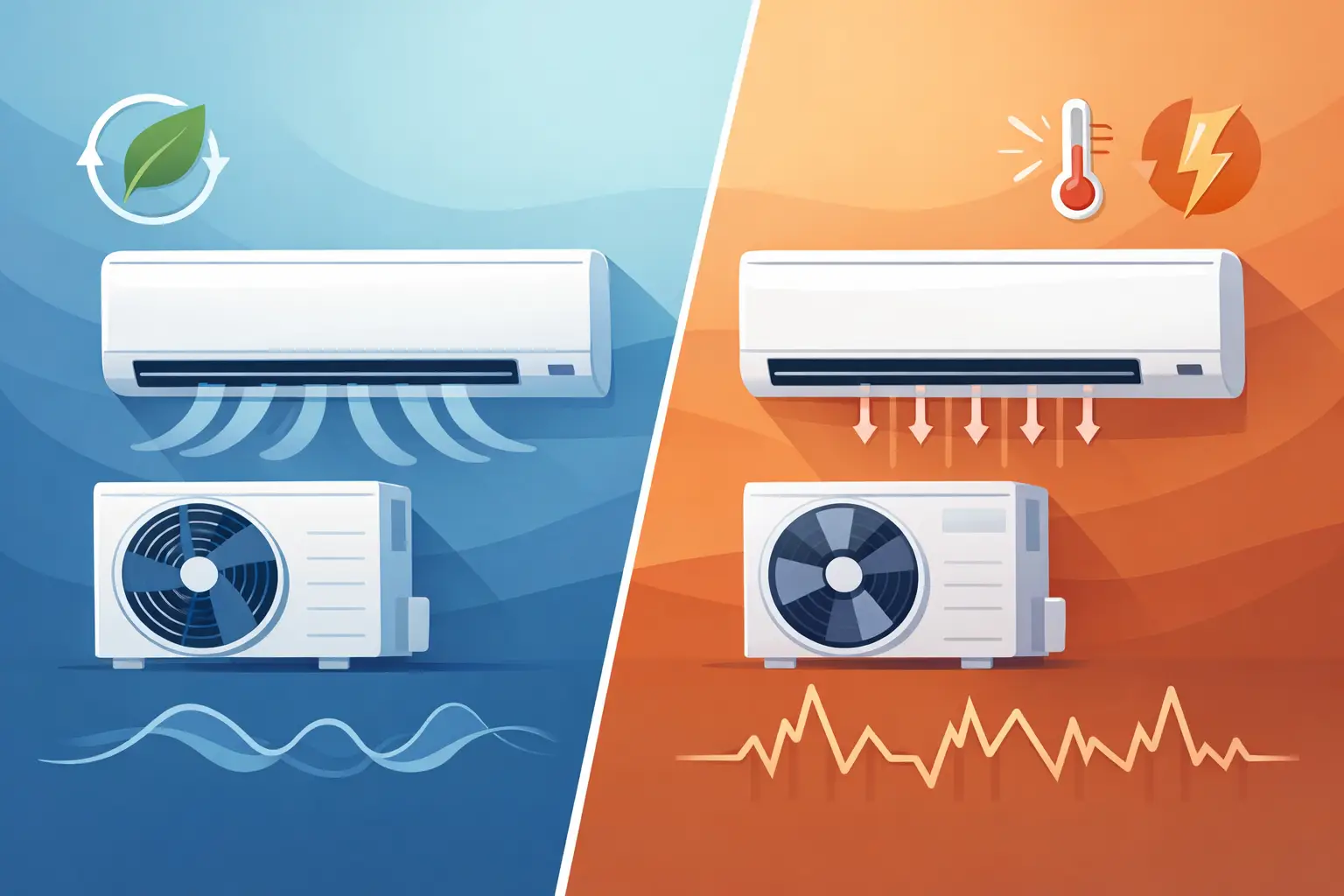
A system that blasts cold air, reaches the set temperature, then switches off may seem perfectly normal. But that stop-start cycle is the central difference in the inverter vs non inverter aircon decision, and it can affect your power bills, comfort, noise levels, and long-term operating costs.
For many homes and small businesses, an inverter system is the better everyday choice. That does not mean a non-inverter unit is automatically wrong. The right option depends on how often you use air conditioning, the size and layout of the space, your budget, and whether consistent temperature control matters to you.
How inverter and non-inverter air conditioners work
A non-inverter air conditioner has a compressor that generally operates at one fixed speed. When the room is warmer than the temperature you selected, the compressor switches on at full capacity. Once the target temperature is reached, it switches off. As the room warms again, it restarts.
An inverter air conditioner uses a variable-speed compressor. Rather than repeatedly turning fully on and off, it can slow down once the room is close to the desired temperature. It then makes small adjustments to maintain that setting with less dramatic cycling.
Both systems cool and heat effectively when correctly sized and installed. The difference is how they get there. A non-inverter unit works in distinct bursts, while an inverter unit is designed to match its output more closely to the actual demand in the room.
Inverter vs non inverter aircon: the differences that matter
Energy use
Inverter air conditioners are usually more energy-efficient during normal, extended use. Starting a compressor at full output requires a significant amount of energy. Because an inverter unit can reduce its speed instead of shutting down and restarting as often, it typically uses less electricity to hold a stable indoor temperature.
The size of the saving varies. It depends on the unit’s efficiency rating, outdoor conditions, insulation, thermostat habits, room size, and how many hours the system runs. A poorly sized inverter air conditioner will not deliver the savings expected from a well-designed system. Likewise, a non-inverter unit used only occasionally in a small space may have a modest total running cost simply because it is not operating very often.
For a family using heating and cooling most days, or a business keeping an office, store, or reception area comfortable throughout the day, the lower energy use of an inverter system can be meaningful over time.
Temperature consistency and comfort
Non-inverter systems can create a noticeable temperature swing. The room may feel quite cool while the compressor is running, then gradually warmer after it shuts off. This is especially apparent in bedrooms, open-plan living areas, and customer-facing commercial spaces where comfort needs to remain steady.
An inverter system is generally better at maintaining an even temperature. Once it reaches the set point, it runs at a lower capacity to manage gradual changes in heat load. The result is often less hot-and-cold fluctuation and a more comfortable indoor environment.
This matters for more than personal preference. Consistent cooling can help employees concentrate, keep customers comfortable, and reduce the tendency to continually change the thermostat setting. For homes, it can make bedrooms more comfortable overnight and reduce the feeling that the system is either working too hard or not doing enough.
Noise levels
Because inverter compressors do not need to restart at maximum output as frequently, they are often quieter in operation. Indoor fan noise still depends on the model and fan speed, but the overall experience is usually less disruptive once the space reaches temperature.
A non-inverter unit can be a practical choice for a workshop, garage, storage room, or lightly used area where background noise is less of a concern. In a bedroom, meeting room, or living space, quieter operation is usually worth considering.
Upfront cost
Non-inverter units are often less expensive to purchase. For buyers working to a strict initial budget, this can be their main advantage. The design is simpler, and a basic system may be suitable where cooling is needed only for short periods or as a temporary solution.
Inverter models generally cost more upfront. The question is whether the higher purchase price is justified by lower energy consumption, quieter operation, and better comfort over the life of the system. In frequently used spaces, it often is. In a rarely occupied room, the payback may take longer.
Installation quality should be part of this calculation. Selecting the lowest-priced unit without considering sizing, electrical requirements, drain routing, refrigerant pipework, and placement can create poor performance regardless of whether the system has inverter technology.
Performance in changing conditions
Outdoor temperatures do not stay constant, and neither does the heat load inside a property. Sun exposure, cooking, people entering and leaving, computer equipment, and large windows can all change how much cooling a room needs.
Inverter air conditioners are well suited to these changing conditions because they can increase or decrease output as required. This is particularly useful for open-plan homes, rooms with afternoon sun, and commercial spaces with varying occupancy.
A non-inverter system has less flexibility. It can still cool the room, but it does so by operating at full capacity until it reaches the thermostat setting. On very hot days, any air conditioner may need to work hard. Correct capacity, effective insulation, and sensible system design remain more important than technology alone.
Which system suits your property?
An inverter split system is often a strong fit for bedrooms, living rooms, apartments, home offices, and spaces used every day. It is also commonly a good choice for businesses that operate regular hours and need predictable comfort without excessive energy use.
Inverter technology is available across several system types, including wall-mounted split systems, multi-split systems, ducted air conditioning, and VRV/VRF solutions. For larger homes and commercial properties, the benefits can extend beyond one room. Zoned ducted and VRF systems can reduce unnecessary conditioning of unused areas while providing stable comfort where it is needed.
A non-inverter unit may make sense for a low-use room, a basic budget installation, or a space where temperature precision and sound levels are less important. It can also be considered when replacing an older system in a setting with limited electrical capacity or other site constraints. These cases should be assessed individually rather than assumed.
Do not compare technology without comparing size
The most efficient air conditioner is not always the one with the highest advertised rating. An oversized unit may cool a small room too quickly, causing short cycles and uneven dehumidification. An undersized unit may run continuously in peak weather, struggle to reach the thermostat setting, and place unnecessary strain on components.
A proper recommendation considers room dimensions, ceiling height, insulation, window orientation, local climate, occupancy, appliances, and whether doors are frequently opened. For ducted and commercial systems, zoning, duct design, airflow balance, and outdoor unit location also matter.
This is why two properties with the same floor area can need very different solutions. A shaded, insulated apartment and a sun-exposed retail space with large glass frontage do not have the same cooling load.
Maintenance and reliability considerations
Inverter air conditioners contain more sophisticated electronics, so qualified diagnosis is important if a fault occurs. That does not make them unreliable. Modern inverter systems are widely used and can provide many years of dependable service when they are correctly installed and maintained.
Both inverter and non-inverter units benefit from regular filter cleaning, clear outdoor airflow, drain inspections, and professional servicing. Dirty filters restrict airflow and reduce efficiency. Blocked drains can lead to water damage. Low refrigerant, electrical faults, and worn components should be addressed early rather than ignored until the system fails during extreme weather.
For commercial operators, preventive maintenance is especially valuable. A breakdown can affect staff comfort, customer experience, equipment, and trading conditions. Scheduled checks make it easier to identify issues before they become urgent callouts.
The practical choice
If you use air conditioning regularly, want quieter operation, and value stable temperatures and lower ongoing energy use, an inverter system is usually the sensible investment. If the unit will cool an occasional-use space and the initial purchase price is the priority, a non-inverter option may still meet the need.
The best decision starts with an honest assessment of how the space is used, not just the price tag on the unit. A correctly sized, professionally installed system will do more for comfort and efficiency than a feature list ever can.