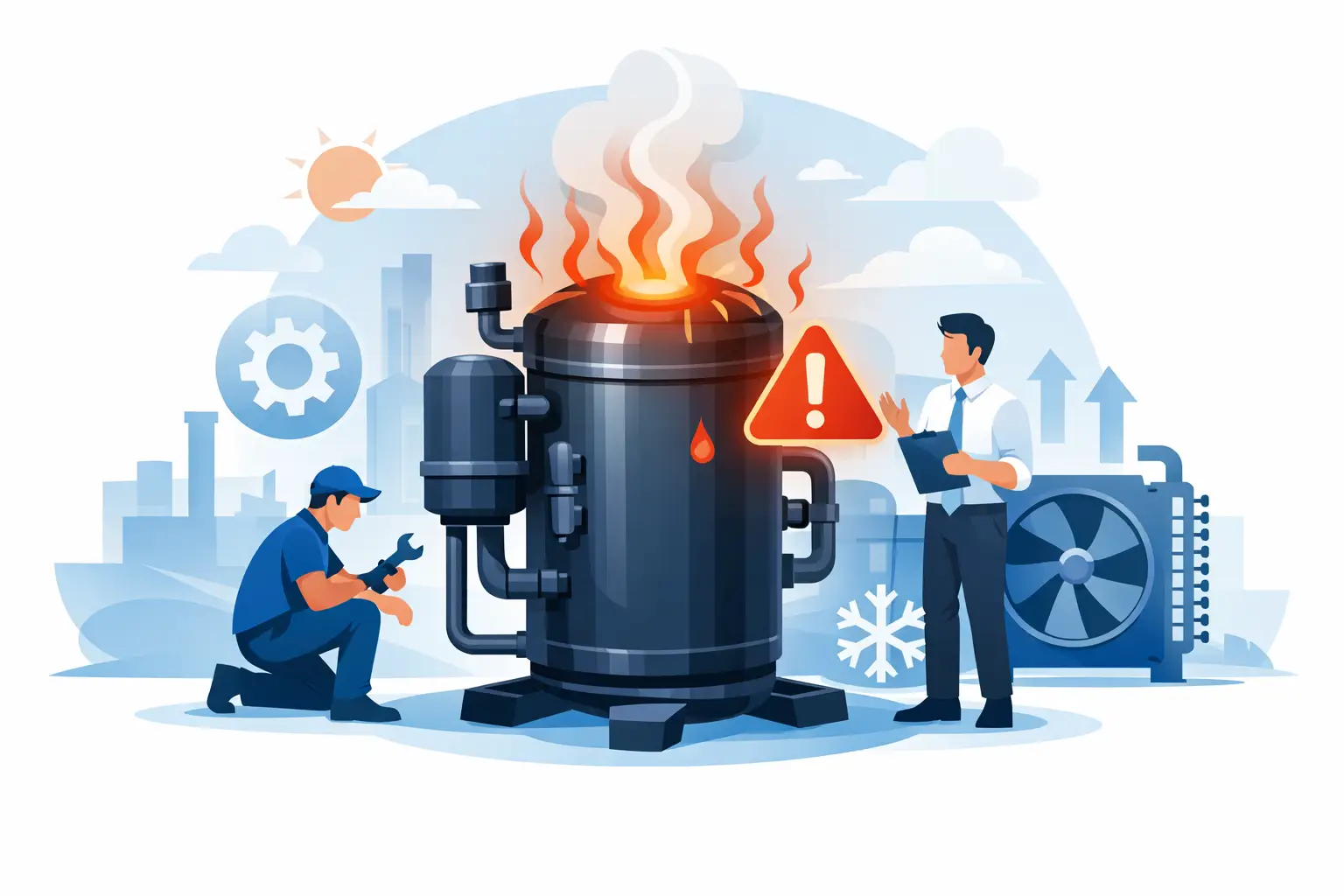
A compressor that shuts down on a hot afternoon is rarely an isolated inconvenience. It can leave rooms warm, disrupt a business, and turn a manageable service call into a major repair if the system is repeatedly restarted. Understanding why compressors overheat helps you recognize the early signs, protect the equipment, and know when to call an HVAC professional.
The compressor is the part of an air conditioning system that circulates refrigerant and makes cooling possible. It works under high pressure and generates heat during normal operation. The outdoor unit is designed to release that heat, but when airflow, refrigerant pressure, electrical supply, or internal components are not working as intended, temperatures can climb beyond safe limits.
Why compressors overheat in air conditioning systems
Most modern systems have thermal protection that shuts the compressor off before serious damage occurs. That safety feature is useful, but it is not a fix. If the underlying problem remains, the system may short cycle, cool poorly, consume more electricity, or eventually fail to start at all.
Restricted airflow around the outdoor unit
An air conditioner cannot cool your home effectively if its outdoor condenser cannot reject heat. Dirt, leaves, grass clippings, and cottonwood can block the condenser coil. So can landscaping planted too close to the unit, stacked boxes near commercial equipment, or a cover left on during operation.
When heat cannot escape, the refrigerant pressure rises and the compressor has to work harder. The outdoor fan may still be spinning, yet the unit can become extremely hot and shut down on overload. A dirty coil is one of the more preventable causes of compressor overheating, but it needs to be cleaned carefully. High-pressure washing or aggressive brushing can flatten the delicate coil fins and reduce airflow further.
A failed fan or fan motor problem
The condenser fan pulls outdoor air across the coil. If the fan motor is weak, the blade is damaged, the capacitor has failed, or the fan is not running at the correct speed, the compressor may overheat quickly.
You may hear a humming outdoor unit without the usual fan sound, or notice that the fan starts and stops intermittently. Turn the system off rather than allowing it to run in that condition. Fan and capacitor repairs are often far less costly than replacing a damaged compressor.
Low refrigerant from a leak
Air conditioners do not use up refrigerant in normal operation. If the charge is low, there is usually a leak somewhere in the system. Low refrigerant can cause the evaporator coil to freeze, reduce cooling capacity, and force the compressor to run longer under unfavorable conditions.
Adding refrigerant without locating and repairing the leak may provide temporary cooling, but it does not solve the cause. A proper repair involves diagnosing the leak, addressing it where practical, testing the system, and charging it according to manufacturer specifications.
Refrigerant overcharge or incorrect system setup
Too much refrigerant can also create trouble. An overcharged system may run at excessive pressure, putting added strain on the compressor and other components. This sometimes happens after an incorrect repair, but installation issues such as improper line sizing, poor evacuation practices, or mismatched equipment can also affect system operation.
This is one reason compressor concerns should be assessed with gauges, temperature readings, electrical tests, and a review of the complete system. The outdoor unit alone does not tell the whole story.
Dirty filters and indoor airflow restrictions
A clogged return-air filter may seem unrelated to the compressor outside, but airflow problems begin a chain reaction throughout the system. Restricted indoor airflow can cause the evaporator coil to become too cold and freeze. Once the system pressures move outside their normal range, compressor operation can be affected.
Check filters regularly, particularly during periods of heavy summer use. Homes with pets, construction dust, or frequent open windows may need more frequent filter changes. For ducted systems, closed or blocked supply vents, damaged ductwork, and a failing indoor blower can create similar problems.
Electrical issues and hard starting
Compressors need a steady electrical supply and the right starting components. A weak capacitor, deteriorated contactor, loose wiring connection, voltage fluctuation, or worn relay can make starting difficult. The compressor may draw high current, hum without starting, or repeatedly trip a breaker.
Do not keep resetting a tripped breaker to force cooling. Breakers trip for a reason, and repeated resets can risk equipment damage or an electrical hazard. An HVAC technician can test voltage, amp draw, capacitors, terminals, and compressor windings to identify whether the issue is external to the compressor or within it.
Warning signs a compressor is running too hot
A hot outdoor cabinet alone is not a reliable diagnosis. On a warm day, it is normal for the condenser section to feel warm and for the unit to release heat. The concern is a change in performance or operation.
Watch for weak cooling, unusually long run times, warm air from supply vents, frequent system shutdowns, a breaker that trips, loud humming, clicking, or a burning electrical smell. Ice on the refrigerant line or indoor coil can also point to airflow or refrigerant problems. If you see ice, turn cooling off and set the fan to ON if it is operating normally. Let the ice thaw before service so the system can be evaluated accurately.
Commercial operators may notice a different pattern: inconsistent comfort across zones, a rising utility bill, complaints from customers or staff, or refrigeration and server-room temperatures becoming harder to maintain. In a multi-zone, VRF, or larger ducted system, the source may involve controls, multiple indoor units, or refrigerant circuit performance. Those systems need a technician familiar with the equipment type.
What to do when an AC compressor overheats
Start by turning the cooling system off at the thermostat. If the breaker has tripped, leave it off. Running a compressor after it has overheated can worsen mechanical wear, damage insulation in the motor windings, and turn a repairable fault into a compressor replacement.
After the unit has cooled, you can safely look for obvious external issues. Remove loose leaves and debris around the outdoor unit, make sure nothing is blocking its airflow, and inspect the return filter. Replace a visibly dirty filter with the correct size and type. Do not open electrical panels, touch wiring, add refrigerant, or spray water into the unit while it is energized.
If the system resumes operation but performs poorly, do not treat that as confirmation that the problem has resolved. Intermittent overloads are common with weak capacitors, dirty coils, failing fans, and electrical connections. Scheduling an inspection before the next heat wave can help avoid an after-hours breakdown.
Repair or replacement: what makes sense?
A compressor issue does not automatically mean the whole air conditioner must be replaced. The right decision depends on the cause, the system age, efficiency, refrigerant type, overall condition, and cost of the repair compared with replacement.
For example, cleaning a coil, replacing a capacitor, repairing a fan motor, or correcting an airflow restriction can restore reliable operation without major expense. A refrigerant leak may be worth repairing on a newer, otherwise sound system. However, a failed compressor in an older unit with recurring repairs, obsolete refrigerant, or poor efficiency may make replacement the better long-term value.
An honest assessment should include more than the immediate part cost. It should consider expected reliability, energy use, warranty coverage, and whether the existing system is correctly sized for the space. For a home with uneven temperatures or a business with changing occupancy, replacement may also be an opportunity to improve zoning and comfort rather than simply restore the old setup.
Preventing future compressor overheating
Regular maintenance is the most practical defense. Before peak cooling season, have the system inspected, coils cleaned as needed, electrical components tested, drain operation checked, and refrigerant performance evaluated. Keep the outdoor unit clear of vegetation and debris, and replace filters on schedule.
Installation quality matters just as much. Correct sizing, refrigerant piping, airflow setup, and electrical connections all influence compressor life. A system that is too small may run excessively, while an oversized system can short cycle and struggle with humidity control. The best solution is not always the largest unit – it is the system designed and commissioned for the building.
A compressor protects your comfort, but it also protects itself only to a point. When your air conditioner starts cycling off, blowing warm air, or tripping breakers, stopping early and arranging professional diagnosis is the simplest way to protect the rest of the system.