
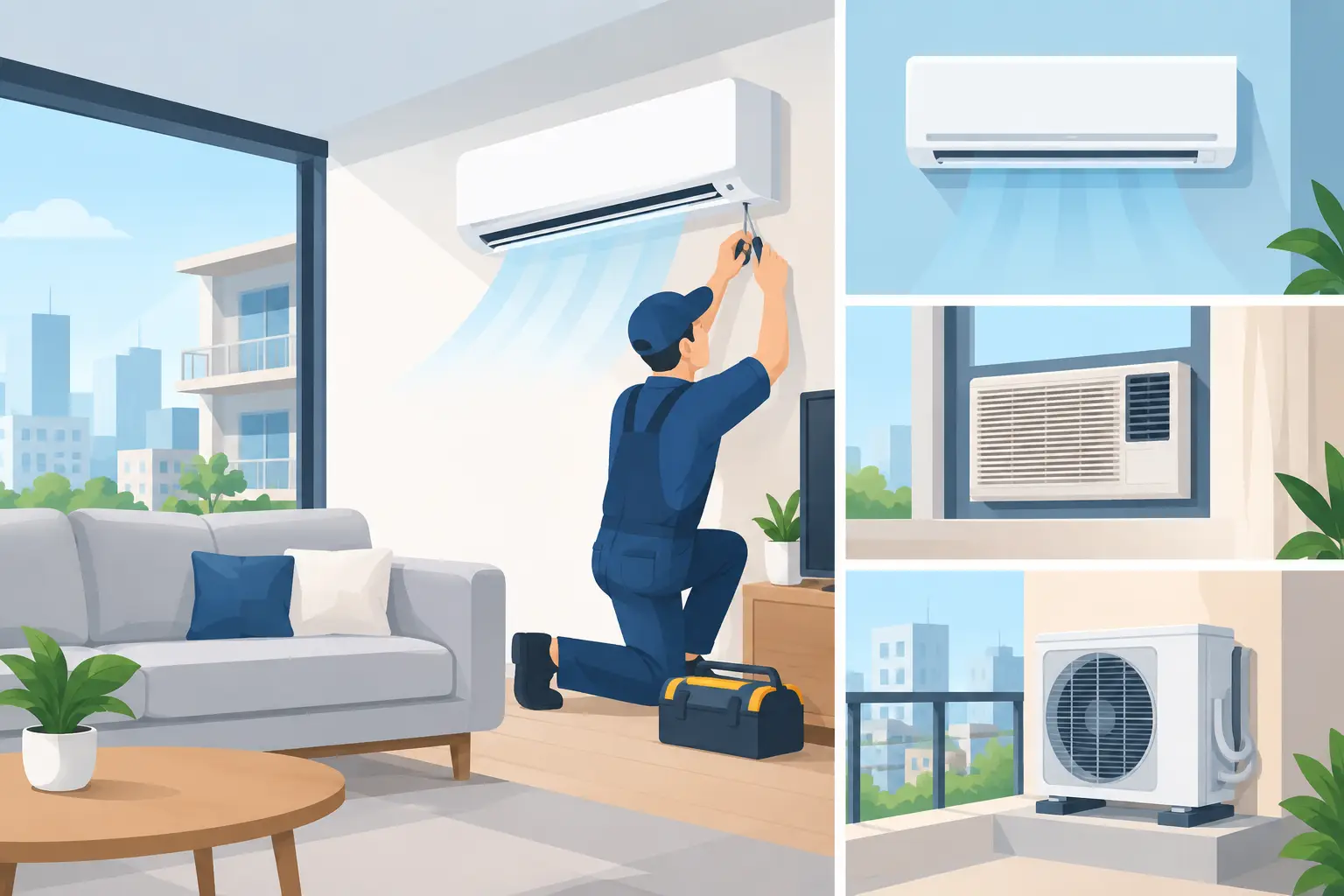
A west-facing apartment can become uncomfortably warm long before the outdoor temperature reaches its peak. But cooling an apartment is not as simple as choosing the largest unit that fits the wall. Apartment aircon installation options need to work within the building’s rules, available electrical capacity, exterior restrictions, and the layout of your home.
The right system should cool the rooms you use, operate quietly, and avoid creating approval or maintenance problems later. For some apartments, a simple window or portable unit is enough. For owner-occupied condos and larger apartments, a professionally installed split, multi-split, or ducted system can provide quieter, more efficient long-term comfort.
Start with the building, not the equipment
Before comparing brands or capacities, confirm what your lease, homeowners association, condo board, or building management allows. Exterior condensers, wall penetrations, balcony use, drainage, and changes to common property often require written approval. In many buildings, a window-mounted unit may also be restricted because of appearance, safety, or facade rules.
Your apartment’s electrical panel matters too. Older buildings may have limited capacity, while a new heat pump system may need a dedicated circuit. A qualified HVAC contractor and licensed electrician can identify these issues before an installation is quoted, rather than discovering them after equipment has been ordered.
It is also worth considering access. Outdoor units may be installed on a balcony, roof, approved exterior bracket, or designated mechanical area. If technicians need roof access, a lift, or a scheduled work window, that can affect both planning and installation cost.
Apartment aircon installation options at a glance
There is no one best system for every apartment. The practical choice depends on whether you rent or own, how many rooms need cooling, and what the building will permit.
Portable air conditioners
Portable units are usually the easiest option for renters because they do not permanently alter the property. Most vent warm air through a window kit, and they can be moved between rooms. Their main drawback is performance: they are generally louder and less efficient than fixed systems, particularly in larger or sunny rooms.
A portable unit can be a reasonable short-term answer for a bedroom or small living space. It is rarely the best choice for cooling an entire apartment every day through a hot summer.
Window and through-wall units
Window air conditioners can deliver more direct cooling than portable units at a relatively low upfront cost. They suit apartments where window units are allowed and where the window type can safely support one. Casement windows, security screens, heritage restrictions, and building rules can make this option impractical.
Through-wall units require a permanent opening in an exterior wall. They can look cleaner than a window unit and free up window space, but installation is more involved. Because exterior walls may be common property, approval is especially important before any work begins.
Single-zone ductless mini-splits
A ductless mini-split pairs an indoor wall-mounted unit with an outdoor condenser. Refrigerant lines and wiring run through a small wall opening, allowing the indoor unit to cool a living room, bedroom, studio, or open-plan area efficiently.
For many apartment owners, this is the strongest balance of comfort, noise control, and operating cost. Modern inverter systems adjust output as the room temperature changes, rather than repeatedly switching fully on and off. They are quieter than portable or window units and can also provide heating in many climates.
The trade-off is that the outdoor unit needs an approved location, condensate must drain correctly, and the installation requires professional design. A poorly positioned indoor head can leave one part of the room cool while another remains warm.
Multi-split systems for several rooms
A multi-split system connects two or more indoor units to one outdoor condenser. It can be a good solution for a two- or three-bedroom apartment where occupants want independent control in bedrooms and living areas but the building permits only one outdoor unit.
Each indoor unit can usually be controlled separately, which helps avoid cooling unused bedrooms. However, multi-splits are not automatically the lowest-cost option. The pipework design is more complex, and capacity must be calculated carefully so the system performs when several zones run at once. In some layouts, installing two single-zone systems can be simpler and more economical if the building allows multiple condensers.
Ducted and concealed systems
Ducted air conditioning provides the cleanest visual finish. Air is delivered through ceiling grilles, with the equipment concealed in a ceiling void or service area. Zoning can allow different rooms to be conditioned separately, making ducted systems attractive for larger apartments, penthouses, or major renovations.
Space is the deciding factor. Many apartments do not have enough ceiling cavity for ducts, insulation, and access panels without lowering ceilings. Installation can also involve more extensive construction work. When the layout and budget support it, ducted air conditioning offers discreet, even comfort across the home.
Concealed ducted mini-splits can be useful where only one area, such as an open living and dining space, needs a hidden solution. They still require adequate ceiling space and a planned return-air path.
VRF or VRV systems
Variable refrigerant flow systems, often called VRF or VRV systems, are typically used in larger residences, mixed-use buildings, and commercial spaces. They support multiple indoor units with sophisticated zone control and can be a suitable choice for a premium apartment project or an entire building upgrade.
For a single small apartment, VRF is usually more system than necessary. It becomes more relevant when a developer, building owner, or commercial tenant needs flexible climate control across many rooms or suites.
Size the system for the apartment you actually have
Cooling capacity should be based on more than square footage. Ceiling height, glazing, sun exposure, insulation, floor level, kitchen heat, and the number of occupants all change the load. A top-floor apartment with large west-facing windows may need a very different solution than a shaded ground-floor unit of the same size.
Oversizing is not a safe shortcut. A unit that is too large can cool a room quickly but cycle too often, which may reduce comfort and humidity control. An undersized unit may run continuously and still struggle on the hottest days. A proper site assessment considers the room layout and heat gain before capacity is selected.
Plan for drainage, noise, and appearance
The details behind the equipment often determine whether an installation feels successful. Condensate from indoor units needs a reliable drainage route. Gravity drainage is preferable where possible; a condensate pump may be needed when the pipe route cannot fall naturally, but pumps add a component that requires periodic checking.
Noise should be assessed from both sides of the system. Indoor units need thoughtful placement away from beds or quiet work areas, while the outdoor condenser should not direct noise toward neighboring windows, balconies, or shared corridors. Vibration isolation and secure mounting are particularly valuable in apartment buildings, where sound can transfer through walls and slabs.
Line-set routing also deserves attention. Neatly planned pipe covers, concealed services, and appropriately placed indoor heads protect the appearance of the apartment. The cheapest route is not always the best route if it leaves exposed pipework across a balcony or requires difficult maintenance access later.
What affects installation cost?
Apartment air conditioning costs vary widely because the equipment is only one part of the project. A basic portable unit is the lowest upfront investment, while a professionally installed split system adds labor, electrical work, refrigerant piping, drainage, and mounting. Multi-zone and ducted installations cost more because they involve additional indoor units, controls, pipe runs, and construction work.
The biggest cost variables are system capacity, access constraints, the length and difficulty of line runs, electrical upgrades, condensate drainage, structural mounting, and required building approvals. If a quote appears unusually low, ask what it includes: permits, electrical work, wall penetrations, brackets, drainage, commissioning, cleanup, and warranty support should be clear.
Questions to settle before approving an installation
Ask building management whether the condenser location, exterior penetrations, operating noise, and work hours are approved. Ask the contractor how the system will be sized, where condensate will drain, whether a dedicated electrical circuit is required, and how future service access will be maintained.
Also clarify who is responsible for restoring finishes around wall penetrations and whether the manufacturer warranty depends on professional installation and registration. Clear answers before work starts prevent the most common disputes after installation.
A well-chosen apartment system should feel almost invisible in daily life: consistent temperature, manageable energy use, quiet operation, and no concern about whether it was installed correctly. The best next step is an on-site assessment that accounts for your apartment, your building rules, and how you actually use each room.