
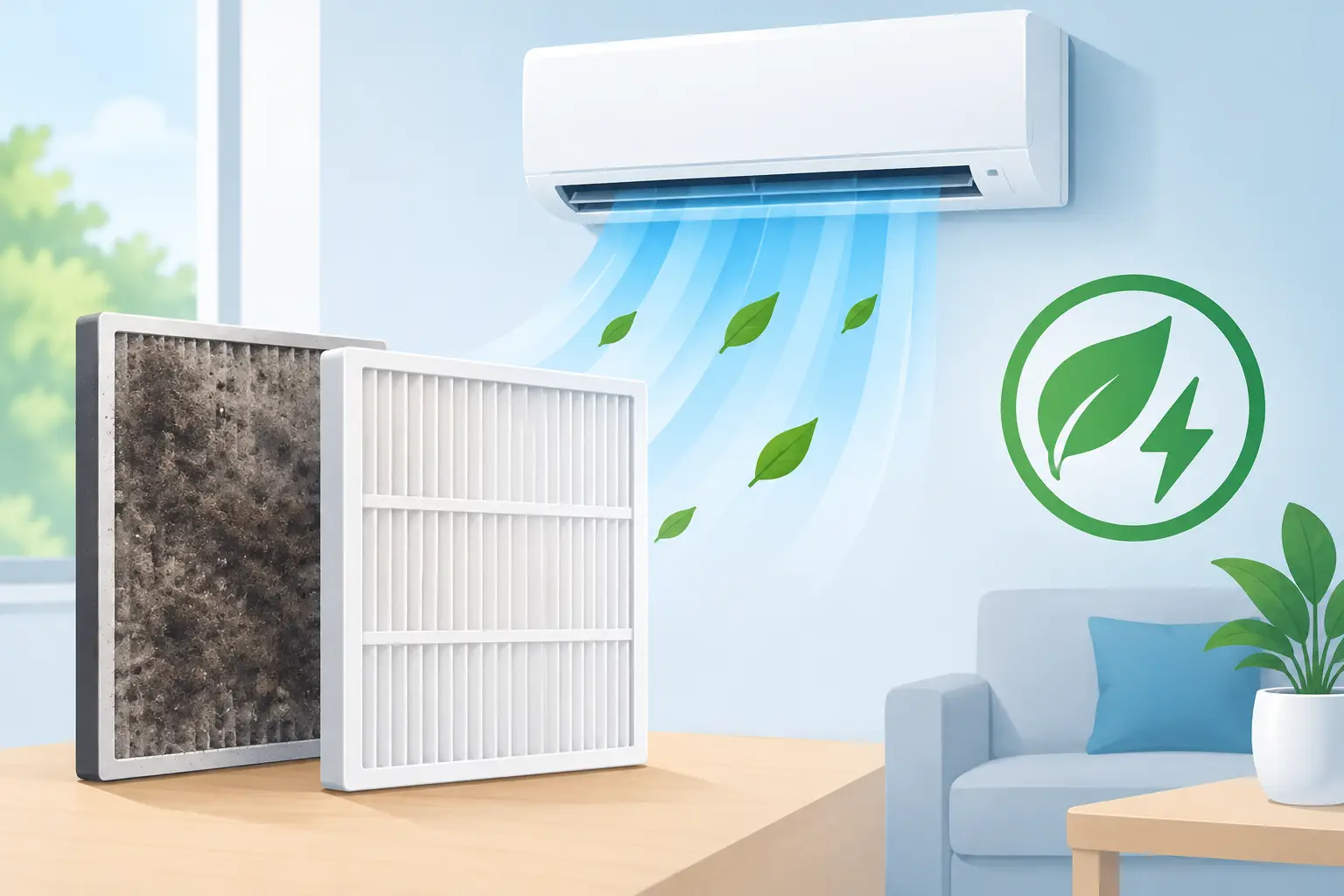
A weak stream of cool air from a vent often has a simple cause: a filter that has collected months of dust, pet hair, and debris. Clean air conditioner filters help your system move air as designed, which can improve comfort, reduce unnecessary strain on equipment, and support better indoor air quality for the people using the space.
For a homeowner, this is one of the most straightforward maintenance tasks available. For an office, retail store, or other commercial space, it is a small routine that can prevent larger comfort complaints and avoidable service calls. The key is knowing whether your filter should be cleaned or replaced, how often to check it, and when a dirty filter may be pointing to a larger HVAC issue.
Why clean air conditioner filters make a difference
Your air conditioner needs steady airflow to cool effectively. In a central ducted system, air is drawn back through return grilles, passes through the filter, and then travels across the indoor coil before being distributed through the property. In a ductless split system, filters behind the front panel capture dust before air moves through the indoor unit.
When that filter is clogged, the system has to work harder to pull air through it. You may notice rooms taking longer to cool, less air coming from vents, or the unit running for extended periods without delivering the same level of comfort. The system can still appear to be operating, but it may be using more energy than necessary to do the job.
Restricted airflow can also contribute to other problems. In severe cases, an indoor coil can become cold enough to freeze, leading to reduced cooling or water leaks once the ice melts. A dirty filter is not the only cause of a frozen coil, but it is one of the first things worth checking.
Filters also have an indoor air quality role. They help capture common airborne particles, including household dust, lint, pollen, and pet dander. They are not a replacement for managing moisture, cleaning ductwork when appropriate, or addressing mold and other contamination sources. Still, the correct filter in good condition is a practical first line of defense.
Clean or replace the filter?
This depends on the type of equipment and filter installed. Many wall-mounted mini-split systems have washable mesh filters designed to be removed, cleaned, dried, and reinstalled. Many ducted central systems use disposable pleated filters that should be replaced rather than washed.
Trying to wash a disposable filter usually damages its filtering material and frame. It may look cleaner afterward, but its performance can be compromised. Likewise, reinstalling a washable filter while it is still damp can introduce moisture into the indoor unit and encourage odors or microbial growth.
Check the filter frame, the owner’s manual, or the air handler specifications if you are unsure. A technician can also identify the correct filter type and size during routine maintenance. The wrong size can allow unfiltered air to bypass the filter, while a poorly fitted filter can rattle, bend, or restrict airflow.
How to clean a reusable split-system filter
Turn the unit off before opening the indoor head. Carefully remove the filters according to the manufacturer’s instructions, then use a vacuum with a soft brush attachment to remove loose dust. If the filters need more attention, rinse them gently with lukewarm water.
Avoid harsh cleaners, stiff brushes, or high-pressure water. These can damage the fine mesh. Let the filters air-dry completely in a clean, shaded area before reinstalling them. Do not use a hair dryer or direct heat, as heat can distort plastic components.
While the filters are out, look for visible buildup on the indoor unit’s louvers or signs of dripping water. Do not spray cleaner deep into the unit or attempt to clean the coil yourself. Those areas need careful access and cleaning methods that protect electrical components and drainage parts.
When to replace a central HVAC filter
Disposable filters should be replaced when they are visibly loaded with debris or according to the recommended schedule. Hold the filter up to a light source. If little light passes through, or the surface is heavily gray and dusty, replacement is usually due.
Install the new filter with the airflow arrow pointing toward the equipment. In most central systems, that means the arrow points from the return grille toward the air handler or furnace. An incorrectly installed filter may not perform as intended and can make service access harder.
Never operate a ducted system without a filter in place. Even a short period can allow dust to build up on the indoor coil and blower components, where cleaning is more involved than changing a filter.
How often should you check filters?
There is no single schedule that works for every property. Usage, pets, nearby construction, smoking, occupancy, and local pollen levels all affect how quickly a filter becomes dirty. Checking regularly is more reliable than waiting until airflow becomes noticeably poor.
As a practical starting point:
- Check washable mini-split filters every month during periods of regular cooling or heating use, and clean them as needed.
- Check standard one-inch central filters monthly and expect to replace them about every one to three months.
- Check thicker media filters at least every two to three months. Some last longer, but the actual condition matters more than the label.
- Check filters more frequently in homes with shedding pets, allergy concerns, renovation dust, or high system run time.
Commercial properties may need a tighter schedule. A small office with consistent occupancy can often follow a planned quarterly inspection, while a busy retail location, workshop, or space near a dusty loading area may require more frequent checks. Maintenance records help building managers spot patterns and budget for service before comfort issues affect staff or customers.
Choose filtration without choking airflow
It is tempting to select the highest-rated filter available, especially when allergies are a concern. More filtration is not always better for every system. High-efficiency filters can create additional resistance to airflow, particularly if the return ductwork or blower was not designed for them.
MERV ratings are commonly used to describe how effectively a filter captures particles. A mid-range pleated filter is often a sensible choice for many residential systems because it offers better particle capture than basic fiberglass filters without placing excessive demand on the equipment. However, the right rating depends on the system, the filter’s surface area, and the household’s needs.
If someone in the building has significant allergy or respiratory concerns, discuss the options with an HVAC professional rather than simply increasing the MERV rating. The solution may involve a compatible filter cabinet, improved return airflow, a dedicated air cleaner, or a combination of measures. Good filtration should support both air quality and reliable system performance.
Signs the problem is more than the filter
Replacing or cleaning a filter can restore airflow quickly, but it will not solve every cooling issue. If the new or cleaned filter makes little difference, there may be a mechanical, refrigerant, drainage, ductwork, or control problem that needs professional diagnosis.
Pay attention if the unit is blowing warm air, cycling on and off repeatedly, making unusual noises, leaking water, producing a persistent musty odor, or tripping a breaker. Uneven temperatures between rooms can also point to duct leaks, poor zoning, undersized return air, blocked vents, or a system that is not properly matched to the space.
For ductless systems, filters that become dirty again very quickly may indicate that the indoor coil, blower wheel, or drain pan needs deeper cleaning. For ducted equipment, recurring dust buildup can be related to return leaks, construction debris, or gaps around the filter rack. A thorough maintenance visit can identify these issues before they lead to a breakdown during peak weather.
Make filter care part of routine maintenance
The easiest approach is to set a recurring reminder at the beginning of each month and keep the correct replacement filters on hand. Write the filter size, type, and installation date on the frame. For washable filters, keep a simple note of the last cleaning date so they do not get overlooked during a busy season.
Professional seasonal maintenance adds another layer of protection. A technician can inspect airflow, electrical connections, condensate drainage, coils, refrigerant performance, and overall system operation. Filter care handles a common source of restriction, while professional service addresses the parts of the system that are not visible from the return grille or indoor unit cover.
A clean filter is a small piece of equipment with a direct effect on comfort. Make time to check it before the next stretch of hot weather, and if airflow or cooling still feels wrong afterward, arrange an inspection before a minor issue becomes an untimely repair.