
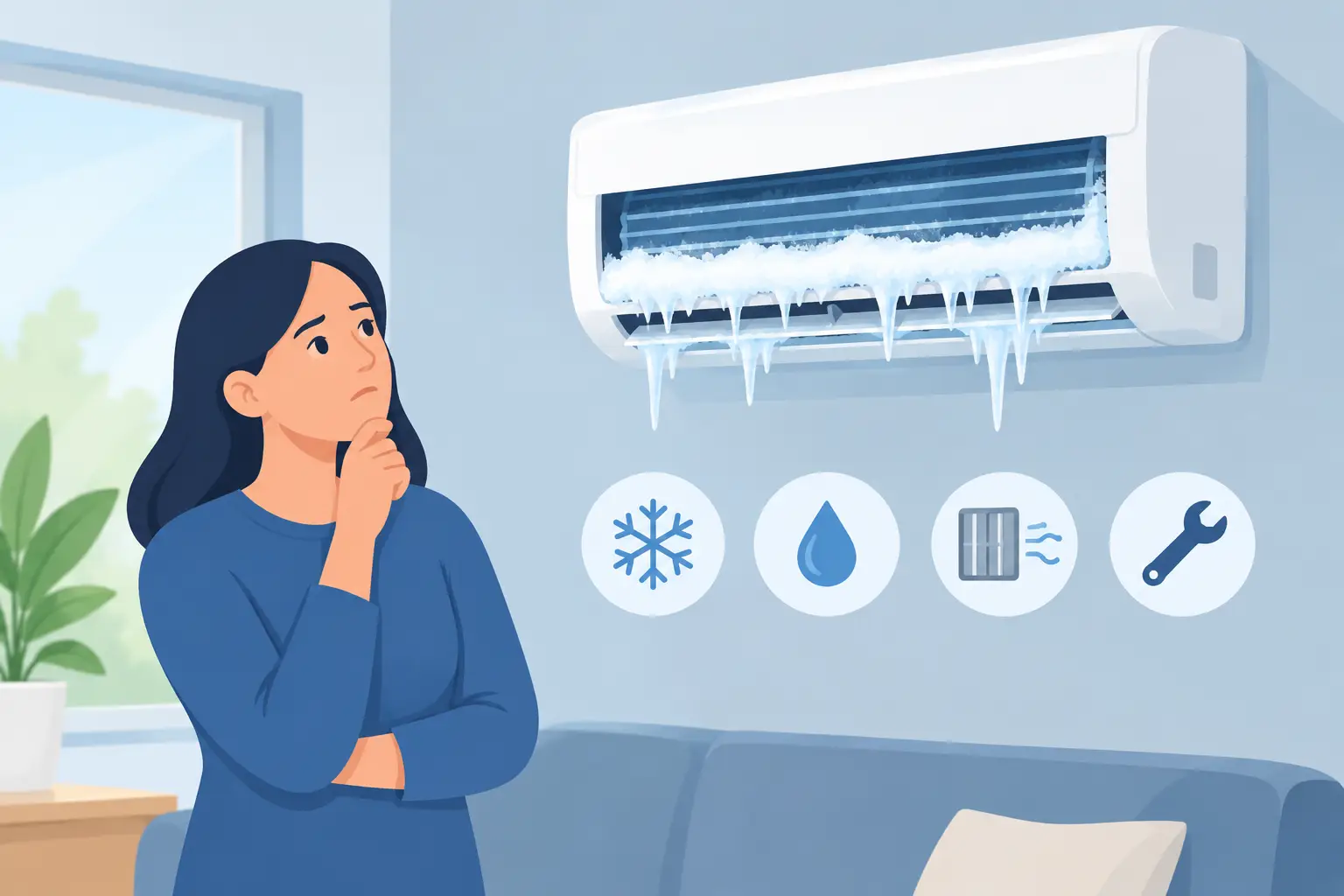
A frozen air conditioner can look like a minor issue at first: a little frost on the refrigerant line, weaker airflow from a vent, or water appearing near the indoor unit after the system shuts off. But if you are asking why air conditioners ice up, the short answer is that the indoor coil has become too cold. The more useful answer is that something is preventing the system from absorbing and moving heat the way it should.
Ice buildup is not normal operation, even during hot weather. Continuing to run a frozen system can strain the compressor, reduce comfort, and turn a relatively straightforward repair into a more expensive one. Whether you have a central ducted system, a ductless mini-split, or a multi-zone commercial system, prompt attention is the sensible approach.
Why Air Conditioners Ice Up
Your air conditioner cools indoor air by passing it across an evaporator coil filled with refrigerant. As the refrigerant absorbs heat, the coil stays cold while the air moving across it prevents temperatures from dropping below freezing.
When airflow is too low, refrigerant charge is incorrect, or controls are not operating properly, the coil can fall below 32 degrees Fahrenheit. Moisture naturally present in the air then freezes on the coil. That ice further blocks airflow, causing more ice to form. It is a cycle that rarely improves by itself.
The location of the ice can offer a clue. Frost on the insulated copper line near the outdoor unit often points to an indoor coil problem. Ice inside the air handler or on a mini-split’s indoor coil indicates the unit should be turned off and inspected once it has thawed.
Restricted airflow is the most common cause
A dirty air filter is one of the most frequent reasons a residential system freezes. A clogged filter limits the volume of warm household air reaching the coil. Less heat reaches the refrigerant, so the coil gets colder and moisture freezes onto its surface.
Other airflow restrictions can create the same result. Closed supply registers, blocked return grilles, crushed or leaking ductwork, a dirty evaporator coil, and a failing blower motor can all reduce airflow. In a ductless system, dirty indoor filters, a heavily soiled fan wheel, or an obstructed coil can be responsible.
It is tempting to close vents in unused rooms to save energy, but this can create problems in systems designed for a specific airflow volume. A properly designed zoned system handles room-by-room control differently. If certain rooms are consistently too cold, too warm, or poorly supplied with air, the right fix may involve balancing, duct repairs, zoning adjustments, or equipment assessment rather than closing vents throughout the property.
Low refrigerant usually means there is a leak
Refrigerant does not get used up like fuel. If an air conditioner is low on refrigerant, there is usually a leak somewhere in the sealed system. Lower refrigerant pressure can make the evaporator coil excessively cold, resulting in frost and ice.
This issue needs professional diagnosis. Adding refrigerant without finding and addressing the leak may restore cooling briefly, but it does not correct the underlying fault. A qualified HVAC technician should inspect the system, identify the leak where practical, complete the repair, evacuate the system correctly, and charge it to the manufacturer’s specifications.
Low refrigerant can also lead to longer run times, poor cooling, higher electricity use, and compressor damage. For that reason, a frozen coil combined with hissing sounds, oily residue around refrigerant connections, or a steady decline in cooling performance warrants a service call rather than a wait-and-see approach.
Dirty coils and mechanical faults can trigger freezing
Even with a clean filter, the evaporator coil can collect dust, pet hair, and household debris over time. Because the coil sits inside the air handler or furnace cabinet, it is easy to overlook. Dirt acts as insulation and restricts the heat transfer the system depends on.
A dirty outdoor condenser coil can also contribute to poor system performance, particularly during periods of heavy use. The outdoor unit needs open space around it and clean coil surfaces to release heat effectively. Shrubs, leaves, grass clippings, or stored items can reduce performance and add stress to the equipment.
Mechanical faults are another possibility. A blower motor may be running at the wrong speed, a capacitor may be weakening, a control board may be malfunctioning, or a metering device may not be feeding refrigerant correctly. These are not reliable do-it-yourself repairs. Accurate testing is needed because several faults can produce similar symptoms.
Thermostat settings and cool outdoor conditions matter
Running cooling when outdoor temperatures are unusually low can cause some systems to freeze, especially if they are not designed or controlled for low-ambient operation. This is more likely in commercial spaces with internal heat loads, such as server rooms, where cooling may be requested year-round.
A thermostat that is misreading room temperature, cycling erratically, or set too low can also contribute to excessive run times. However, thermostat settings alone are less commonly the sole cause of a fully iced coil. If raising the setpoint and replacing the filter do not resolve the issue after thawing, further diagnosis is needed.
What to Do When Your AC Freezes
First, turn off the cooling mode. Do not keep lowering the thermostat in an effort to force cold air through the system. That only allows more ice to form.
If your system has a fan-only setting and the indoor blower is operating normally, turn the fan to ON to help melt the ice. Leave the cooling off until all visible ice has thawed. Depending on the severity, this can take several hours and sometimes longer. Place towels around the indoor unit if melting ice may create water runoff, but avoid removing panels or disturbing electrical components.
Do not chip ice off the coil or refrigerant lines with a sharp object. Evaporator coils and refrigerant tubing are easily damaged, and a puncture can create a significant repair. You should also avoid repeatedly turning the system back on to check whether it has recovered. Restarting too soon can cause it to freeze again before the original issue is identified.
Once the unit has thawed, check the air filter and replace it if it is dirty. Make sure return grilles and supply vents are unobstructed, and remove leaves or debris from around the outdoor unit. If the filter was severely clogged and the system returns to normal after thawing, continue to monitor its performance. If it freezes again, schedule service.
When a Frozen Air Conditioner Needs Professional Repair
A technician should inspect the system if ice returns after you replace the filter and restore airflow, if cooling remains weak, or if you notice water leaks, unusual noises, or a burning smell. Businesses should act quickly when a frozen unit affects customer comfort, staff productivity, temperature-sensitive inventory, or equipment rooms.
During a service visit, the technician can check airflow, blower operation, coil condition, refrigerant pressures, electrical components, condensate drainage, and thermostat controls. This process matters because an iced coil is a symptom, not a diagnosis. Honest troubleshooting identifies the cause before recommending repairs.
For older equipment, the best path depends on the condition of the system and the nature of the fault. Cleaning a coil or repairing a blower component can be a practical repair. A major refrigerant leak, failing compressor, or repeated breakdowns in an aging unit may justify comparing repair costs against replacement. The right recommendation should account for system age, efficiency, comfort needs, and how long you expect to remain in the property.
Preventing Air Conditioner Ice Buildup
Routine maintenance is the most reliable way to reduce the risk of a frozen coil. Replace or clean filters on the schedule recommended for your system, with more frequent checks in homes with pets, renovations, or high dust levels. Keep indoor returns clear, avoid shutting too many registers, and maintain clearance around outdoor equipment.
Professional seasonal maintenance adds another layer of protection. A technician can clean accessible coils, verify airflow, inspect electrical connections, check drainage, and identify early signs of refrigerant or mechanical problems. For ducted, split-system, multi-split, and commercial equipment, maintenance also helps protect efficiency during the periods when you depend on cooling most.
A frozen air conditioner is your system asking for attention. Turning it off, letting it thaw, and arranging the right diagnosis protects both your comfort and the equipment that provides it.