
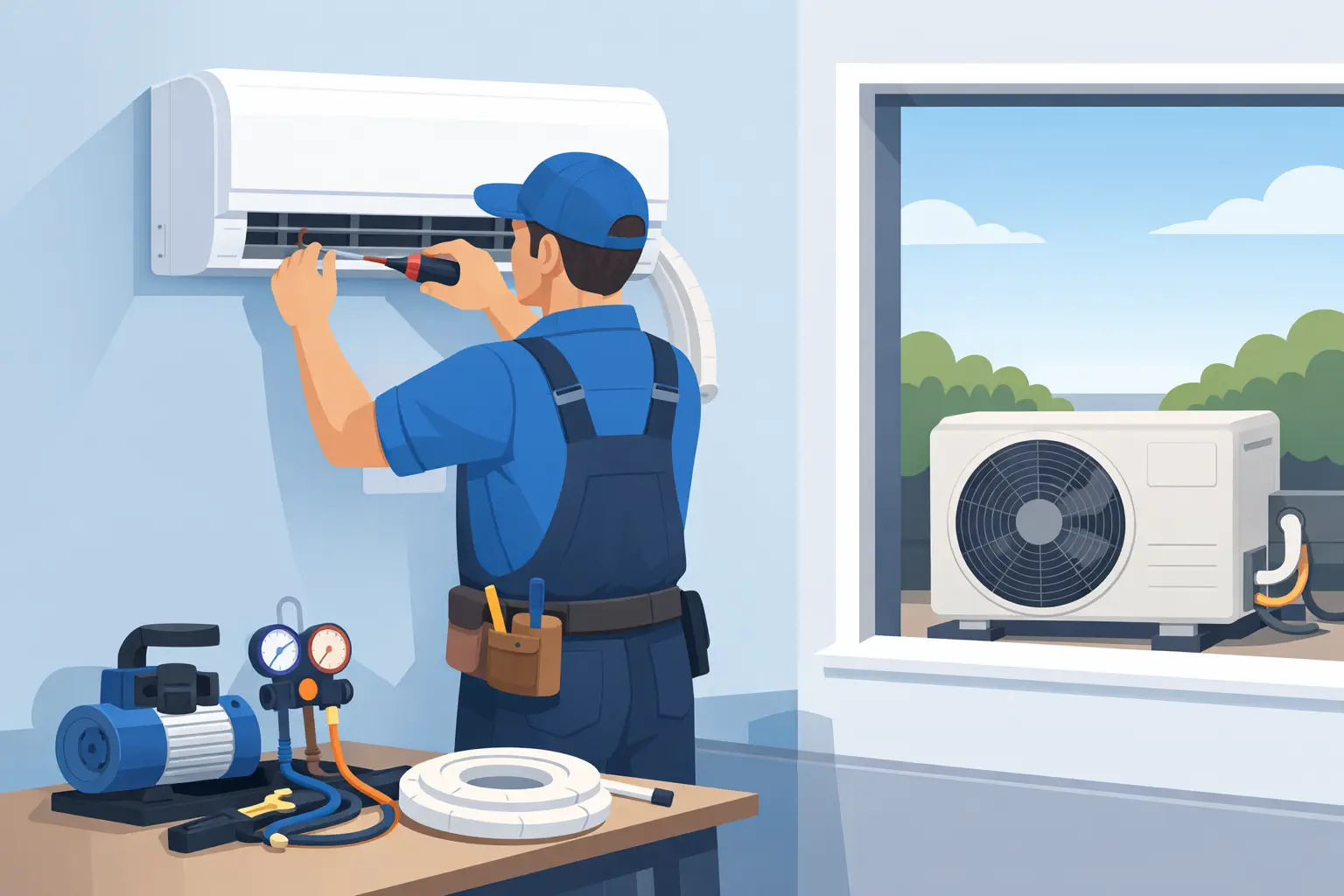
A split system can look simple once it is on the wall and running quietly, but the quality of the installation has a direct effect on comfort, power bills, noise, and long-term reliability. That is why split system air conditioner installation is not just about mounting an indoor unit and connecting a few pipes. It is a design and workmanship job that needs to suit the room, the property, and the way you actually use the space.
For homeowners, that might mean cooling a bedroom without overcapitalizing. For a business, it could mean keeping a small office comfortable through peak summer without constant complaints about hot and cold spots. In both cases, the right system and the right install matter just as much as the brand on the box.
Why split system air conditioner installation matters
A well-installed split system should cool efficiently, run quietly, and maintain a stable temperature without short cycling. If the unit is oversized, it may cool the room too quickly and switch on and off more often, which can affect humidity control and wear the system faster. If it is undersized, it may run hard for long periods and still struggle on very hot days.
Placement also has a major impact. An indoor unit installed too close to a corner, above a heat source, or in a position that blows directly onto seating or beds can make a good system feel like a poor one. The outdoor unit needs enough clearance for airflow and servicing, and it should be mounted in a location that balances performance, appearance, and noise considerations.
This is where professional advice becomes valuable. Good installers do not just ask what size unit you want. They look at room size, ceiling height, insulation, sun exposure, window area, and how the space is used during the day and at night.
How the installation process usually works
Most split system air conditioner installation projects follow a similar path, but the details can vary depending on the property. A back-to-back installation, where the indoor and outdoor units are mounted on opposite sides of the same wall, is usually the simplest and most cost-effective setup. Longer pipe runs, apartment access, double brick walls, and multi-story homes can all add complexity.
1. System selection and sizing
The first step is choosing a system with the right capacity for the room or area. A small bedroom may only need a modest unit, while an open-plan living area or retail space may need a higher-capacity model. Energy efficiency, noise level, filtration features, and brand reliability also come into the decision.
For some properties, a single split system is enough. For others, a multi-split or ducted setup may be a better fit. It depends on how many rooms you want to condition, whether you want independent control, and how much visible equipment you are comfortable with.
2. Indoor and outdoor unit placement
Once the system is selected, the installer determines the best location for both units. The indoor unit should allow even airflow across the room and be accessible for cleaning and servicing. The outdoor unit should sit on a stable base or brackets with enough ventilation around it.
There are always trade-offs here. The visually neatest location is not always the best mechanical location. Sometimes a slightly different position gives better drainage, easier pipe routing, or less noise transfer into bedrooms or neighboring areas.
3. Pipework, cabling, and drainage
The indoor and outdoor units are connected by refrigerant pipework, electrical cabling, and a condensate drain. These components need to be installed neatly and correctly, with proper insulation and support. Poor drainage is one of the more common causes of water leaks from indoor units, so this part of the job should never be treated as an afterthought.
In some homes and commercial spaces, concealment matters. Trunking can tidy exposed pipework, while certain layouts may allow lines to be hidden within walls or ceiling spaces. The best option depends on the building and budget.
4. Electrical connection and testing
Air conditioning systems need the correct electrical supply and isolation. Depending on the unit and site conditions, electrical upgrades may be required. After connection, the installer should test operation, check pressures and performance, confirm drainage, and make sure the controller and modes are working properly.
Commissioning matters. A system that is simply switched on and left without proper testing may have issues that only show up later, such as poor cooling performance, unusual noise, or drainage faults.
What affects installation cost
One of the first questions people ask is cost, and fairly so. The answer depends on more than the unit itself. The overall price of split system air conditioner installation is usually influenced by system capacity, brand, access, pipe run length, wall type, mounting method, and whether electrical works are needed.
A straightforward install in a standard room will usually cost less than a job in an apartment, a heritage property, or a commercial tenancy with restricted access. If the outdoor unit needs wall brackets, vibration control, roof access, or a longer route to the indoor unit, the labor and materials increase.
This is where transparent quoting matters. A low headline price can look attractive until variations start appearing for items that should have been discussed early. Clear site assessment and honest recommendations help prevent that.
Common mistakes to avoid
The most expensive air conditioning mistakes often happen before the system is even turned on. Choosing a unit based only on price is one example. Another is assuming every room of a similar size needs the same capacity. Orientation, glass, insulation, occupancy, and equipment loads all change the calculation.
Another common issue is poor placement. A unit installed above a bed, opposite a doorway, or in a spot that struggles to distribute air evenly can leave people uncomfortable even if the system is technically working. In commercial spaces, this can lead to staff adjusting settings constantly and driving up energy use.
Skipping aftercare is another problem. Filters need regular cleaning, and systems benefit from routine servicing to maintain efficiency and reduce breakdown risk. Even a high-quality installation needs maintenance over time.
Split systems for homes and small businesses
Split systems remain popular because they offer a practical balance of performance, efficiency, and cost. In homes, they are often ideal for bedrooms, living areas, home offices, and additions where extending ducted air is not practical. They are also a good option for apartments and townhouses where space is limited.
For small businesses, split systems can work well in offices, consulting rooms, shops, and small studios. They are relatively quick to install, easy to control, and suitable for targeted heating and cooling. The main consideration is matching the setup to the layout and occupancy. One unit may suit a small tenancy, while multiple rooms may call for a multi-split or a different system altogether.
How long installation takes
A standard residential split system installation can often be completed within a day, especially if the setup is straightforward. More complex jobs may take longer if there are access issues, electrical works, multiple units, or custom pipe routes.
Commercial installations can vary more widely depending on tenancy rules, working hours, and the need to avoid disrupting staff or customers. A proper site inspection helps set realistic timing rather than giving a one-size-fits-all promise.
Choosing the right installer
When comparing contractors, look beyond the equipment brand and the quote total. Ask how the system will be sized, where the units will go, what is included in the quoted installation, and whether any site-specific issues could affect the final cost. A dependable installer should be able to explain the reasoning in plain language.
That practical advice is often the difference between a system that looks fine on day one and one that still performs properly years later. Experienced providers such as Cool Air Tech focus on the full picture – system selection, workmanship, energy efficiency, and ongoing support – because that is what delivers lasting value to both homeowners and businesses.
FAQs about split system air conditioner installation
Do I need a new circuit for a split system?
Sometimes. Smaller systems may suit the existing electrical setup, while larger units or older switchboards may require electrical upgrades. This should be checked before installation begins.
Is a bigger split system better?
Not always. Oversizing can reduce efficiency and comfort just as much as undersizing. Correct sizing is based on the room and how it is used, not just a preference for more power.
Can pipework be hidden?
Often, yes, but the method depends on the wall type, building layout, and budget. Surface trunking is common, while some installations allow more concealed solutions.
How often should a split system be serviced?
For most homes, regular cleaning and periodic professional servicing are recommended. Commercial systems may need more frequent attention depending on operating hours and site conditions.
A split system is one of the most effective ways to improve comfort in a single room or defined area, but the result depends heavily on the planning behind the install. If you are weighing up options, the best next step is to have the space assessed properly so the system fits the room, the property, and the way you live or work.