
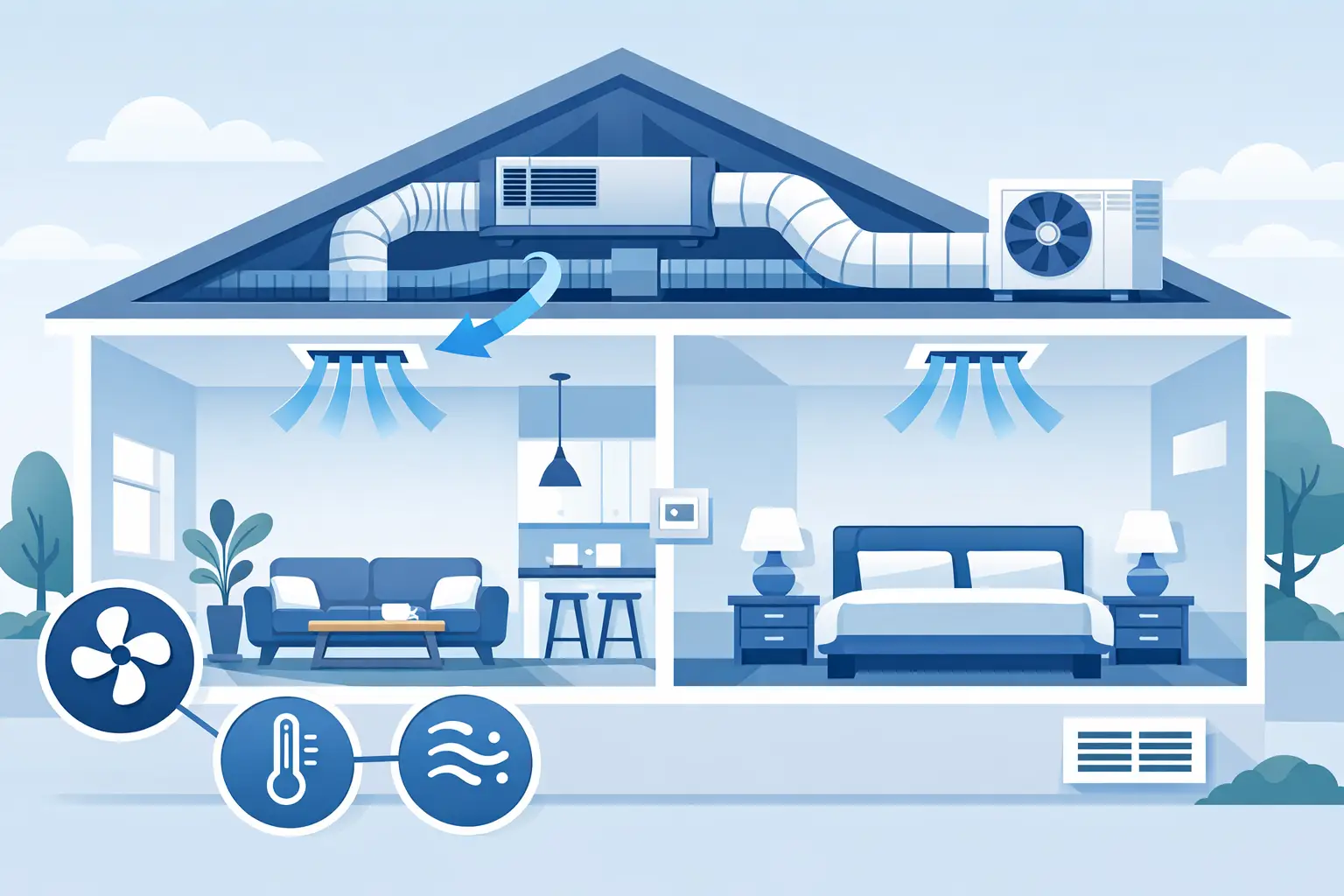
A ducted system can look perfect on paper and still leave you with hot bedrooms, noisy vents, and power bills that make no sense. That usually comes down to design, not just equipment.
Good ducted air conditioning design is the difference between a system that quietly does its job for years and one that never quite feels right. For homeowners and business operators, that matters more than the brand name on the indoor unit. The layout of the property, the way rooms are used, ceiling space, insulation levels, and even window placement all affect how the system should be planned.
Why ducted air conditioning design matters
Ducted air conditioning is often chosen for whole-home comfort, a cleaner look, and the ability to control multiple areas from one system. Those benefits are real, but only when the design suits the building.
A system that is too small will run hard and struggle in peak weather. A system that is too large can short cycle, waste energy, and create uneven temperatures. Poor duct layout can reduce airflow before conditioned air even reaches the rooms that need it. Weak return air planning can make the system noisy or cause pressure problems from one zone to another.
In other words, the design phase decides how the system will feel every day after installation is complete.
The first step in ducted air conditioning design
The starting point is never “How big a unit can we fit?” It is “What does this building actually need?”
For a home, that means looking at the floor plan, ceiling height, insulation, orientation to the sun, glazing, room sizes, and how the family uses each space. Open-plan living areas have different demands than closed bedrooms. A second story usually behaves differently from the first. A media room, home office, or nursery may need more precise control than a hallway or guest room.
For a commercial property, the same principle applies, but occupancy patterns become even more important. Offices, retail spaces, and small warehouses can all have different heat loads depending on people, lighting, equipment, and trading hours.
This is why honest system recommendations often start with questions. If an installer skips straight to a generic size or a quick quote without understanding the building, there is a good chance the final result will be compromised.
Sizing the system properly
Correct sizing is one of the biggest parts of good design, and it is also one of the most misunderstood.
Many people assume a larger unit means better performance. In practice, oversizing creates its own problems. The system may cool or heat too quickly near the sensor, switch off too often, and fail to maintain an even temperature across the property. That can leave some areas comfortable and others lagging behind.
Undersizing is more obvious. The system runs for long periods, struggles during very hot or cold weather, and can wear faster because it is constantly trying to catch up.
A properly sized system balances capacity with the real heat load of the building. It is not about selling the biggest model. It is about matching the system to how the property performs in real conditions.
Why room-by-room thinking matters
Whole-home capacity is only part of the picture. Each room also needs the right amount of airflow. A master bedroom with large west-facing windows will not behave the same way as a shaded guest room. If airflow is split evenly without considering these differences, comfort will not be even.
That is why a thoughtful design looks beyond total square footage. It considers where the load actually sits within the building.
Zoning is where comfort and efficiency meet
Zoning allows different parts of the property to be controlled independently. In a family home, that may mean separating living areas from bedrooms, or upstairs from downstairs. In a commercial setting, it may mean splitting work areas from meeting rooms or customer-facing spaces.
This matters because most people do not use every room the same way at the same time. Without zoning, you are often conditioning areas that do not need it. With zoning, the system can work more efficiently and deliver better comfort where it is needed most.
There is a trade-off, though. More zones can give better control, but they also require a design that manages airflow correctly when only part of the system is operating. If this is handled poorly, it can create excess static pressure, noise, and uneven performance. Good zoning is not just adding more buttons on a controller. It is making sure the whole system behaves properly under different operating conditions.
Duct layout and airflow are not secondary details
The ductwork is the delivery path for conditioned air. If it is undersized, poorly routed, kinked, or installed with too many restrictions, the system loses performance before the air reaches the room.
Good duct design keeps airflow balanced and efficient. Supply ducts should be sized for the room load, with layouts that reduce unnecessary bends and pressure losses. Return air should be generous enough to let the system breathe properly. Grille placement should support even air distribution rather than blasting one area and ignoring the rest.
Noise also starts here. Whistling grilles, rushing air, and rattling duct runs often point back to design or installation issues. A quieter system usually comes from better airflow planning, not just a quieter indoor unit.
Supply and return air both matter
People often focus on where cool or warm air comes out, but return air is just as important. If return air is restricted or badly located, the system can struggle to circulate air effectively. Rooms may feel stuffy, doors may pull or slam when zones change, and overall comfort can drop.
Balanced supply and return design is one of those behind-the-scenes details that owners rarely see but always feel.
Register placement affects the way a room feels
A ducted system is meant to be discreet, but the vent locations still matter. Ceiling registers, bulkhead grilles, and return air positions all influence how air moves through the space.
In open areas, the goal is usually broad, even coverage. In bedrooms, comfort and quietness tend to be the priority. In commercial interiors, placement may need to avoid blowing directly onto desks, seating, or retail counters.
There is no single layout that suits every property. A beautiful ceiling plan can still perform badly if register placement is based on appearance alone. The best designs balance aesthetics with airflow performance.
Energy efficiency starts with design, not marketing
Energy-efficient air conditioning is often discussed in terms of system features, ratings, and controls. Those matter, but design is the first place efficiency is won or lost.
If the unit is oversized, if duct losses are high, if zones are poorly arranged, or if the thermostat is in the wrong location, operating costs can climb even with a high-quality system. By contrast, a well-designed ducted setup can reduce wasted runtime, improve temperature stability, and make zoning genuinely useful.
Insulation, sealing, and building envelope performance also affect results. Air conditioning design should respond to those conditions, not pretend they do not exist. Sometimes the best advice is not just a bigger unit. It may be improving insulation, adjusting zones, or redesigning airflow to fix the real problem.
Ducted design should fit the property and the people using it
This is where experience matters. A large family home, a compact townhouse, and a small office may all be suitable for ducted air, but the right design approach will differ.
Some clients want premium whole-home comfort with fine control in multiple zones. Others want a practical system that handles the core living or working areas well and keeps installation within budget. Neither goal is wrong. The right answer depends on the property, usage patterns, and priorities.
That is why practical advice matters more than a one-size-fits-all package. At Cool Air Tech, projects are approached with that in mind – clear recommendations, transparent quoting, and a design that is built around comfort, efficiency, and long-term reliability rather than guesswork.
What to ask before moving ahead
If you are comparing ducted options, ask how the system is being sized, how zones are being planned, where supply and return air will go, and whether the installer has allowed for the way your property is actually used. Ask what trade-offs come with the recommended layout. Ask what happens in extreme weather and whether the design leaves room for future changes.
Those questions do more than protect your budget. They help you avoid the common situation where a system is technically installed correctly but never performs the way you expected.
A well-designed ducted system should feel simple once it is running. The rooms reach temperature evenly, the airflow feels natural, the controls make sense, and the system does not need constant adjustment to stay comfortable. That is usually the sign that the hard work was done before installation day, where it belongs.