
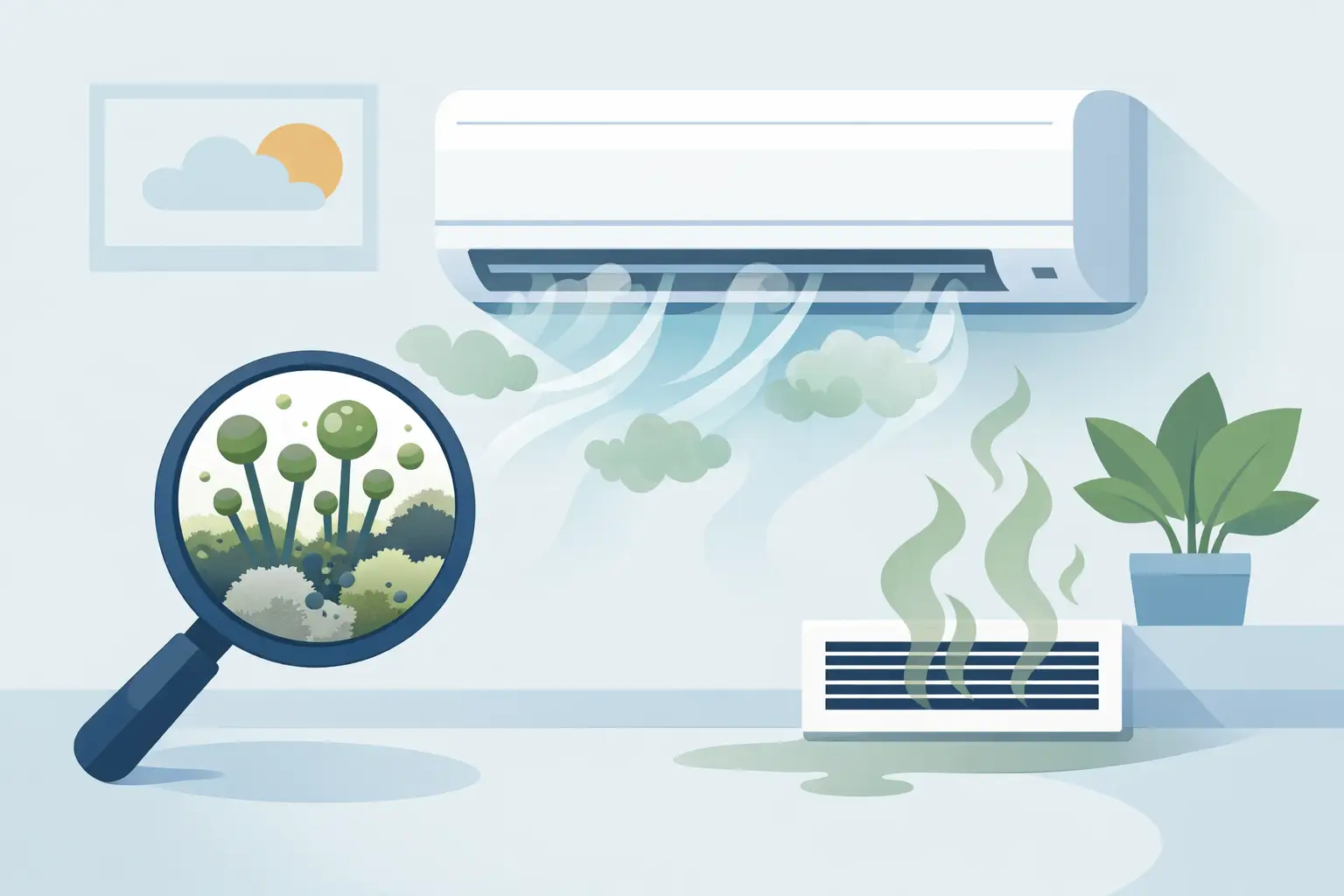
You turn on the air conditioner expecting cool, clean air, and instead the room smells like a damp basement. If you have been asking why does AC smell musty, the short answer is moisture. Somewhere in the system, water is lingering long enough for mold, mildew, or bacteria to grow, and the AC is blowing that odor through your home or workspace.
That smell is more than just unpleasant. It usually points to a maintenance issue that can affect air quality, system efficiency, and in some cases the life of the equipment. The good news is that a musty AC smell is often traceable to a handful of common causes.
Why does AC smell musty in the first place?
Air conditioners naturally remove humidity as they cool. Warm indoor air passes over the evaporator coil, moisture condenses, and that water is supposed to drain away through the condensate system. When the process works properly, the system dries out between cycles and odors are minimal.
The problem starts when moisture does not drain, surfaces stay wet, or airflow is restricted. A dark, damp interior is the ideal environment for microbial growth. That is what creates the stale, musty smell people notice most when the unit first starts up.
In a residential split system, the source is often inside the indoor air handler. In ducted systems and larger commercial applications, the issue may also involve the return air side, ductwork, or multiple zones. It depends on the system design and how long the problem has been developing.
The most common reasons your AC smells musty
Dirty evaporator coil
The evaporator coil is one of the most common problem areas. Dust and organic debris can build up on the coil surface over time. Add condensation, and that layer becomes a breeding ground for mildew and bacteria.
When this happens, the smell may be strongest right after startup or whenever the unit has been off for a while. The system is basically pushing air across a damp, dirty surface and into the room. Coil cleaning is not just about odor control. It also helps restore airflow and cooling performance.
Clogged condensate drain line or drain pan
Your AC creates condensate every time it cools. If the drain line is blocked by sludge, dirt, or microbial buildup, water can back up into the drain pan or remain trapped in the system. Standing water is one of the fastest ways to end up with a musty smell.
Sometimes you will notice extra signs, like water around the indoor unit, higher indoor humidity, or the system shutting off if a float switch is triggered. In other cases, the only clue is the odor.
Dirty air filter and restricted airflow
A neglected air filter does not usually cause the smell by itself, but it can make conditions worse. Restricted airflow can keep the evaporator coil colder and wetter for longer. It also allows more dust to settle inside the system, which gives mold and mildew more material to feed on.
This is one of the simpler issues to check. If the filter looks heavily loaded with dust, replacing it may help reduce the smell and improve system performance. If the odor remains, there is likely buildup deeper inside the unit.
Mold or mildew in ductwork
If you have a ducted system, the smell may not be coming from the air handler alone. Ducts can develop odor problems when moisture enters through leaks, poor insulation, high humidity, or condensation near supply boots and return sections.
This gets more likely in spaces such as attics, crawl spaces, or utility areas where temperature differences can cause sweating. If the musty odor is stronger in certain rooms than others, ductwork contamination or a localized moisture issue may be part of the problem.
Oversized system or short cycling
This cause is less obvious, but it matters. An oversized AC can cool the room too quickly without running long enough to remove humidity properly. The result is a space that feels cool but still damp. That lingering humidity can contribute to musty smells both in the room and inside the equipment.
Short cycling can also come from thermostat issues, low refrigerant, or other performance problems. The point is that odor is not always just a cleaning issue. Sometimes it is tied to how the system is operating.
Long periods without use
If the smell appears at the start of the cooling season, the system may simply have collected dust and residual moisture while sitting idle. A mild odor at startup can happen, especially after humid weather. But if it persists beyond the first few cycles, it usually means the unit needs inspection and cleaning.
What you can check yourself first
A musty AC smell does not always require an immediate repair call, but it should not be ignored. There are a few practical checks you can make before bringing in a technician.
Start with the air filter. If it is dirty, replace it with the correct size and type recommended for your system. Then inspect around the indoor unit for visible water, staining, or signs that the drain may be blocked.
If your system has a visible condensate drain line, look for obvious clogs or slow drainage. You can also pay attention to when the smell is strongest. If it happens only at startup, that points more toward moisture and coil contamination. If it is constant in certain rooms, ducts or localized humidity may be involved.
What you should not do is start opening sealed equipment panels, spraying random cleaners into the unit, or trying to scrub the coil without proper access and safety precautions. AC components are easy to damage, and an incomplete cleaning can leave the real source untouched.
When the smell means it is time to call a professional
If the odor lasts more than a day or two, keeps returning, or is paired with weak airflow, water leaks, rising humidity, or reduced cooling, professional service is the right next step. A proper diagnostic does more than mask the smell. It identifies where moisture is collecting and why.
A technician will typically inspect the evaporator coil, blower components, drain pan, condensate line, filter condition, and overall airflow. In ducted systems, they may also evaluate whether the ductwork has contamination, leaks, or insulation problems. If the system is short cycling or not dehumidifying properly, they can test for performance issues that are contributing to the odor.
For homes and small businesses, this matters because musty air can affect comfort well before the AC actually breaks down. In retail or office settings, it can also affect how the space feels to staff and customers. A cooling system should make the space fresher, not stale.
Can a musty AC smell be harmful?
It depends on the cause and how sensitive the occupants are. A mild musty smell does not automatically mean there is a serious health hazard, but it does suggest microbial growth or excess moisture somewhere in the system. For people with allergies, asthma, or respiratory sensitivities, that can be enough to trigger symptoms.
There is also the broader issue of indoor air quality. If mold or mildew is growing on the coil, in the drain pan, or inside ducts, the odor is a sign that the environment inside the system is not as clean as it should be. That is worth correcting even if the smell seems minor.
How to prevent musty AC odors from coming back
The best prevention is routine maintenance. A clean coil, clear drain line, and proper airflow go a long way toward keeping the system dry between cooling cycles. Regular filter changes matter too, especially during heavy use.
It also helps to keep indoor humidity under control. If a space tends to feel damp, the AC may not be sized correctly, may not be running efficiently, or may need support from ventilation or dehumidification. This is especially true in properties with limited airflow, frequent door opening, or rooms that stay cooler than the rest of the building.
For ducted and commercial systems, preventive service is even more valuable because odor issues can spread farther and affect multiple zones. A maintenance visit is often the simplest way to catch drain problems, coil buildup, or airflow restrictions before they turn into persistent smells.
If you are wondering whether a musty odor is a minor nuisance or the start of a bigger problem, the safest approach is to treat it as an early warning sign. In our experience at Cool Air Tech, the sooner the moisture issue is found, the easier it usually is to correct. Clean, dry airflow is what your AC is supposed to deliver, and when the smell changes, that is your cue to have the system checked before comfort and air quality slip further.