
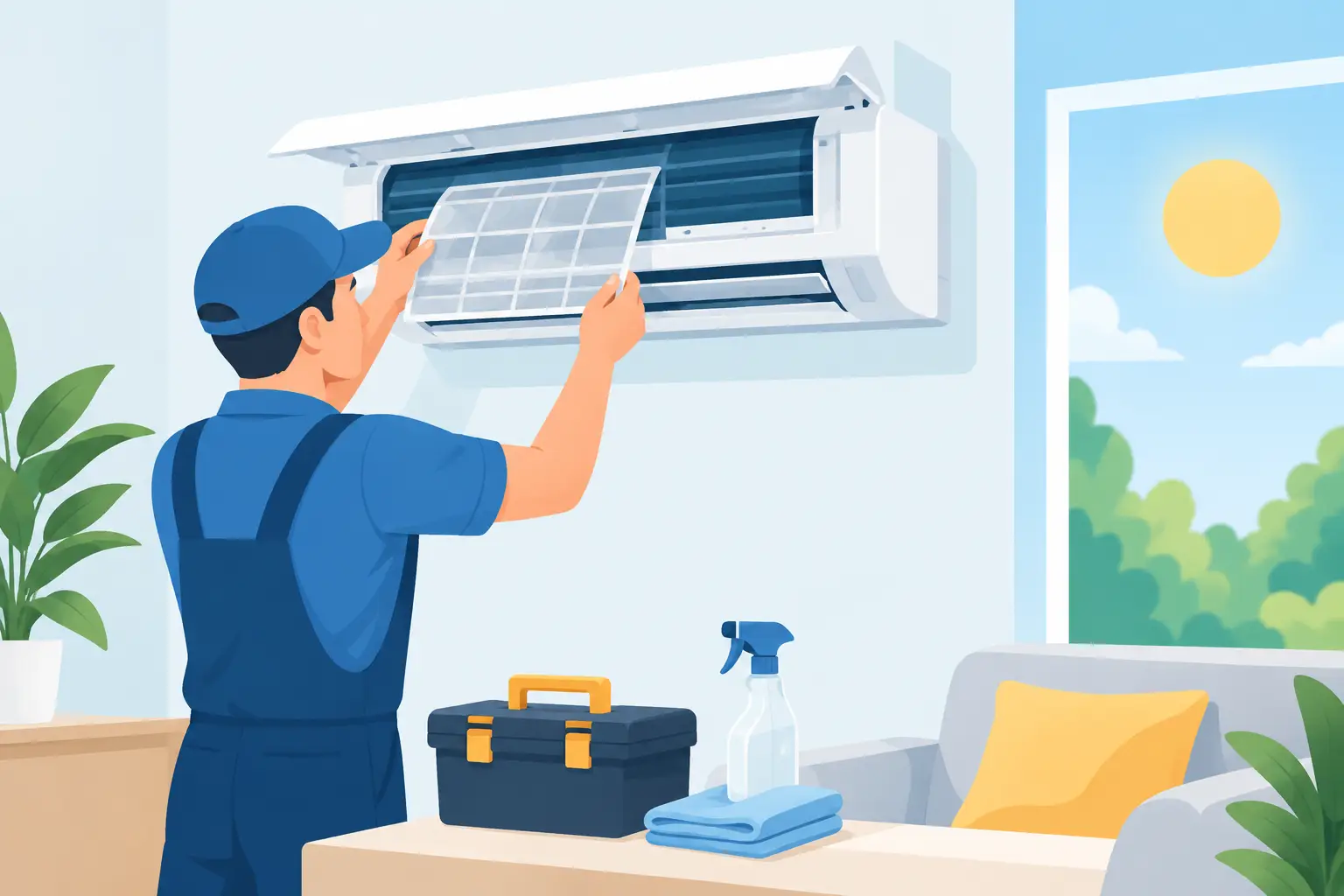
The first truly hot day is a poor time to find out your air conditioner is not cooling properly. To prepare your air conditioner for summer, start before the temperatures climb and give the system time to be serviced if it needs attention. A few practical checks can improve comfort, reduce avoidable energy use, and lower the chance of a breakdown when your home or business needs cooling most.
For central systems, ducted units, split systems, multi-zone equipment, and commercial air conditioning alike, the goal is the same: clear airflow, clean components, dependable electrical operation, and settings that suit how the space is actually used.
Why early air conditioner preparation matters
An air conditioner can appear to work while still operating inefficiently. Restricted filters, dirty outdoor coils, blocked drains, or low refrigerant can make the system run longer to reach the set temperature. That extra run time increases energy bills and puts added strain on components.
Early preparation also gives you choices. If a technician identifies a worn capacitor, damaged insulation, duct leakage, or a drainage issue in mild weather, repairs can usually be planned around your schedule. Waiting until a heat wave often means less comfort, more urgency, and a greater risk of disruption for families, staff, customers, or tenants.
Start with the parts you can check safely
Homeowners and business operators can handle several simple tasks without opening electrical panels or dismantling equipment. Begin by turning the system on and letting it run for 10 to 15 minutes. Check whether cooled air is reaching each room or zone and whether the airflow feels noticeably weaker than usual.
Listen for rattling, buzzing, grinding, or repeated clicking. A brief operational sound can be normal, but new or persistent noises should be investigated. Also look for water marks around the indoor unit, ceiling vents, or drain lines. Moisture where it should not be can point to a blocked condensate drain or another issue that should be addressed before regular summer use.
Replace or clean air filters
A clean filter is one of the most effective ways to support airflow. In many residential systems, filters should be checked monthly during heavy-use periods and replaced or cleaned as the manufacturer recommends. Homes with pets, smokers, renovations, or allergy concerns may need more frequent attention.
For a wall-mounted split system, the washable mesh filters behind the front cover can often be gently vacuumed or rinsed, then dried fully before being reinstalled. For ducted systems, use the correct filter type and size. A filter that is too restrictive can reduce airflow, while a poor-fitting filter can allow dust to bypass it and build up inside the system.
Clear the outdoor unit
The outdoor condenser needs room to release heat. Remove leaves, grass clippings, loose debris, and stored items from around the unit. Keep plants trimmed back so air can move freely through and around the coil.
Do not use a pressure washer or bend the delicate coil fins. If the coil is visibly dirty or clogged, professional cleaning is the safer option. Outdoor units can also be affected by damaged insulation, loose mounting, corrosion, or pest activity, all of which are worth having checked during a maintenance visit.
Check vents, returns, and indoor units
Make sure supply vents and return-air grilles are open and not blocked by furniture, rugs, displays, shelving, or curtains. Closing too many vents does not usually save energy in a ducted system. It can increase static pressure, limit airflow, and contribute to uneven temperatures.
In commercial spaces, this check matters just as much. A relocated desk, retail display, or storage rack can disrupt air distribution and create hot or cold spots that staff and customers notice quickly.
Test cooling performance before the heat arrives
Set the thermostat or controller to cooling mode and choose a temperature a few degrees below the current room temperature. The system should start, deliver cool air, and cycle normally after the space reaches the set point.
Pay attention to signs that cooling is not keeping up. These include air that feels only mildly cool, rooms that never reach the selected temperature, frequent cycling, ice on refrigerant lines, unpleasant odors, or a sudden rise in operating noise. A system may need professional diagnosis if these symptoms continue after filters and airflow have been checked.
It is tempting to assume low cooling means the unit simply needs refrigerant. Refrigerant is not fuel that is routinely used up. If levels are low, there may be a leak that needs to be found and repaired. Adding refrigerant without addressing the cause can provide only a short-term result and may create a more expensive problem later.
Schedule professional air conditioning maintenance
A professional maintenance visit goes beyond a basic visual inspection. A qualified HVAC technician can inspect electrical connections, test controls, assess refrigerant operation, clean components safely, check condensate drainage, and identify wear before it leads to failure.
For ducted systems, maintenance may also include examining accessible ductwork, checking zoning operation, and confirming that airflow is balanced across the property. In multi-split and VRF or VRV systems, the technician can assess whether each indoor unit is communicating and operating correctly. These systems offer excellent flexibility, but their controls and refrigerant circuits benefit from experienced servicing.
Businesses should plan maintenance around operating hours where possible. An office, shop, warehouse, or hospitality space may have different cooling demands in different areas, so a technician should understand occupancy, equipment heat loads, and hours of use rather than treating every zone the same.
Improve efficiency with the right settings
Once your equipment is clean and working properly, daily operating habits make a measurable difference. Set a realistic temperature rather than pushing the thermostat as low as possible. A moderate setting is typically more comfortable over long periods and places less demand on the system.
Use programmable schedules or smart controls to match occupancy. There is little value in cooling an empty home all day or conditioning unused commercial areas at full capacity. If your system has zoning, use it thoughtfully. Cool the rooms in use, while maintaining enough airflow and appropriate settings to protect the system.
Ceiling fans can also help occupants feel more comfortable by circulating air. They do not lower the room temperature, but they can allow a slightly higher thermostat setting in occupied rooms. Keep blinds or shades closed on sun-facing windows during the hottest parts of the day, and check that doors and windows seal properly.
Know when repair is more sensible than replacement
A tune-up may reveal that an older air conditioner is becoming costly to run or unreliable. That does not automatically mean replacement is necessary. A targeted repair can be the practical choice when the system is otherwise in good condition, parts are available, and performance suits the space.
Replacement becomes worth discussing when repairs are recurring, cooling is uneven, energy costs have risen sharply, or the system is too small or too large for the property. An undersized unit may run continuously in summer, while an oversized unit can cool too quickly without properly managing humidity or distributing comfort evenly.
The right solution depends on the building. A single split system can be an efficient option for one main room. Multi-split systems suit properties needing individual room control without ductwork throughout. Ducted air conditioning may be better for whole-home comfort and a cleaner appearance, while VRF or VRV systems can provide scalable zoning for larger or more complex commercial spaces.
A practical summer-ready checklist
Before summer, make sure filters are clean, outdoor equipment is clear, vents are unobstructed, and the system can cool normally. Arrange professional maintenance if the unit has not been serviced recently, if you notice unusual performance, or if the system supports a larger home or business with multiple zones.
Preparing early is not about finding problems where none exist. It is about giving your air conditioner the conditions it needs to work efficiently and giving yourself time to make informed decisions. A well-maintained system is more likely to deliver steady comfort when summer heat stops being an occasional inconvenience and becomes part of every day.