
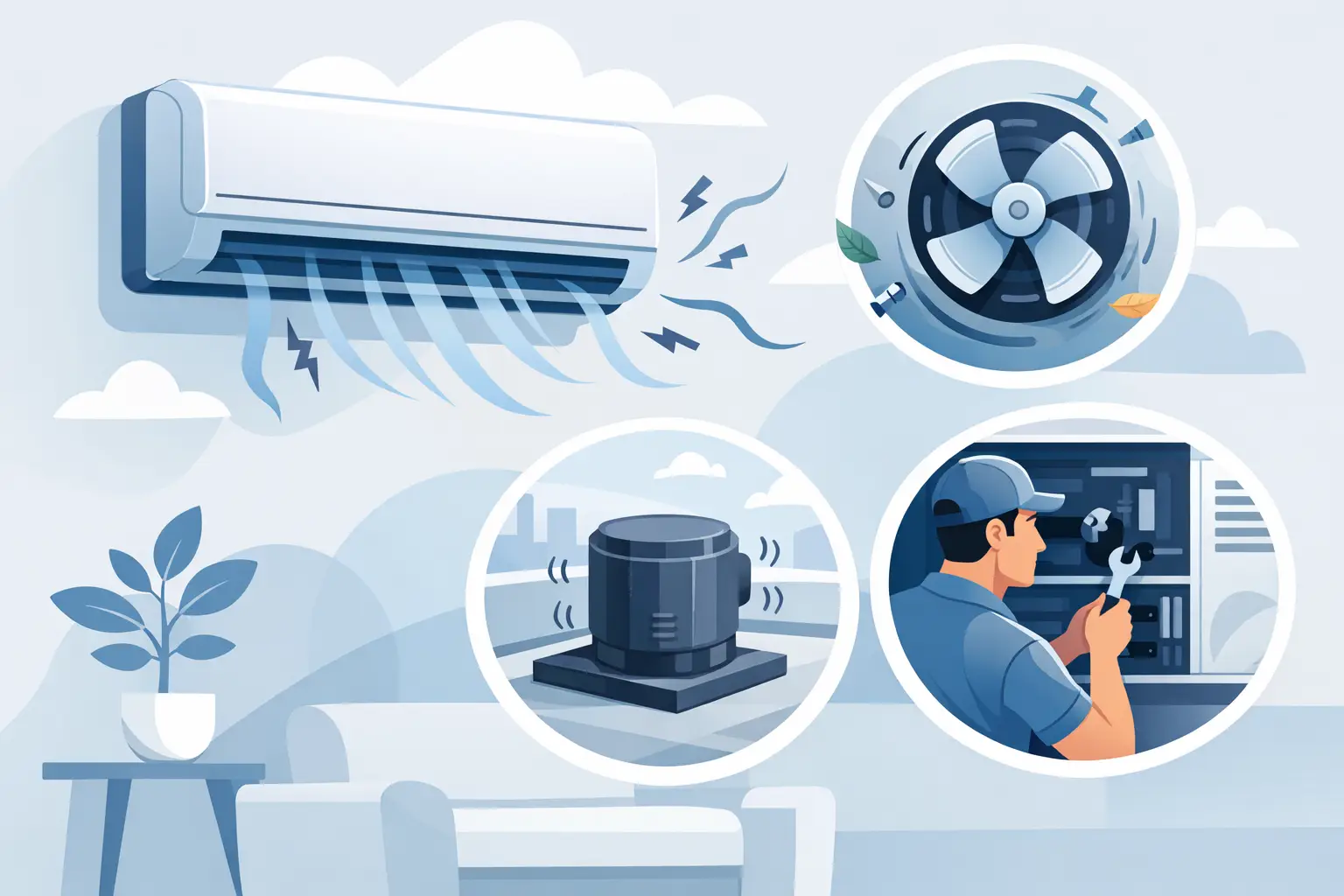
That sudden rattle at 2 a.m. usually gets your attention faster than a rising power bill. If you are asking, why is my AC noisy, the sound itself is often the best clue. Air conditioners are not silent, but they should be predictable. When the sound changes – louder, sharper, more frequent, or just unfamiliar – it usually points to wear, airflow problems, loose parts, or a component that is starting to fail.
Some noises are minor and easy to address. Others are early warnings that can turn into a bigger repair if they are ignored through another hot week. The key is not to guess based on volume alone. A soft hissing sound can be more serious than a loud panel rattle, and a unit that still cools may still need attention.
Why is my AC noisy all of a sudden?
When an AC gets noisy without much warning, the cause is usually one of three things: vibration, restricted airflow, or a mechanical part under strain. That can mean something as simple as a loose cover panel, a clogged filter, or debris around the outdoor unit. It can also mean the blower motor, fan assembly, or compressor is no longer operating smoothly.
Age matters too. Older systems naturally get louder as rubber mounts harden, bearings wear down, and metal components loosen over time. That does not always mean replacement is needed, but it does mean unusual sounds should be taken more seriously on a system that is already several years into service.
The location of the sound matters just as much as the type. Noise from the indoor unit often points to airflow or blower issues. Noise from the outdoor condenser is more likely to involve the fan motor, compressor, coil vibration, or debris inside the cabinet.
What different AC noises usually mean
Rattling
Rattling is one of the most common complaints, and it is often one of the least dramatic causes. A loose screw, access panel, bracket, or section of ductwork can create a repetitive metal-on-metal sound as the system cycles on. In some homes, even a slightly off-balance fan or vibration transferred through the wall can produce a similar noise.
If the rattling is coming from the outdoor unit, leaves, twigs, or small debris may have entered the cabinet. If it is coming from ducts, the sound may be tied to expansion and contraction or poorly secured sections of metal ducting. Rattling is not always urgent, but it should not be ignored if it gets worse or starts affecting performance.
Buzzing
Buzzing can point to electrical issues, but not always. It may come from a loose component, a vibrating copper line, or condenser parts under stress. On the more serious end, buzzing may be linked to a failing contactor, capacitor, or compressor problem.
If your AC is buzzing and struggling to start, turning on and off rapidly, or cooling unevenly, that is a stronger sign the issue is not just cosmetic. Electrical faults can damage other parts if the system keeps running under load.
Banging or clanking
Banging is a sound to take seriously. It can mean a loose or broken part inside the compressor, an unbalanced blower, or a fan assembly that is no longer secure. Clanking often suggests that one component is striking another during operation.
In some cases, the unit may still cool for a while, which gives a false sense that the problem can wait. Mechanical impact inside the system tends to get more expensive, not less, if left alone.
Hissing
A light hissing noise near ductwork may simply be air escaping through a gap or poorly sealed connection. A hissing sound near the indoor coil or refrigerant lines is a different matter. That can indicate a refrigerant leak or pressure issue.
Because refrigerant problems affect both efficiency and system health, hissing should be checked promptly if it is persistent, especially if cooling has dropped off or ice is forming on the unit.
Screeching or squealing
High-pitched noises often point to motor or belt issues, depending on the system type. In modern residential systems, screeching may come from failing motor bearings or a blower wheel problem. In some commercial equipment or older units, belt wear or misalignment may be the source.
This is the kind of sound that usually gets worse quickly. If the motor is struggling, continuing to run it can lead to overheating or total failure.
Clicking
A click when the system starts or stops can be normal. Repeated clicking, especially when the unit fails to start, usually is not. That pattern may indicate a thermostat problem, control board issue, relay failure, or electrical fault.
If the clicking is constant and the system is not running properly, it is best to stop cycling the unit and have it inspected.
What you can check before calling for service
There are a few practical things worth checking before assuming the worst. Start with the air filter. A heavily clogged filter can restrict airflow, increase strain on the blower, and sometimes create whistling or rumbling sounds. Replacing the filter is simple and often overlooked.
Next, look at the indoor and outdoor units for anything visibly loose. A panel that has shifted, screws that have backed out, or light debris caught around the condenser can all create noise. Around the outdoor unit, make sure branches, leaves, and other obstructions are cleared away.
It is also worth listening carefully to where the sound starts. Is it the return grille, the indoor head unit, the outdoor condenser, or the ductwork? That detail helps narrow down the issue quickly and makes a service visit more efficient.
What you should not do is open sealed electrical sections, attempt compressor-related repairs, or keep resetting the system when it clearly sounds wrong. AC equipment combines electricity, moving parts, and refrigerant pressure. DIY has limits here.
When a noisy AC means you should shut it off
Some sounds justify turning the system off until it can be checked. Banging, grinding, loud screeching, or buzzing accompanied by burning smells, short cycling, or weak airflow should not be ignored. Those symptoms often mean a part is failing in a way that can cause wider damage.
The same goes for hissing that seems tied to refrigerant lines or any noise paired with icing, water leakage, or a sudden drop in cooling. Running the unit longer may not get you through the day – it may just turn a repairable issue into a major component replacement.
For business owners, this matters even more. A struggling AC in a retail shop, office, or small commercial space can affect comfort, equipment, and daily operations. Early service is usually less disruptive than waiting for a full breakdown.
Why professional diagnosis matters
The challenge with AC noise is that several different faults can sound similar. A rattle might be harmless sheet metal vibration, or it might be a fan issue that is about to damage the cabinet. A buzz might be a loose line set, or it might be an electrical component on the way out.
That is why diagnosis should focus on sound, system behavior, and operating conditions together. A qualified technician will usually check mounting points, blower components, fan motors, refrigerant pressures, electrical parts, drain conditions, and airflow across the system. The goal is not just to stop the noise but to fix the reason it started.
For homeowners, that means fewer repeat callouts and a better chance of preserving system life. For commercial clients, it means avoiding preventable downtime and controlling repair costs before the issue spreads.
Can maintenance prevent AC noise?
Often, yes. Many noisy AC calls trace back to buildup, neglected filters, worn isolation mounts, loose hardware, dirty fan assemblies, or early motor wear that routine maintenance could have caught sooner. Maintenance will not stop every failure, but it does reduce the chance of small issues turning into loud ones in the middle of summer.
This is especially true for ducted and multi-zone systems, where airflow balance, static pressure, and duct condition all influence sound levels. Split systems can also become noisy when indoor heads are dirty or outdoor units are installed on surfaces that transfer vibration too easily.
At Cool Air Tech, one of the most practical parts of service work is helping customers tell the difference between normal operating sound and early warning signs. That clarity matters when you are deciding whether to monitor a minor issue or act before comfort and efficiency drop further.
If your AC sounds different, trust the change. You do not need to diagnose every component yourself, but you do want to catch the problem while it is still a repair instead of a replacement.